**Editors Note: This story was written around October 18, 2011
(GoinsReport.com) – When asked whether he supports the President’s recent decision to send military advisors to Central Africa, Sen. John Thune says he hasn’t thought much about that—but added that he hopes it will be an “international, worldwide” commitment to address the problems in Uganda.
GoinsReport.com asked Senator Thune (R-S.D.) on Capitol Hill Tuesday, “Do You support the president unilaterally sending 100 troops to Uganda?”
Thune said: “I have to say I haven’t thought a lot about that. I know that’s something some of my colleagues who are more familiar with the issue have been discussing.”
He continued: “But obviously there is some tremendous atrocities being committed that hopefully it will be an international, worldwide commitment to try and address and the United States clearly is always taking a leadership role and we’ll probably continue to do that. But I need to look more at the details and particulars of it.”
In an electronic newsletter sent Tuesday, Sen. Jim Inhofe (R-Okla.) wrote that he supported President Obama in sending military advisors to Uganda to assist in apprehending Joseph Kony and his Lord’s Resistance Army.
“This latest development is another step to bringing much awaited justice to the children and victims in Uganda devastated by the monstrous acts of Kony and the LRA,” Sen. James Inhofe (R-Okla) wrote.
“As the pioneer for this cause in Congress for the past decade, it is my prayer that Kony will be held accountable for the violent acts the LRA has committed against the youth of Uganda and throughout the continent of Africa” he continued.
However, several members of Congress in the Senate and the House of Representatives have warned against sending troops to a foreign country without congressional approval.
Rep. Michelle Bachmann (R-Minn.) said in a Friday Townhall in Iowa that she wasn’t very aware of President Obama’s recent action, according to CBSNews.
“I do not know enough about it to comment on it,” the report quoted Bachmann as saying. But she added “we will have to first demonstrate a vital American national interest” before sending troops overseas.
Referring to the president’s decision to aid pro-Democracy forces in Libya she is quoted as saying, “he did not get permission from Congress; he just did it unilaterally.” She added: “It just happened again.”
Sen. John McCain (R-Ariz.) said this past Sunday in an interview CNN’s “State of the Union” that he thinks it’s appropriate to “do what we can to prevent and eradicate” the Lord’s Resistance Army. However, he added that he doesn’t have all of the details and that a slippery slope situation could happen in Uganda.
“We don’t know any of the details,” McCain said. “I remember Somalia. I remember Lebanon. We’ve got to be very careful about how we engage. This slippery slope thing could happen there. I think it’s mainly humanitarian in this case.”
Wednesday, March 7, 2012


Legal Scholar says Obama act impeachable, but far from most impeachable act
*Editors note: This story was written around October 18, 2011
(GoinsReport.com) – President Obama’s recent decision to send 100 military advisors to Uganda to assist Ugandan forces to depose of the Lord's Resistance Army leader Joseph Kony is an impeachable act—but far from the most impeachable thing he’s done in his presidency, says a constitutional scholar.
“The thing is of course that we have many statutes outstanding giving the president all kinds of legal authority, some of which are conflicting, and so clearly you have to look into his formal statements about what authorizes him to do this before you can reach a conclusion” says Kevin Gutzman.
He added: “Just from what I know about this current action in South Central Africa, we don’t really know exactly whether it’s legal. We don’t know exactly what he wants these soldiers doing.”
“It’s hard to believe that people would make very much out of 100 troops when we’ve had weeks and weeks of American military involvement in Libya and nothing has come of it,” Gutzman said.
Last March, the President invoked the War Powers Act to conduct U.S. missile strikes against Libya's air-defense systems. Nine Democratic lawmakers, including Rep. Dennis Kucinich (D-Ohio) and Rep. Donna Edwards (D-Md.), raised objections to constitutionality of the president's actions, reports said back in March.
At the time, a non-partisan advocacy group, the War Powers Committee of the Constitution Project, called the continued U.S. military action in Libya "unlawful" since even the most generous interpretations of the War Powers Act can't stretch the time limit the Commander-in-Chief has to get congressional approval beyond 60 days.
“They consulted the Arab League. They consulted the United Nations. They did not consult the United States Congress,” one Democrat lawmaker reportedly said on the White House's decision to become involved in Libya.
“They’re creating wreckage, and they can’t obviate that by saying there are no boots on the ground. … There aren’t boots on the ground; there are Tomahawks in the air,” the Democrat lawmaker continued.
Under the War Powers Act, established in the president has to seek congressional approval within 60 days of committing U.S. troops abroad and inform Congress that troops will be deployed for military action.
“Consulting” congress has its origins in the War Powers Act, an act which Gutzman calls unconstitutional to the extent that it allows the president to deploy troops for months before seeking authorization from Congress.
“The bottom line is these things are supposed to be done after getting authorization from congress,” Gutzman said.
The pattern of presidents sending troops off to war without congressional authorization is a pattern that has become common after World War II, and is unlike precedents set by America’s earliest presidents like Thomas Jefferson and James Madison who both received congressional approval before sending ships off to North Africa to protect American ships there and defending American ships at sea by declaring war against Great Britain, respectively, Gutzman said.
“This pattern of behavior that we have in presidents now really comes from World War II, at least of basically doing whatever they want and then asking Congress ‘would you please approve it?’ is the opposite of what the Constitution contemplates,” Gutzman said.
Kevin Gutzman is professor of History at Western Connecticut University and co-author of Who Killed the Constitution?
(GoinsReport.com) – President Obama’s recent decision to send 100 military advisors to Uganda to assist Ugandan forces to depose of the Lord's Resistance Army leader Joseph Kony is an impeachable act—but far from the most impeachable thing he’s done in his presidency, says a constitutional scholar.
“The thing is of course that we have many statutes outstanding giving the president all kinds of legal authority, some of which are conflicting, and so clearly you have to look into his formal statements about what authorizes him to do this before you can reach a conclusion” says Kevin Gutzman.
He added: “Just from what I know about this current action in South Central Africa, we don’t really know exactly whether it’s legal. We don’t know exactly what he wants these soldiers doing.”
“It’s hard to believe that people would make very much out of 100 troops when we’ve had weeks and weeks of American military involvement in Libya and nothing has come of it,” Gutzman said.
Last March, the President invoked the War Powers Act to conduct U.S. missile strikes against Libya's air-defense systems. Nine Democratic lawmakers, including Rep. Dennis Kucinich (D-Ohio) and Rep. Donna Edwards (D-Md.), raised objections to constitutionality of the president's actions, reports said back in March.
At the time, a non-partisan advocacy group, the War Powers Committee of the Constitution Project, called the continued U.S. military action in Libya "unlawful" since even the most generous interpretations of the War Powers Act can't stretch the time limit the Commander-in-Chief has to get congressional approval beyond 60 days.
“They consulted the Arab League. They consulted the United Nations. They did not consult the United States Congress,” one Democrat lawmaker reportedly said on the White House's decision to become involved in Libya.
“They’re creating wreckage, and they can’t obviate that by saying there are no boots on the ground. … There aren’t boots on the ground; there are Tomahawks in the air,” the Democrat lawmaker continued.
Under the War Powers Act, established in the president has to seek congressional approval within 60 days of committing U.S. troops abroad and inform Congress that troops will be deployed for military action.
“Consulting” congress has its origins in the War Powers Act, an act which Gutzman calls unconstitutional to the extent that it allows the president to deploy troops for months before seeking authorization from Congress.
“The bottom line is these things are supposed to be done after getting authorization from congress,” Gutzman said.
The pattern of presidents sending troops off to war without congressional authorization is a pattern that has become common after World War II, and is unlike precedents set by America’s earliest presidents like Thomas Jefferson and James Madison who both received congressional approval before sending ships off to North Africa to protect American ships there and defending American ships at sea by declaring war against Great Britain, respectively, Gutzman said.
“This pattern of behavior that we have in presidents now really comes from World War II, at least of basically doing whatever they want and then asking Congress ‘would you please approve it?’ is the opposite of what the Constitution contemplates,” Gutzman said.
Kevin Gutzman is professor of History at Western Connecticut University and co-author of Who Killed the Constitution?
Tuesday, March 6, 2012
Ron Paul: Federal Government Fails at Running D.C. School System | CNSNews.com
(CNSNews.com) – Rep. Ron Paul (R-Texas) said Monday the federal government has proven ineffective at running an educational system, as evidenced by the D.C. school system, which spends $18,000 a student and is among the worst in the country. Paul is advocating getting rid of the Department of Education.
Ron Paul: Federal Government Fails at Running D.C. School System | CNSNews.com
Saturday, March 3, 2012
Reporter rejects GOP nominees because of world we don't actually live in--A world where GOP worships Rothbard
Last time I checked, most Republicans couldn't name an Austrian economist. So I have a hard time believing the GOP candidates are worshipping at the Temple of Rothbard, Mises, and Hayek.
From the National Catholic Reporter:
From the National Catholic Reporter:
So, no, I can’t see myself voting for a Republican candidate anytime soon. Their party seems completely unalert to the vision of Catholic social teaching and such core concepts as the common good and solidarity. Their stances on particular issues like Iran are frightening. Their reading of history is tendentious. Their worship at the temple of the Austrian economists too thorough-going. Obama may no longer be my candidate, but the GOP is not my party either.No, I'm Not Becoming a Republican || National Catholic Reporter
Friday, March 2, 2012
Conservative Heavyweights William F. Buckley, Thomas Sowell, and Walter Williams are against the Drug War
William F. Buckley, pretty much the founder of the conservative movement, spoke about "emancipating ourselves from the superstition that that which is legal is for that reason something we approve of" in a 1988 ABC TV special, publicly debated liberal Congressman Charlie Rangel (D-N.Y.) in 1991 on drug legalization, then he argued before the New York Bar Association in favor of drug legalization, and then again in 2004 wrote for the National Review on marijuana legalization.
We have, at the very least, a span of 16 years of Mr. Buckley on record questioning the status quo in regards to the drug war.
Thomas Sowell, no conservative lightweight and quite the opposite, has argued in favor of drug legalization.
And finally, Walter Williams, another conservative intellectual, has argued in favor of the very same thing in The Freeman magazine.
All of these men are conservative giants.
And while people tend to place Thomas Sowell (he called himself a libertarian in a Salon interview) and Walter Williams (he said he's a Jeffersonian Liberal) in the libertarian tradition, which may be rightly deserved, no one can say that William F. Buckley is a libertarian (Well, except for Buckley himself).
*Skim over sentences for sources
We have, at the very least, a span of 16 years of Mr. Buckley on record questioning the status quo in regards to the drug war.
Thomas Sowell, no conservative lightweight and quite the opposite, has argued in favor of drug legalization.
And finally, Walter Williams, another conservative intellectual, has argued in favor of the very same thing in The Freeman magazine.
All of these men are conservative giants.
And while people tend to place Thomas Sowell (he called himself a libertarian in a Salon interview) and Walter Williams (he said he's a Jeffersonian Liberal) in the libertarian tradition, which may be rightly deserved, no one can say that William F. Buckley is a libertarian (Well, except for Buckley himself).
*Skim over sentences for sources
Thursday, March 1, 2012
William F. Buckley--Icon of Conservative Movement--Was Against the Drug War
How soon we forget?
I HAVE spared you, even as I spared myself, an arithmetical consummation of my inquiry, but the data here cited instruct us that the cost of the drug war is many times more painful, in all its manifestations, than would be the licensing of drugs combined with intensive education of non-users and intensive education designed to warn those who experiment with drugs. We have seen a substantial reduction in the use of tobacco over the last thirty years, and this is not because tobacco became illegal but because a sentient community began, in substantial numbers, to apprehend the high cost of tobacco to human health, even as, we can assume, a growing number of Americans desist from practicing unsafe sex and using polluted needles in this age of AIDS. If 80 million Americans can experiment with drugs and resist addiction using information publicly available, we can reasonably hope that approximately the same number would resist the temptation to purchase such drugs even if they were available at a federal drugstore at the mere cost of production.William F. Buckley, The War on Drugs is Lost
Ron Paul vindicated on the real rate of inflation
(GoinsReport.com) -- A recent report by CBS vindicates what Rep. Ron Paul (R-Texas) said yesterday during an exchange with Federal Reserve chairman Ben Bernanke during a House Financial Services meeting--namely, that the inflation rate is much higher than what government statistics suggest.
While Paul was likely referring to the Congressional Budget Office's Consumer Price Index (CPI) or Bureau of Labor Statistics Data, the CBS article refers to the American Institute for Economic Research's everyday price index which says that prices are up 8 percent over a year--just one percent short of what Paul said during the hearing yesterday.
During the exchange yesterday, Paul told Bernanke: "Ok, so you’re aware of the prices, but you know this argument that the prices are going up about 2 percent, nobody believes it."
He continued: "You know in the old CPI says prices are going up about 9 percent so they believe this," he continued.
"People on fixed incomes – they’re really hurting, the middle class is really hurting because their inflation rate is very much higher than the government tries to tell them and that’s why they lose trust in government," Paul said.
Read the rest of the CBS article by clicking the link below.
Inflation: Not as low as you think || CBS News
Paul: "The Fed's going to self-destruct eventually anyways"
Rep. Ron Paul (R-Texas) took a break from his presidential bid to pursue one of his favorite pastimes — criticizing the Federal Reserve.I'm glad The Hill got this. But I reported on this a lot sooner--perhaps even first--on my own blog back in November and the story was technically published in December (due to a conflict).
Paul returned to Capitol Hill on Wednesday to question Fed Chairman Ben Bernanke, who was appearing before the House Financial Services Committee to deliver his semiannual testimony.
Here's the relevant excerpt:
In his speech, Paul said that he would not end the Federal Reserve in one day because it will “eventually shut itself down” when it destroys the currency. Rather he will work to break the FED’s monopoly on issuing currency by legalizing sound money including gold and silver and repealing legal tender laws.Paul returns to DC to assail Bernanke - The Hill's On The Money
Subscribe to:
Posts (Atom)
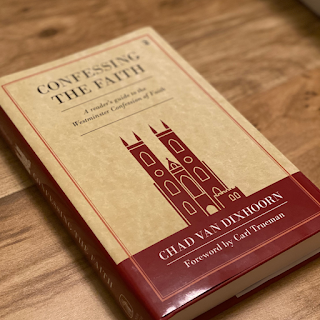
WCF Chapter One "Of Holy Scripture" Sunday School (Sept.-Oct. 2021)
Our text for Sunday School (also "The Confession of Faith and Catechisms") Biblical Theology Bites What is "Biblical Theology...
-
January 12, 2012 Update: The old link no longer works. The old link is still below but the new leak is right below the old link. Thanks to t...
-
 If you want to learn how we have gotten to where we are today, then you've landed at the right spot. These books were some of the first...
