Showing posts with label Anarchism. Show all posts
Showing posts with label Anarchism. Show all posts
Monday, October 12, 2015
Libertarianism leads to anarchy
Libertarianism leads to anarchy. When I was a libertarian anarchist, a self-described "Christian Rothbardian," I thought that was a good thing.


I caught myself being contradictory
I caught myself being contradictory, so I deleted the following sentence out of a blog-in-process:
The truth is that I do believe in government force, but only where it is legitimate.
As one high-level person in the Libertarian Party once told me, under the Libertarian Party, 90 percent of government would shrink at all levels.
That's pretty much what biblical law would do as well.
But being pro-peace means being anti-violence; and that includes violence from the state against individuals. You can't have a fully-orbed pro-peace philosophy if you are pro-violence somewhere down the line in your thinking.This means I can never be fully libertarian in the Rothbardian sense of the word.
The truth is that I do believe in government force, but only where it is legitimate.
As one high-level person in the Libertarian Party once told me, under the Libertarian Party, 90 percent of government would shrink at all levels.
That's pretty much what biblical law would do as well.
Monday, September 21, 2015
Video: Fiorina Claims She's Not Part of the "Professional Political Class"
Editor's Note: I am no longer a libertarian anarchist.
When I was, I used the Center For Stateless Society's material for my intellectual edification all of the time. This C4SS video on Carly Fiorina is very eye-opening, but it is not an endorsement of libertarian anarchism -- left or right.
The critique in the video can be maintained by any libertarian minarchist -- Christian or secular.
For one, the video shows that Hewlett-Packard was long-time beneficiary of government privileges.
HP is a part of the military-industrial complex.
Intellectual property "rights" gave HP its marketplace advantage.
If Fiorina can't point this out, how can she truly be called a "free-marketeer"?
When it comes to approving or disapproving legislation dealing with intellectual property rights, which create artificial scarcity, how will she vote? Will she veto? Will she uphold intellectual property "rights"?
 |
| Picture Courtesy of the Getty Images |
If she doesn't understand that then there is at least one area of the economy which we can't expert her to advocate freedom.
Of course, I keep all of this in context with all of her competitors and what she proposes.
But based on her foreign policy views alone, as she voiced them on the September 16, 2015 CNN debate, I couldn't support her.
She is a war hawk. Pure and simple.
Don't believe me?
Read her words from the debate here....
...and then read an analysis of them.
David Stockman, Director of Office and Budget Management under Ronald Reagan, cites Fiorina's own words from the debate and then breaks down her talking points, and then gives the real history of foreign policy that Fiorina, in all likelihood, is clueless about.
Sunday, October 20, 2013
Christopher Hitchens, my home boy, and I

"Do you have an extra copy?" I recall him asking.
I didn't. And in fact, I thought about leaving him a copy but there wasn't a Kinko's in sight on our way there.
If I remember correctly, I was the last person to have anything signed by Christopher Hitchens that night. It was getting late. Christopher had already signed tons of autographs. And I believe he had a plane to catch.
My homeboy, then a Christian, asked Christopher why he didn't believe in God?
It was one of those, "it's obvious there is a God, why don't you believe in him?"-type questions. It was very passionate.
I don't remember Christopher's response.
But my friend asked him the question as he was still sitting down. I had just stepped away after my paper was signed. Shortly after saying something, Christopher Hitchens stood up, and either he or his help had a gray wheeled luggage bag (or maybe I'm confusing his bag for the one Frank Turek possibly had). He told Christopher about his flight.
That one Christian guy who asks atheists why they don't believe
I was reminded of the entire 2009 TCNJ scene when an old white man, after the Q&A opened up, popped the first question to ask Richard Dawkins at the National Press Club a few weeks ago. Also admittedly an atheist -- at least for that night -- Sally Quinn, a long-time Washington Post reporter and editor, gave one of the worst interviews of Richard Dawkins I've ever seen.
Why do I say that?
Because she steered the conversation to make Richard Dawkins says things that he has literally said 1,000 times before in his speaking and debate circuits after the publication of his 2006 bestseller The God Delusion. We could Wiki some of his answers. This lady is a religion editor. You would have thought she would have done her homework. Maybe she did. Maybe she had done the kind of preparation for a test where the examiner doesn't question you on anything you had studied for. That would be apt, except she was the examiner. And examiner decided to test you on last month's material, which you certainly knew, but were prepared for something more recent (Does this hypothetical ever happen? lol)
Richard Dawkins was there on September 30, 2013 to discuss his new book "An Appetite for Wonder: The Making of a Scientist" (2013), the first half of his two-part memoir. The best she could have done was read excerpts from the book, and then ask him to expound on that.
"What did you mean when you said..." would have been a much more productive way of interviewing than pointing out he became an atheist in his teens (something he has said many times before) and contrasting that with her own awareness that she was an atheist at age 5. Instead, she barely asked about the book, in my view. As I see it, she was a Washington Post reporter getting an exclusive interview with Richard Dawkins and used her exclusive interview to self-servingly get some personal questions answered.
Anyway, after what I guess was a half-hour of virtually unproductive conversation, the Q&A started.
The aforementioned first questioner asked "Why don't you believe in the empirical evidence of the resurrection of Jesus Christ?"
The question brought me back to my friend who asked a similar question with the same underlying vein: "Dear atheist, why don't you see it?"
Thank you for saving me, Richard Dawkins
I respected the question. Both questions. But I must say the following time was spent on two non-questions, a question about when atheism is going to catch on (or something like that) and at least one conspiracy-deny conspiracy theorist. I'll get to the latter in a second.
But a woman explained that she was on the way to the nunnery when she picked up a copy of Richard Dawkins' classic The Selfish Gene, which was even required text for some classes at my alma mater of La Salle University. At that point, she had dropped everything, changed course of her life to one that was religious and would have been completely religious if she had become a nun, and embraced the secular life in all its wonder.
Another man, a former Muslim originally from a Middle Eastern country, explained that it was The Selfish Gene that was the text that changed his outlook on life.
Another guy, who apparently attempted to indulge in some camaraderie before posing his question by, I think, tipping his hat towards The Selfish Gene or maybe some other RD work, asked something to the effect of "What do you think about Government conspiracy?" I believe it dealt with the fact that governments lie. That is true. (I'm sure the question is on tape. That will correct the record.) But there was some brief mention of 9/11 conspiracy theories, but the way it was postulated it was like he was trying to have it both ways. Sure he was secular, maybe even thought of himself as a critical thinker, and whatever he researched in his personal time he may have indeed had some good points, but the way he asked his question was ambiguous, and one wouldn't know if he was pro-conspiracy theory or not (I, for one, think they're OK, if support by facts). Richard was puzzled. So was I.
It also reminds of the way Sally Quinn conducted her interview. Not that her questions had anything to do with conspiracy. They didn't. But I feel like she used the opportunity to ask questions so he could answer and, in effect, do the research for her.
And that's the same way I felt with the guy. Richard Dawkins, by all accounts, is a scientist, not a philosopher of religion, or a political philosopher. (He did mention he wanted to live in a world where people pay taxes, as if taxes were moral things in themselves. In that case, I wouldn't want to live a world that Richard Dawkins gets to construct.) So asking him a political question is kind of intellectually lazy on the questioners part, because it seems like all these people want them to do is give free advice or do the research for the person.
Can we finally--finally!--talk about the book?

In the end, I met Richard Dawkins for the first time. Saw a buddy -- who described himself as "not convinced" by Dawkins and somewhat of "a mystic" -- I recently met a few weeks ago there. And got two RD's signature. It was the only novel thing I got from the experience, and perhaps the only novel thing other attendees got from their experiences. It's not like they could get a novel interview when it's conducted by Sally Quinn. Not that day, at least.
I did entertain a few people waiting in line to get there book signed. And one guy, probably one of the only other black people in the crowd (whether Tea Party rallies or anti-war rallies, politically left or politically right, black people hardly are in the crowds where I do my serious reporting or blogging) recommended I buy Vincent Bugliosi's "The Divinity of Doubt: The God Question." It has been added to my Amazon Wish List.
I ordered The God Delusion a few days before, and so I didn't have the physical copy in front of him to sign. He signed my Amazon receipt instead, which I cut out and pasted into my copy of The God Delusion when it arrived in the mail days later.
The other thing I had RD sign was a printed page of the old Richard Dawkins website. There was a post on there about Richard Dawkins "fleas" (the number of response books to The God Delusion). The blue response book, picture above, is what I originally planned on posting that second RD signature into. I haven't done that yet. The Ipod Tutor: The Argument Against Richard Dawkin's The God Delusion is one of three response books I own. I also own secular Jew, agnostic, and mathematician David Berlinki's book "The Devil's Delusion: Atheism and it's Scientific Pretension's" and Christian and mathematician John Lennox's "God's Undertaker: Has Science Buried God?" I bought all three response books back in college prior to 2011. Perhaps all prior to 2010. I haven't completed one, although I did get through a good portion of Lennox's book back in college, with the highlights, and red and blue ink to show for it. I plan to read all four books soon, meaning within a year or two, starting with the Dawkin's book.
He (RD) was eminently pleasant, by the way.
"Do you want me to sign here?" he said. I was in awe and calmed by his pleasant demeanor.
Wednesday, August 29, 2012
Guy Fawkes and Us
So much for the textbook Catholic high school teaching on Guy Fawkes.
The Whiskey and Gunpowder blog has an excellent article based on its namesake that explores the Whiskey Rebellion of the 1700's and the Gunpowder Plot of the early 1600's.
The following passage really made me think of something I'd thought of before:
That's it.
And it also reminded that statism has so many different incarnations (in this case religious) that we really have to question whether it was the religions themselves or something else that was the cause of it.
I don't know. Maybe something like, you know, the human heart.
The Whiskey and Gunpowder blog has an excellent article based on its namesake that explores the Whiskey Rebellion of the 1700's and the Gunpowder Plot of the early 1600's.
The following passage really made me think of something I'd thought of before:
Anarchists and various anti-government types often appropriate a stylized simulacrum of Guy Fawkes’ face as their symbol because Guy was the one caught preparing the barrels of gunpowder. He is most closely associated with the anti-government plot in the popular imagination…
But Guy wasn’t interested in permanently or drastically reducing the reach of power of government; he merely wanted a Catholic monarch in power to persecute the Protestants, instead of the prevailing situation in which a Protestant monarch was persecuting the Catholic minority.
Guy was actually much like your garden-variety nationalist. He wanted his kind of people in power. This is not unlike the supporters of the few politicians we like — like Ron Paul.The Republican Party and the Democratic Party aren't small-government or pro-civil liberties. They just kick and scream as if they are. But really, it's just that their version of big government isn't being posed on the rest of the nation.
That's it.
And it also reminded that statism has so many different incarnations (in this case religious) that we really have to question whether it was the religions themselves or something else that was the cause of it.
I don't know. Maybe something like, you know, the human heart.
Tuesday, January 17, 2012
My Bio
My intellectual interests are New Perspective Theology (NP on Paul; NP on Jesus) and the life and teachings of Jesus in his original cultural and linguistic settings, Political Theory, the literature of John Updike, Austro-Libertarianism, Satire in the Bible, and the Christian anarchist tradition of Jacques Elul and Leo Tolstoy.
I am a member of the Ludwig Von Mises Institute and my reportorial work has been published in prominent newspapers in the Washington DC area.
Ron Paul is my homeboy!
Follow me on twitter @GoinsReport
I am a member of the Ludwig Von Mises Institute and my reportorial work has been published in prominent newspapers in the Washington DC area.
Ron Paul is my homeboy!
Follow me on twitter @GoinsReport
Friday, December 16, 2011
Jacques Ellul on not being conformed to this world
"Nevertheless, over against involved Christians, we have to avoid falling into the trap of the dominant ideology of the day. As I have noted already, the church was monarchist under the kings, imperialist under Napoleon, and republican under the Republic, and now the church (the Protestant Church at least) is becoming socialist in France. This runs contrary to the orientation of Paul, namely, that we are not to be conformed to the ideas of the present world. Here is a first area in which anarchism can form a happy counterweight to the conformist flexibility of Christians."Jacques Ellul, Anarchy and Christianity
Friday, October 7, 2011
Christian Academic: We reject the utopian delusions of no state and of an omni-competent state.
We reject the utopian delusions of no state and of an omni-competent state.Why Christians favor small goverment | The Washington Post
[Editor's note: The man never makes his case against anarchism.
Although I linked to the Jesus Radicals page, I vehemently disagree with their "Economics" sub-section under Anarchism which advocates socialism. The reason for linking to their description of anarchism is because it provides a coherent explanation of the relationship between Christianity and anarchism.
That's it.]
Monday, September 26, 2011
Making Anarchy Believable - David Gordon - Mises Daily
Chartier's book is vital reading for libertarians. It manifests the author's wide-ranging knowledge of philosophy, ethics, history, and contemporary politics.Making Anarchy Believable - David Gordon - Mises Daily
Saturday, May 14, 2011
David Boaz on What Anarchism is Not
Boaz deals with some irresponsible journalism in a recent blog post. He also defends the image of anarcho-capitalists. We should be thankful:
But disgruntled young people, lashing out at the end of an unsustainable welfare state, are not anarchists in any serious sense. They’re just angry children not ready to deal with reality. But reality has a way of happening whether you’re ready to deal with it or not.David Boaz, "Anarchist" Idiocy
Friday, April 1, 2011
Saturday, November 20, 2010
Anarchy and Christianity
Somehow I keep on finding these great product descriptions that are worth mentioning. This latest one is from the back cover of Anarchy and Christianity:
"Jacques Ellul blends politics, theology, history, and exposition in this analysis of the relationship between political anarchy and biblical faith. On the one hand, suggests Ellul, anarchists need to understand that much of their criticism of Christianity applies only to the form of religion that developed, not to biblical faith. Christians, on the other hand, need to look at the biblical texts and not reject anarchy as a political option, for it seems closest to biblical thinking."(Italics added)The notion that anarchy is closest to biblical thinking has been reiterated and expounded upon in the 2001 essay Biblical Anarchism by Stephen W. Carson. I thoroughly recommend it. In fact, one should listen to this brief 12-minute MP3 (The Biblical Prophet: He Told It Like It Is by the late Robert LeFevre) before reading the essay to get a good understanding of where Carson is coming from.
Friday, November 19, 2010
Hennacy on Anarchism
"Oh judge! Your damn laws! The good people don't need them, and the bad people don't obey them." Ammon Hennacy
Subscribe to:
Comments (Atom)
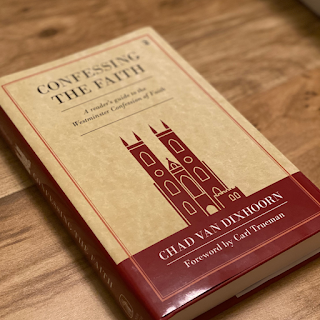
WCF Chapter One "Of Holy Scripture" Sunday School (Sept.-Oct. 2021)
Our text for Sunday School (also "The Confession of Faith and Catechisms") Biblical Theology Bites What is "Biblical Theology...
-
January 12, 2012 Update: The old link no longer works. The old link is still below but the new leak is right below the old link. Thanks to t...
-
 Our text for Sunday School (also "The Confession of Faith and Catechisms") Biblical Theology Bites What is "Biblical Theology...
