Showing posts with label Austrian Economics. Show all posts

Monday, July 12, 2021

10 Free Books for Understanding the Economy Today

If you want to learn how we have gotten to where we are today, then you've landed at the right spot. 

These books were some of the first books I ever read on economics. 

They were preceded only by "The Alpha Strategy" (My Most Visited Post! Free Download! A great book for today in these inflationary times), the Politically Incorrect Guide to Capitalism, The Gold Wars (free download), Economics in One Lesson (free download), Meltdown, End the Fed, and Crash Proof 1.0.

I gotta be honest. I read all the way up to Modern Money Mechanics and didn't finish the rest of the list. But even half the books below and the books above will give you a working economic knowledge for life. 

Any citizen will be an economically literate citizen even if he or she reads only half of these books.

These economics books are free for downloading. Read them in this order.

Gary North, Inherit the Earth

Gary North, Honest Money

Murray Rothbard, What Has Government Done to Our Money?

Gary North, Mises on Money

Murray Rothbard, The Case Against the Fed

Murray Rothbard, The Mystery of Banking

Federal Reserve Bank of Chicago, Modern Money Mechanics

Gene Callahan, Economics for Real People

Robert P. Murphy, Lessons for the Young Economist

Murray Rothbard, Man, Economy, and State; Robert P. Murphy, Study Guide for Man, Economy, and State

Source: Ten Free Economics Books for Understanding What Is Going On Today | Specific Answers 

I hope you enjoy the books! 

Next up will be books that will help you become a functional Christian.

Wednesday, October 28, 2015

Good read: There’s More to Money than Hyperinflation

Picture Taken from the Mises Institute's Instagram

The thing is, we don’t need Weimar-style money printing to redistribute wealth and encourage bubbles: even small credit expansions produce inequalities and malinvestments, whether hyperinflation eventually happens or not. Mises and other Austrians have been arguing this point for decades.
The problems run deeper than the threat of total disaster. In fact, that’s the whole point: if bad monetary policies always produced immediate catastrophe, people would long ago have seen the failings of central banks and done something to replace them. But because the distortions caused by monetary expansion seep slowly and discontinuously through the economy, their true origins remain unseen, even when the bubbles they create become obvious to the world.

There’s More to Money than Hyperinflation || Mises Institute 

Monday, September 28, 2015

Audio: What Really Causes Global Depressions?

Austrian this, Keynesian that. Why should one embrace one over the other?

Kevin Swanson doesn't get into that, but he does say that our practical atheism is the reason why America is doing so badly nowadays.

Listen below.


It's true that Austrian economics is more in line with the biblical worldview, but what authority do Austrian economists stand on?

Mises and Rothbard.

In other words, men.

In the same vein, we have also embraced man's erroneous views of laws and economics -- that is why we will be in a depression.

Friday, May 1, 2015

Put the economic crisis in perspective


Put the economic crisis in perspective:

The government has been using stimulus to thwart a recession since I was 13.

I'm 27 now. They've been pushing off a recession for over half of my lifetime.


By pushing off the recession with stimulus, they make the inevitable correction even worse.

What if we had one bad recession in 2001 and then that was it? What if we all had to toughen it out for one bad year when the economy was much stronger?

What happens now that the crisis is still forthcoming and people don't have the incomes and savings to brace for it?

Imagine if all of the people who went to college from 2001 to 2015 -- including myself -- had to make decisions to go to school based upon real price sensitivity, based upon what they could actually afford, versus enrolling in federal student loan programs? How financial freer would those people be?

The solution is to drastically cut spending, preferably Ron Paul 2012 presidential platform style by $1 trillion, end local, state, and federal bureaucracies, drastically lower taxes (no regressive flat tax, conservatives), and end the American Empire overseas and at home. Oh, and of course, End the Fed.

There's also other things that could be done but that's for another blog post. But for starters, we could legalize capitalism.

Saturday, April 25, 2015

15 years of Economic Policy: What do we have to show for it?

In a recent article, David Stockman sets up the American Economic Scene since 2000 quickly:

Indeed, during that span we have encompassed several business cycles, two financial crises/meltdowns and nearly a non-stop blitz of “extraordinary” policy interventions. To wit, a $700 billion TARP, an $800 billion fiscal stimulus, upwards of $4.0 trillion of money printing and 165 months out of 180 months in which interests rates were being cut or held at rock bottom levels.

You’d think with all that help from Washington that American capitalism would be booming with prosperity. No it’s not. On the measures which count when it comes to sustainable growth and real wealth creation, the trends are slipping backwards—– not leaping higher.

The kinds of breadwinner jobs that we need the most -- those that provide the most productivity and output -- are slipping behind. He explains:

Moreover, within the 70 million breadwinner jobs category, the highest paying jobs which add the most to national productivity and growth——goods production—-have slipped backwards even more dramatically. As shown below, there were actually 21% fewer payroll jobs in manufacturing, construction and mining/energy production reported last Friday than existed in early 2000.

Takeaways:

  • Non financial business productivity has grown 1.1 percent annually since the 2007 peak. 
  • This is only half of the productivity from 1953 until 2000.
  • So despite 15 years of stimulus there is little to show for it.
  • During the Eisenhower years, which saw balanced budgets, this growth rate was two and one half times what it is now.
  • The number breadwinners jobs in the economy is still 2 million lower than it was in 2000.
  • Breadwinner jobs are defined as "construction, white collar, manufacturing, FIRE, transport, information, trade."
  • Breadwinner jobs are jobs that pay around $50K. 
  • There are about 70 million of these breadwinner jobs.
  • $50K is enough to support a household without government assistance.
  • Editor's Commentary: I make much less than $50K. While I am not on government assistance, I am on parental assistance.
  • The part-time economy -- $14/hour or $20K/year jobs -- is booming.
  • This is the second part-time job boom of this century.
  • This means that all of the job growth that occurred in the first boom -- the Bush II years -- were also part-time jobs. 
  • The top 10% of income earners account for 40% of the spending in an economy.
  • We are in the middle of the third financial bubble of this century.
  • This bubble will pop too.
  • The part-time jobs that were created as a result of wealthy people spending more will vanish in the next bust.
  • As Stockman puts it, "On a net basis, the only jobs created during this entire century are in the HES Complex (health, education and social services)."
  • But why? Well, again, as Stockman puts it, "they are a function of the entitlement state and the massive $200 billion per year of tax subsidies which support employer-funded health benefits."
There's more information that I did not summarize. See the rest by clicking the link below.


Wednesday, April 15, 2015

David Klinghoffer quotes my work in Evolution News and Views

This is so cool. David Klinghoffer, a writer who I look up to and is a guide for me in the vast area of physical science, quotes me extensively in a recent article of his on the Discovery Institute's "Evolution News and Views" website, which I am subscribed to via RSS feed.

Thursday, March 12, 2015

Tuesday, March 3, 2015

How to Prepare for the Coming Economic Crisis or the Next Great Depression

Via David Stockman's Contra Corner:

David Stockman, architect of President Reagan’s economic turnaround known as ‘Morning in America’, warns of the looming collapse of free market prosperity and the destruction of American wealth. Plus: Emergency actions viewers can take now to protect themselves from the crisis.

As I've said previously, the recession is not over. In 2011, I remember posting an article on Facebook from Lew Rockwell talking about America entering another great depression.  It drew the ire of skeptics.

In fact, my motivation for starting The Goins Report in 2009 was precisely because I began to understand free-market economics, and I knew that the president's stimulus plan, and all other forms of violent economic intervention into the markets, was not going to save us...period.

My friends very incorrectly even thought I was a George Bush supporter because I came of age intellectually at the end of 2008 and opposed Obama's policies from the beginning. But if I had come of age a year earlier, or two years earlier, I would have been just as vocal about George W. Bush.

So I went on the intellectual warpath and began to warn friends about the intrinsic shortcomings of government economic policy.

And I proceeded to prepare myself for the downturns and dollar crises that I thought would come.

But now I want to share a link with you to help you, while there is still time.

Since 2010, I have had a page with links to movies that warned that the economic crisis is not over.

Since 2009, I have provided a free-book warning on how to protect yourself from the Federal Reserve's disastrous inflationary policies. In fact, it is my most visited blog post with over 1,000 hits.

Time and again, the true free-markets economists have warned that the current economy "recovery" is no recovery at all. While I can not say when, or where, or what will cause the next economic bubble to pop -- and indeed no good free-market economist tries -- I know that the ball is up in the air, and it is being continuously hit upwards by government and central bank policies. But every volley ball game has to end. The ball must come down eventually.

But it doesn't have to come down on you or your side of the court.

You can be on the winning team.

"The prudent sees danger and hides himself, but the simple go on and suffer for it." Proverbs 22:3 (ESV)

That is the Bible's wisdom for our day.

Don't be simple; be prudent. Watch the video.  Download this free book. Prepare.

Saturday, February 21, 2015

Video: Ron Paul gives trenchant foreign policy analysis in "The State of Liberty 2015"


If you are short on time, begin at the 30-minute mark. Dr. Paul gives an excellent analysis of foreign policy.

Near the beginning, he also touches on Ferguson and police militarization and police culture.

Does the Federal Reserve cause booms and busts?


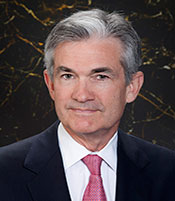
I recently asked Federal Reserve Governor Jerome H. Powell what he would say to the critics of the Federal Reserve who say that the Fed is the cause of the boom and bust cycle.  I figured that any answer would do.  This was his response:
The question was do we cause booms. I guess I would really look at that question this way: What would life be like without the Fed. In other words, I wouldn’t expect perfection from of any government organization, or of any organization of any kind.

So the fed will never get things perfect and the fed has made mistakes. Right? We allowed inflation to get out of control in the 70s. Policy improves over time, we hope. Exogenous events happen and they make fools of everybody and then they’ll make geniuses out of everybody. So don’t expect perfection. But over time it has made sense – I think the Fed has done a good and improving job in keeping inflation low now for more than 30 years, and essentially having pretty good results.

Now are you going to point – now you ought to be pointing at the financial crisis and say “how did that work out?” The financial crisis is not something that -- any government agency that had a responsibility for the economy can feel really good about. So mistakes get made.

But I guess the question I would ask back is what would life be life with no – if you look back pre-fed, there were very severe depressions—depressions that looked a lot more like the Great Depression.
In this depression (sic), output went down 4%. In the Great Depression, output went down 25%. That kind of thing happened a lot in the 19th century. You had these hard stops of credit. The banking system would fail. There would be a run on the banks. JP Morgan personally would come in and get his friends together and bail out the system.

But – so the judgment was finally made to create a central bank. There is no advanced economy in the world that doesn’t have a central bank that does pretty much the same thing the Fed does. No one has run an experiment in a very long time of not having a central bank. Don’t really think that’s a way to go.

Tuesday, May 15, 2012

VIDEO: The Truth Behind the Unemployment Numbers + Stimulus vs Austerity


Main Points:
"This is the weakest recovery on record, despite the most amount of stimulus ever applied.

Instead of coming to the logical conclusion that the stimulus isn't working, they instead conclude that it's just not enough."

Saturday, March 3, 2012

Reporter rejects GOP nominees because of world we don't actually live in--A world where GOP worships Rothbard

Last time I checked, most Republicans couldn't name an Austrian economist. So I have a hard time believing the GOP candidates are worshipping at the Temple of Rothbard, Mises, and Hayek.

From the National Catholic Reporter:
So, no, I can’t see myself voting for a Republican candidate anytime soon. Their party seems completely unalert to the vision of Catholic social teaching and such core concepts as the common good and solidarity. Their stances on particular issues like Iran are frightening. Their reading of history is tendentious. Their worship at the temple of the Austrian economists too thorough-going. Obama may no longer be my candidate, but the GOP is not my party either.
No, I'm Not Becoming a Republican || National Catholic Reporter

Monday, February 20, 2012

Ron Paul: 'I am the only one who predicted the economic meltdown'


(GoinsReport.com) -- While issuing a response to the Congressional Budget Office's latest report, Rep. Ron Paul (R-Texas) also took time to tout his clairvoyance on the economic crisis.

"Of the five men seeking the presidency in the major parties – President Obama, Governor Romney, Speaker Gingrich, Senator Santorum, and myself – I am the only one who predicted the economic meltdown," Paul said.

He continued: "and the only one who has proposed a serious plan to balance the budget, reduce taxes, and create jobs."

On the House Floor on September 6, 2001, Ron Paul, speaking on the expansion of credit into the housing market, said the following: "Instead of the newly inflated money being directed toward the stock market, it now finds its way into the rapidly expanding real-estate bubble."

"This, too, will burst as all bubbles do," Paul continued. "The Fed, the Congress, or even foreign investors can't prevent the collapse of this bubble, any more than the incestuous Japanese banks were able to keep the Japanese "miracle" of the 1980s going forever."

In mid-2006, the Federal Reserve began raising interest rates to discourage inflation. By first quarter 2007, subprime foreclosures were becoming more frequent. The housing bubble had burst.

To read the rest of Ron Paul's speech, "The US Dollar and the World Economy," given on the House floor, click here.

Read the rest of the statement on the CBO report here.

Tuesday, January 17, 2012

My Bio

My intellectual interests are New Perspective Theology (NP on Paul; NP on Jesus) and the life and teachings of Jesus in his original cultural and linguistic settings, Political Theory, the literature of John Updike, Austro-Libertarianism, Satire in the Bible, and the Christian anarchist tradition of Jacques Elul and Leo Tolstoy.

I am a member of the Ludwig Von Mises Institute and my reportorial work has been published in prominent newspapers in the Washington DC area.

Ron Paul is my homeboy!

Follow me on twitter @GoinsReport

Tuesday, September 6, 2011

Self-Education: Graduate-Level Economics Education

For the most part, it's dirt cheap.

Graduate-Level Economics Education
Mises: Human Action
Rothbard: Man, Economy, & State
Rothbard: History of Money & Banking in the U.S.
Rothbard: History of Economic Thought
Rothbard: Mystery of Banking
Hazlitt: Failure of the "New Economics"
Hayek: Constitution of Liberty
Kirzner: Market Theory & the Price System
Kirzner: Capitalism & Entrepreneurship
Kirzner: Perception, Opportunity, & Profit
Kirzner: The Meaning of Market Process
Bauer: Dissent on Development
McCloskey: The Bourgeois Era (first 2 volumes)
Ropke: Economics of the Free Society
Many books can be found at the Mises Store.

Monday, June 20, 2011

The Chicago School versus the Austrian School - Robert P. Murphy - Mises Daily

The Austrians are oddballs among professional economists for their focus on methodological issues in the first place. Indeed, Mises's magnum opus, Human Action, devotes the entire second chapter (41 pages) to "The Epistemological Problems of the Sciences of Human Action." There was no such treatment in the last Freakonomics book.

Although most economists in the 20th century and our time would disagree strongly, Mises insisted that economic theory itself was an a priori discipline.

The Chicago School versus the Austrian School - Robert P. Murphy - Mises Daily

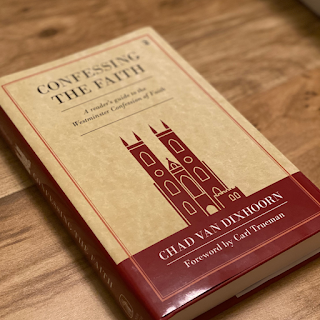
WCF Chapter One "Of Holy Scripture" Sunday School (Sept.-Oct. 2021)

Our text for Sunday School (also "The Confession of Faith and Catechisms") Biblical Theology Bites What is "Biblical Theology...