Showing posts with label Chrestomathy. Show all posts

Monday, September 20, 2021

Peter Leithart on V-Mandate Resistance


 "
To submit to a vaccine mandate is implicitly to endorse a political order that is willing to make participation in everyday life contingent on an unwanted medical procedure." -Peter Leithart

In the rest of the commentary, he notes that his individual resistance is a measure to thwart biopolitical technocracy. He explains:

"I oppose vaccine mandates because I want to do my small part to gum up the works. I don’t mean the works of the Biden administration, but the much larger global trend toward biopolitical technocracy. As Roberto Esposito put it in Biopolitics, political authority was traditionally the authority to kill. Under the reign of biopolitics, rulers care for and manage life. Once upon a time, the ruler bore a sword; now, a syringe."

So in other words, "biopolitical technocracy" is a kind of ideology and government type that should be opposed. 

It should be opposed as fervently as one opposes fascism, or socialism, or American exceptionalism (especially the kind that wants to impose the American order on the rest of the world by bombs and bullets), or neoconservatism (and this only wants to impose the American order on the rest of the world by bombs and bullets).

Remember folks, Jesus is King so the State is not.

Read the rest here: Why I Didn't Get the COVID Vaccine | Peter Leithart

Tuesday, August 16, 2016

If your son dies in a war are you beyond reproach? Thomas Woods answers

And no, you are not morally beyond reproach because your son died in war." ~Thomas Woods

Taken from his August 16, 2016 email. Here's the link.

Here's the full context:

Tonight I was taking a glance at my Facebook feed, and I saw Thaddeus Russell had posted something I'd missed.

Remember Khizr Khan, the Muslim man who spoke at the Democratic Convention and whose son died in the Iraq war?

At the time, I remember finding him utterly odious. For the life of me I could not understand people who defended this man.

He exploits the memory of his fallen son on behalf of the Democratic Party, and on behalf of a woman who helped send his son into that ludicrous war?

He urges his son to fight an idiotic -- not to mention grotesquely unjust -- war against a Muslim population, and all the pro-Muslim people flock to him?

Insanity.

If I were ever to exploit the memory of one of my own children on behalf of the Democratic Party, I sure hope everyone reading this would punch me in the face.

If I'd had a chance to speak before the Democratic Party, I would have strayed from my prepared script and appealed to the Bernie supporters in the room by denouncing Hillary and her war.

At any rate, Thaddeus posted a news item I'd missed: Khan's hero is -- wait for it -- John McCain.

I knew my instincts were right about this guy.

"Senator McCain -- he's my hero," Khan told CNN in an interview. "The last book my son read that I sent him was Senator McCain's book about courage: Why Courage Matters. So for me to hear Donald Trump malign my hero -- my son's hero -- it is just mind-boggling."

Senator McCain, who never saw a war he didn't like, and whose foreign policy has spread radical Islam all over the place and caused untold human suffering, is Khan's hero.

Not a good guy.

And no, you are not morally beyond reproach because your son died in war. If anything, Khan is all the more to be condemned for cheering on such a morally depraved course of action.

On this, I can't and won't budge.

Now that that's off my chest: tomorrow on the show I'm discussing the myth of the success of Nordic socialism.

Tuesday, August 2, 2016

The similarity between the youth of today and the youth of Ancient Israel

"The young do not know that they have lost their country because they are born into a time when the country is lost. To them that is normalcy." ~Paul Craig Roberts, "America Destroyed."

This is similar to the young people in ancient Israel when the temple was rebuilt. The newer temple was nothing like the old temple. The older people were at least disappointed, if not outright sobbing. I can't quite remember the reaction of the young people. I am going by my recollection of the biblical stories here.

Tuesday, February 16, 2016

J. Gresham Machen: The True Christian Church is 'Radically Ethical'

In the third place, a true Christian church will be radically ethical...it will be ethical in the sense that it will cherish the hope of true goodness in the other world, and that even here and now it will exhibit the beginnings of a new life which is the gift of God.
That new life will express itself in love. Love will overflow, without questions, without calculation, to all men whether they be Christians or not; but it will be far too intense a passion ever to be satisfied with mere philanthropy. It will offer men simple benefits; it will never pass coldly by on the other side when a man is in bodily need. But it will never be content to satisfy men's bodily needs; it will never seek to make men content with creature comforts or with the coldness of a vague natural religion. Rather will it seek to bring all men everywhere, without exception, high and low, rich and poor, learned and ignorant, compatriot and alien, into the full warmth and joy of the household of faith.
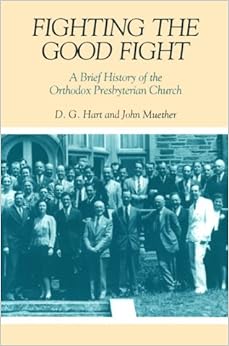
J. Gresham Machen, "The Responsibility of the Church in Our New Age," found in Fighting the Good Fight: A Brief History of the Orthodox Presbyterian Church 

Wednesday, November 4, 2015

The insufficiency of Sunday-only worship and schooling

In his "State of the Church 2014" sermon, Douglas Wilson said "If you have sermonettes, you will have Christianettes." That is, if all you are getting is a 20 minute sermon a week, 20+ minutes of worship, you aren't really becoming a Christian. You're becoming a "Christianette."


In the same sermon, he praised his church for being people who strive to be bible people -- a congregation that knows their bible. It's pleasing to a pastor when a pastor can dig deeper into the scriptures, Wilson said, rather than going over the elementary parts of the faith all over again.

It's a great point.

Back in 2010, Gary Demar noted something similar. He noted that humanists are happy that many Christians are only spending just a little bit of time in church and more time in secular public schools.

He starts off the article like this:
Many Christians claim a form of factual neutrality where some subjects (e.g., science, medicine, technology, geography, politics, mathematics) can be taught without any regard to religious presuppositions since “facts speak for themselves.” This is most evident in education where a self-conscious sacred-secular divide is maintained and supported by Christians. Ninety percent of Christian parents send their children to government schools. Since these parents believe that math is math and history is history, the religious stuff can be made up at church. But one hour of Sunday school and an hour at Youth Meeting each week and maybe a mission trip in the summer can’t make up for five days a week, six hours each day, 10 months of the year, 12+ years of a government-developed curriculum that is humanistic to the core.
He then quotes a humanist publication from the 1930s to drive home the point. Demar writes:
The humanists understand the importance of education in creating worldview shifts and control, so why don’t Christians? Charles Francis Potter, who founded the First Humanist Society of New York in 1929 and signed the first Humanist Manifesto in 1933, made no secret of the purpose of the American public schools:
Education is thus a most powerful ally of Humanism, and every American public school is a school of Humanism. What can the theistic Sunday-school, meeting for an hour once a week, and teaching only a fraction of the children, do to stem the tide of a five-day program of humanistic teaching.


Monday, October 12, 2015

C.S. Lewis on Effort

Tweet taken from Bible Gateway's C.S. Lewis Daily Devotional.


Tuesday, September 22, 2015

Kevin DeYoung's Wisdom

Don’t settle for a superficial understanding. Read the primary sources. Get to know dead writers. Learn from them, and be honest about the mistakes and blind spots of your own tradition. ~Kevin DeYoung, The Neo-Anabaptists

Thursday, September 17, 2015

K. Scott Oliphint on The Goal of Apologetics

Two things I enjoy about Dr. K. Scott Oliphint are his clarity in defending the Christian faith and his ability to refine his terms. The professor at Westminster Theological Seminary in Philadelphia made the following statements over the years.

"I have no interest of making theists of people because theists go where atheists go." ~Dr. K. Scott Oliphint in his discussion with Richard G. Howe and Jason Lisle on apologetic systems.

"When you are defending the Christian faith, you must defend the Christian faith. You are not simply defending some kind of generic theism." ~Dr. K. Scott Oliphint in his sermon Apologetics in Action: Acts 17:16-34

"The goal of a defense of Christianity is not to win the argument.  It's not an intellectual exercise so that we can show we someone we're smarter than they are. That's not what Paul is doing. The goal is the proclamation of the truth of God and of the Lord Jesus Christ in apologetics." ~Dr. K. Scott Oliphint in his sermon Apologetics in Action: Acts 17:16-34

Friday, September 11, 2015

Martin Luther King Jr: The Church as the Conscience of the State


“The church must be reminded that it is not the master or the servant of the state but rather the conscience of the state. It must be the guide and the critic of the state and never its tool. If the church does not recapture its prophetic zeal it will become an irrelevant social club without moral or spiritual authority.” ~Dr. Martin Luther King

Tuesday, July 14, 2015

H.L. Mencken on True Patriotism

"The notion that a radical is one who hates his country is naïve and usually idiotic. He is, more likely, one who likes his country more than the rest of us, and is thus more disturbed than the rest of us when he sees it debauched. He is not a bad citizen turning to crime; he is a good citizen driven to despair." - H. L. Mencken

Tuesday, June 30, 2015

T.S. Eliot Chrestomathy: On Poetry and Poets Edition

T.S. Eliot's On Poetry and Poets is turning out to be a very insightful book. I put together a list of really insightful passages from the first chapter, "The Social Function of Poetry,"  for your edification.


T.S. Eliot on the decline of religious sensibility

"Much has been said everywhere about the decline of religious belief; not so much notice has been taken of the decline of religious sensibility. The trouble of the modern age is not merely the inability to believe certain things about God and man which our forefathers believed, but the inability to feel towards God and man as they did."

"The Social Function of Poetry" in On Poetry and Poets by T.S. Eliot

I can relate to what T.S. Eliot said about foreign languages

"But I have also found sometimes that a piece of poetry, which I could not translate, containing many words unfamiliar to me, and sentences which I could not construe, conveyed something immediate and vivid, which was unique, different from anything in English -- something which I could not put into words and yet felt that I understood. And on learning that language I found that this impression was not an illusion, not something which I had imagined to be in the poetry, but something that was really there.  So in poetry you can, now and then, penetrate into another country, so to speak, before your passport has been issued or your ticket taken."

"The Social Function of Poetry" in On Poetry and Poets by T.S. Eliot

T.S. Eliot on the Greatest Poets' Influence of Language

"A poet like Shakespeare has influenced the English language very deeply, not only by his influence on his immediate successors. For the greatest poets have aspects which do not come to light at once; and by exercising a direct influence on other poets centuries later, they continue to affect the living language. Indeed, if an English poet is to learn how to use words in our time, he must devote close study to those who have used them best in their time; to those who, in their own day, have made the language new."

"The Social Function of Poetry" in On Poetry and Poets by T.S. Eliot

T.S. Eliot on Poets Having Small Audiences

"It matters little whether a poet had a large audience in his own time. What matters is that there should always be at least a small audience for him in every generation. Yet what I have just said suggests that his importance is for his own time, or that dead poets cease to be of any use to us unless we have living poets as well. I would even press my first point and say that if a poet gets a large audience very quickly, that is a rather suspicious circumstance: for it leads us to fear that he is not really doing anything new, that he is only giving people what they are already used to, and therefore what they have already had from the poets of the previous generation. But that a poet should have the right, small audience in his own time is important. There should always be a small vanguard of people, appreciative of poetry, who are independent and somewhat in advance of their time or ready to assimilate poetry more quickly."

"The Social Function of Poetry" in On Poetry and Poets by T.S. Eliot

T.S. Eliot on Great Poets

"And when a civilization is healthy, the great poet will have something to say to his fellow countrymen at every level of education."

"The Social Function of Poetry" in On Poetry and Poets by T.S. Eliot

T.S. Eliot on Emotion and Feeling in Poetry

"Emotion and feeling, then, are best expressed in the common language of the people -- that is, in the language common to all classes: the structure, the rhythm, the sound, the idiom of a language, express the personality of the people which speaks it."

"The Social Function of Poetry" in On Poetry and Poets by T.S. Eliot

T.S. Eliot: "no art is more stubbornly national than poetry"

"That poetry is much more local than prose can be seen in the history of European languages. Through the Middle Ages to within a few hundred years ago Latin remained the language for philosophy, theology, and science. The impulse towards the literary use of the languages of the peoples began with poetry. And this appears perfectly natural when we realize that poetry has primarily to do with the expression of feeling and emotion; and that feeling and emotion are particular, whereas thought is general. It is easier to think in a foreign language than it is to feel in it. Therefore no art is more stubbornly national than poetry. A people may have its language taken away from it, suppressed, and another language compelled upon the schools; but unless you teach that people to feel in a new language, you have not eradicated the old one, and it will reappear in poetry, which is the vehicle of feeling."

"The Social Function of Poetry" in On Poetry and Poets by T.S. Eliot

T.S. Eliot: Every people should have its own poetry

"For I think it is important that every people should have its own poetry, not simply for those who enjoy poetry -- such people could always learn other languages and enjoy their poetry -- but because it actually makes a difference to the society as a whole, and that means to people who do not enjoy poetry. I include even those who do not know the names of their own national poets. That is the real subject of this paper."

"The Social Function of Poetry" in On Poetry and Poets by T.S. Eliot

T.S. Eliot on What Poets Have to Give Besides Pleasure

"I suppose it will be agreed that every good poet, whether he be a great poet or not, has something to give us besides pleasure: for if it were only pleasure, the pleasure itself could not be of the highest kind. Beyond any specific intention which poetry may have, such as I have already instanced in the various kinds of poetry, there is always the communication of some new experience, or some fresh understanding of the familiar, or the expression of something we have experienced but have no words for, which enlarges our consciousness or refines our sensibility."

"The Social Function of Poetry" in On Poetry and Poets by T.S. Eliot

WCF Chapter One "Of Holy Scripture" Sunday School (Sept.-Oct. 2021)

Our text for Sunday School (also "The Confession of Faith and Catechisms") Biblical Theology Bites What is "Biblical Theology...