"Many things—such as loving, going to sleep, or behaving unaffectedly—are done worst when we try hardest to do them."~C.S. Lewis
— Christopher Goins (@GoinsReport) October 13, 2015
Showing posts with label C.S. Lewis. Show all posts
Showing posts with label C.S. Lewis. Show all posts
Monday, October 12, 2015
C.S. Lewis on Effort
Tweet taken from Bible Gateway's C.S. Lewis Daily Devotional.


Saturday, January 11, 2014
On the apologetic abilities of ex-believers
“Bart Ehrman’s career is testament to the fact that no one can slice and dice a belief system more surgically than someone who grew up inside it.” —Salon.com via New Testament scholar Bart Ehrman's old website.
There is a lot of truth to this maxim; but its applicability, as it suggests, extends far beyond just ex-Christians like Ehrman. It even extends beyond religion.

Thomas Sowell, for example, was a marxist that didn't come around to free-markets until he saw his god, his economic religious system, his beliefs he was immersed in, fail. This happened while he was interning for the U.S. federal government in the Department of Labor (I think).
He now is, as he has been for decades, dismantling the left-wing worldview in his weekly columns and books.
American humorist P.J. O' Rourke was also a man of the left, until he got a job, he's quipped a few times.
Christopher Hitchens, whom I will mention again below, was once a committed Trotskyist and socialist in the 1970s and 80s and later came to embrace, well, something.
It's not clear that he is writing approvingly, but in the foreword to Choice: The Best of Reason, Hitchens writes:
Ex-Christians turned atheists, Ex-atheists turned Christians
There are also many ex-atheists who spend much of their life dedicated to sharing the gospel of Jesus and God's coming kingdom to unbelievers. C.S. Lewis, whom I've never actually read yet, except for that liar, lunatic, or Lord line,* comes to mind (I don't think that's too much of a simplification of my past).
Lewis, went on to write many books defending Christianity, such as Mere Christianity, and creatively shared the Christian worldview in his works of fiction, the most notable probably being the Chronicles of Narnia series. (I hear the space trilogy series is pretty good too.)

Some less prominent examples such as David Wood and former Ex-Atheist.com proprietor A.S.A. Jones; others include Peter Hitchens, Alister McGrath, Francis Collins, John Harwick Montgomery, Marvin Olasky, and novelist A.N. Wilson.

Heck, even the late philosopher Antony Flew, who did not become a Christian his last years, became a deist (his words), and put out a book about how he believes in God, albeit a sort of "Aristotelean god."
Richard Dawkins and the late Christopher Hitchens and are on the opposite end of the spectrum. Dawkins admitted to losing his "last vestiges of religious faith" (if I can recall that correctly from The God Delusion Debate DVD with John Lennox) in his teenage years; Hitchens, in his adolescence (around 9).

Dawkins was actually very explicit about why he believed as a young Christian. Via Wikipedia:
In other words, he spent his career "surgically" explaining away design -- the very thing he used to believe in.
[Editor's Update January 13, 2013 7:30 PM] It's somewhat of a genetic fallacy to say that because someone is an ex-believer in some religious belief or some economic philosophy, such as those mentioned above, that their new beliefs are true. However, the fact that they did leave one faith and now believe in something else should raise some eyebrows.
*I know Lewis is not actually quoted in that link. However, I decided to link to perhaps one of the first websites that introduced that line of argument to me; The Case For Christ DVD possibly being the other source for me.
Wikipedia has the quote in it's entirety and actually much to say about it from many sides.
[1] Gillespie, Nick. "Foreword." Foreword. Choice: The Best of Reason. Dallas: BenBella, 2004. 4.
There is a lot of truth to this maxim; but its applicability, as it suggests, extends far beyond just ex-Christians like Ehrman. It even extends beyond religion.
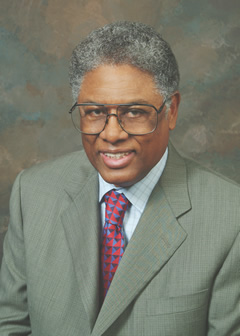
Thomas Sowell, for example, was a marxist that didn't come around to free-markets until he saw his god, his economic religious system, his beliefs he was immersed in, fail. This happened while he was interning for the U.S. federal government in the Department of Labor (I think).
He now is, as he has been for decades, dismantling the left-wing worldview in his weekly columns and books.
American humorist P.J. O' Rourke was also a man of the left, until he got a job, he's quipped a few times.
Christopher Hitchens, whom I will mention again below, was once a committed Trotskyist and socialist in the 1970s and 80s and later came to embrace, well, something.
It's not clear that he is writing approvingly, but in the foreword to Choice: The Best of Reason, Hitchens writes:
But the subsequent industrial and technological revolutions have displaced a good deal of power and initiative away from states and corporations--and the unspoken alliance between them--and toward the individual worker and producer. More than this, they have greatly attenuated the frontiers of states and nations and made it easier to be an everyday "internationalist" than many once-leftist parties would have believed possible. [1]At the very bottom, this is a major admission of the success of capitalism from a former socialist.
Ex-Christians turned atheists, Ex-atheists turned Christians
There are also many ex-atheists who spend much of their life dedicated to sharing the gospel of Jesus and God's coming kingdom to unbelievers. C.S. Lewis, whom I've never actually read yet, except for that liar, lunatic, or Lord line,* comes to mind (I don't think that's too much of a simplification of my past).
Lewis, went on to write many books defending Christianity, such as Mere Christianity, and creatively shared the Christian worldview in his works of fiction, the most notable probably being the Chronicles of Narnia series. (I hear the space trilogy series is pretty good too.)

Some less prominent examples such as David Wood and former Ex-Atheist.com proprietor A.S.A. Jones; others include Peter Hitchens, Alister McGrath, Francis Collins, John Harwick Montgomery, Marvin Olasky, and novelist A.N. Wilson.
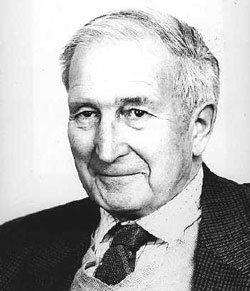
Heck, even the late philosopher Antony Flew, who did not become a Christian his last years, became a deist (his words), and put out a book about how he believes in God, albeit a sort of "Aristotelean god."
Richard Dawkins and the late Christopher Hitchens and are on the opposite end of the spectrum. Dawkins admitted to losing his "last vestiges of religious faith" (if I can recall that correctly from The God Delusion Debate DVD with John Lennox) in his teenage years; Hitchens, in his adolescence (around 9).

Dawkins was actually very explicit about why he believed as a young Christian. Via Wikipedia:
"the main residual reason why I was religious was from being so impressed with the complexity of life and feeling that it had to have a designer, and I think it was when I realised that Darwinism was a far superior explanation that pulled the rug out from under the argument of design. And that left me with nothing."And then, he spends his entire life not striding against religion -- no, that came in recent years -- but in the scientific field explaining the Darwinian origins of life; fleshing out that theory, defending that theory, and re-telling the gospel of Darwin for each generation anew with such works as The Selfish Gene (1976), The Extended Phenotype (1982), The Blind Watchmaker: Why The Evidence of Evolution Reveals A Universe Without Design (1986), River Out of Eden, (1995) Climbing Mount Improbable (1996), Unweaving the Rainbow (1998), The Ancestor's Tale (2004), The Greatest Show on Earth: The Evidence for Evolution (2009), and The Magic of Reality: How We Know What's Really True (2011), never letting the gospel get stale.
In other words, he spent his career "surgically" explaining away design -- the very thing he used to believe in.
And if you were wondering why I described Dawkin's work as gospel, it's because I just saw the video below. N.T. Wright, in his own right, is a master at explaining the gospel to new generations of Christians. Pick up his "For Everyone" series to see what I mean.
*I know Lewis is not actually quoted in that link. However, I decided to link to perhaps one of the first websites that introduced that line of argument to me; The Case For Christ DVD possibly being the other source for me.
Wikipedia has the quote in it's entirety and actually much to say about it from many sides.
[1] Gillespie, Nick. "Foreword." Foreword. Choice: The Best of Reason. Dallas: BenBella, 2004. 4.
Tuesday, March 29, 2011
C.S. Lewis on the Worst Kind of Tyranny
C.S. Lewis on the worst kind of tyranny:
Of all tyrannies, a tyranny sincerely exercised for the good of its victims may be the most oppressive. It would be better to live under robber barons than under omnipotent moral busybodies. The robber baron's cruelty may sometimes sleep, his cupidity may at some point be satiated; but those who torment us for our own good will torment us without end for they do so with the approval of their own conscience.Taken from Thomas Sowell's Favorite Quotations
Subscribe to:
Comments (Atom)
WCF Chapter One "Of Holy Scripture" Sunday School (Sept.-Oct. 2021)
Our text for Sunday School (also "The Confession of Faith and Catechisms") Biblical Theology Bites What is "Biblical Theology...

-
January 12, 2012 Update: The old link no longer works. The old link is still below but the new leak is right below the old link. Thanks to t...
-
 Our text for Sunday School (also "The Confession of Faith and Catechisms") Biblical Theology Bites What is "Biblical Theology...
