Showing posts with label richard dawkins. Show all posts

Saturday, January 11, 2014

On the apologetic abilities of ex-believers

“Bart Ehrman’s career is testament to the fact that no one can slice and dice a belief system more surgically than someone who grew up inside it.” —Salon.com via New Testament scholar Bart Ehrman's old website.

There is a lot of truth to this maxim; but its applicability, as it suggests, extends far beyond just ex-Christians like Ehrman. It even extends beyond religion.
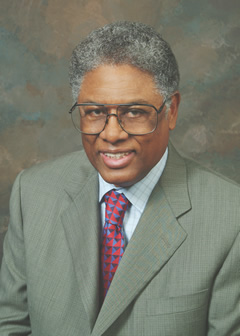


Thomas Sowell, for example, was a marxist that didn't come around to free-markets until he saw his god, his economic religious system, his beliefs he was immersed in, fail. This happened while he was interning for the U.S. federal government in the Department of Labor (I think).

He now is, as he has been for decades, dismantling the left-wing worldview in his weekly columns and books.

American humorist P.J. O' Rourke was also a man of the left, until he got a job, he's quipped a few times.

Christopher Hitchens, whom I will mention again below, was once a committed Trotskyist and socialist in the 1970s and 80s and later came to embrace, well, something.

It's not clear that he is writing approvingly, but in the foreword to Choice: The Best of Reason, Hitchens writes:
But the subsequent industrial and technological revolutions have displaced a good deal of power and initiative away from states and corporations--and the unspoken alliance between them--and toward the individual worker and producer. More than this, they have greatly attenuated the frontiers of states and nations and made it easier to be an everyday "internationalist" than many once-leftist parties would have believed possible. [1]
At the very bottom, this is a major admission of the success of capitalism from a former socialist.

Ex-Christians turned atheists, Ex-atheists turned Christians

There are also many ex-atheists who spend much of their life dedicated to sharing the gospel of Jesus and God's coming kingdom to unbelievers. C.S. Lewis, whom I've never actually read yet, except for that liar, lunatic, or Lord line,* comes to mind (I don't think that's too much of a simplification of my past).

Lewis, went on to write many books defending Christianity, such as Mere Christianity, and creatively shared the Christian worldview in his works of fiction, the most notable probably being the Chronicles of Narnia series. (I hear the space trilogy series is pretty good too.)



Some less prominent examples such as David Wood and  former Ex-Atheist.com proprietor A.S.A. Jones; others include Peter Hitchens, Alister McGrath, Francis Collins, John Harwick Montgomery, Marvin Olasky, and novelist A.N. Wilson.
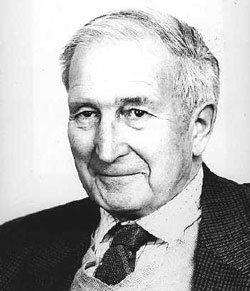


Heck, even the late philosopher Antony Flew, who did not become a Christian his last years, became a deist (his words), and put out a book about how he believes in God, albeit a sort of "Aristotelean god."

Richard Dawkins and the late Christopher Hitchens and are on the opposite end of the spectrum. Dawkins admitted to losing his "last vestiges of religious faith" (if I can recall that correctly from The God Delusion Debate DVD with John Lennox) in his teenage years; Hitchens, in his adolescence (around 9).


Dawkins was actually very explicit about why he believed as a young Christian. Via Wikipedia:
"the main residual reason why I was religious was from being so impressed with the complexity of life and feeling that it had to have a designer, and I think it was when I realised that Darwinism was a far superior explanation that pulled the rug out from under the argument of design. And that left me with nothing."
And then, he spends his entire life not striding against religion -- no, that came in recent years -- but in the scientific field explaining the Darwinian origins of life; fleshing out that theory, defending that theory, and re-telling the gospel of Darwin for each generation anew with such works as The Selfish Gene (1976), The Extended Phenotype (1982), The Blind Watchmaker: Why The Evidence of Evolution Reveals A Universe Without Design (1986),  River Out of Eden, (1995) Climbing Mount Improbable (1996), Unweaving the Rainbow (1998), The Ancestor's Tale (2004), The Greatest Show on Earth: The Evidence for Evolution (2009), and The Magic of Reality: How We Know What's Really True (2011), never letting the gospel get stale.

In other words, he spent his career "surgically" explaining away design -- the very thing he used to believe in.

And if you were wondering why I described Dawkin's work as gospel, it's because I just saw the video below. N.T. Wright, in his own right, is a master at explaining the gospel to new generations of Christians. Pick up his "For Everyone" series to see what I mean.


[Editor's Update January 13, 2013 7:30 PM] It's somewhat of a genetic fallacy to say that because someone is an ex-believer in some religious belief or some economic philosophy, such as those mentioned above, that their new beliefs are true. However, the fact that they did leave one faith and now believe in something else should raise some eyebrows. 

*I know Lewis is not actually quoted in that link. However, I decided to link to perhaps one of the first websites that introduced that line of argument to me;  The Case For Christ DVD possibly being the other source for me.

Wikipedia has the quote in it's entirety and actually much to say about it from many sides.

[1] Gillespie, Nick. "Foreword." Foreword. Choice: The Best of Reason. Dallas: BenBella, 2004. 4.

Thursday, October 31, 2013

David Berlinksi on the Old Testament

I would suggest to any student entering college now, 2011, to do what I'm sure he hasn't done: go read the Old Testament. That should be your first challenge today. I always ask my students "Well, have you (ever) read the, have you  read the Bible? Yea, Yea, I read the Bible, sure. But when I interrogate the student it turns up reading the Bible means they have a Bible on their book shelf. And I said, "have you opened it?""Yea, we've opened it,"  but opening it doesn't mean reading it.
The Old Testament is the greatest repository of human knowledge and wisdom in the history of civilization, any culture, any time, any place. And that really should be the first point of discussion because every attitude current today in the discussion from Richard Dawkins, to me, to Christopher Hitchens, to lonely pastors in the Bible Belt on Sunday morning ranting from a particular text is discussed in the Bible, and there's a characters in the Bible who expresses that point of view, there's sympathy expressed for that point of view, and there's reservations expressed by that sympathy. It's an enormously complex, rich dramatic piece of work. That's the first. 
David Berlinksi on Uncommon Knowledge

Sunday, October 20, 2013

Christopher Hitchens, my home boy, and I

No, that's not me on the right. That's the person I went to the "What Best Explains Reality: Theism or Atheism?" debate with featuring Frank Turek vs. Christopher Hitchens on March 31, 2009 at TCNJ. This was moments after I met Christopher Hitchens for the second time. He had signed the original copy of a 500 word profile of him I wrote for my magazine writing class in Spring 2009.

"Do you have an extra copy?" I recall him asking.

I didn't. And in fact, I thought about leaving him a copy but there wasn't a Kinko's in sight on our way there.

If I remember correctly, I was the last person to have anything signed by Christopher Hitchens that night. It was getting late. Christopher had already signed tons of autographs. And I believe he had a plane to catch.

My homeboy, then a Christian, asked Christopher why he didn't believe in God?

It was one of those, "it's obvious there is a God, why don't you believe in him?"-type questions. It was very passionate.

I don't remember Christopher's response.

But my friend asked him the question as he was still sitting down. I had just stepped away after my paper was signed. Shortly after saying something, Christopher Hitchens stood up, and either he or his help had a gray wheeled luggage bag (or maybe I'm confusing his bag for the one Frank Turek possibly had). He told Christopher about his flight.

That one Christian guy who asks atheists why they don't believe

I was reminded of the entire 2009 TCNJ scene when an old white man, after the Q&A opened up, popped the first question to ask Richard Dawkins at the National Press Club a few weeks ago. Also admittedly an atheist -- at least for that night -- Sally Quinn, a long-time Washington Post reporter and editor, gave one of the worst interviews of Richard Dawkins I've ever seen.

Why do I say that?

Because she steered the conversation to make Richard Dawkins says things that he has literally said 1,000 times before in his speaking and debate circuits after the publication of his 2006 bestseller The God Delusion. We could Wiki some of his answers. This lady is a religion editor. You would have thought she would have done her homework. Maybe she did. Maybe she had done the kind of preparation for a test where the examiner doesn't question you on anything you had studied for. That would be apt, except she was the examiner. And examiner decided to test you on last month's material, which you certainly knew, but were prepared for something more recent (Does this hypothetical ever happen? lol)

Richard Dawkins was there on September 30, 2013 to discuss his new book "An Appetite for Wonder: The Making of a Scientist" (2013), the first half of his two-part memoir. The best she could have done was read excerpts from the book, and then ask him to expound on that.

"What did you mean when you said..." would have been a much more productive way of interviewing than pointing out he became an atheist in his teens (something he has said many times before) and contrasting that with her own awareness that she was an atheist at age 5. Instead, she barely asked about the book, in my view. As I see it, she was a Washington Post reporter getting an exclusive interview with Richard Dawkins and used her exclusive interview to self-servingly get some personal questions answered.

Anyway, after what I guess was a half-hour of virtually unproductive conversation, the Q&A started.

The aforementioned first questioner asked "Why don't you believe in the empirical evidence of the resurrection of Jesus Christ?"

The question brought me back to my friend who asked a similar question with the same underlying vein: "Dear atheist, why don't you see it?"

Thank you for saving me, Richard Dawkins

I respected the question. Both questions. But I must say the following time was spent on two non-questions, a question about when atheism is going to catch on (or something like that) and at least one conspiracy-deny conspiracy theorist. I'll get to the latter in a second.

But a woman explained that she was on the way to the nunnery when she picked up a copy of Richard Dawkins' classic The Selfish Gene, which was even required text for some classes at my alma mater of La Salle University. At that point, she had dropped everything, changed course of her life to one that was religious and would have been completely religious if she had become a nun, and embraced the secular life in all its wonder.

Another man, a former Muslim originally from a Middle Eastern country, explained that it was The Selfish Gene that was the text that changed his outlook on life.

Another guy, who apparently attempted to indulge in some camaraderie before posing his question by, I think, tipping his hat towards The Selfish Gene or maybe some other RD work, asked something to the effect of "What do you think about Government conspiracy?" I believe it dealt with the fact that governments lie. That is true. (I'm sure the question is on tape. That will correct the record.) But there was some brief mention of 9/11 conspiracy theories, but the way it was postulated it was like he was trying to have it both ways. Sure he was secular, maybe even thought of himself as a critical thinker, and whatever he researched in his personal time he may have indeed had some good points, but the way he asked his question was ambiguous, and one wouldn't know if he was pro-conspiracy theory or not (I, for one, think they're OK, if support by facts). Richard was puzzled. So was I.

It also reminds of the way Sally Quinn conducted her interview. Not that her questions had anything to do with conspiracy. They didn't. But I feel like she used the opportunity to ask questions so he could answer and, in effect, do the research for her.

And that's the same way I felt with the guy. Richard Dawkins, by all accounts, is a scientist, not a philosopher of religion, or a political philosopher. (He did mention he wanted to live in a world where people pay taxes, as if taxes were moral things in themselves. In that case, I wouldn't want to live a world that Richard Dawkins gets to construct.) So asking him a political question is kind of intellectually lazy on the questioners part, because it seems like all these people want them to do is give free advice or do the research for the person.

Can we finally--finally!--talk about the book?


In the end, I met Richard Dawkins for the first time. Saw a buddy -- who described himself as "not convinced" by Dawkins and somewhat of "a mystic" -- I recently met a few weeks ago there. And got two RD's signature. It was the only novel thing I got from the experience, and perhaps the only novel thing other attendees got from their experiences. It's not like they could get a novel interview when it's conducted by Sally Quinn. Not that day, at least.

I did entertain a few people waiting in line to get there book signed. And one guy, probably one of the only other black people in the crowd (whether Tea Party rallies or anti-war rallies, politically left or politically right, black people hardly are in the crowds where I do my serious reporting or blogging) recommended I buy Vincent Bugliosi's "The Divinity of Doubt: The God Question." It has been added to my Amazon Wish List.

I ordered The God Delusion a few days before, and so I didn't have the physical copy in front of him to sign. He signed my Amazon receipt instead, which I cut out and pasted into my copy of The God Delusion when it arrived in the mail days later.

The other thing I had RD sign was a printed page of the old Richard Dawkins website. There was a post on there about Richard Dawkins "fleas" (the number of response books to The God Delusion). The blue response book, picture above, is what I originally planned on posting that second RD signature into. I haven't done that yet. The Ipod Tutor: The Argument Against Richard Dawkin's The God Delusion is one of three response books I own. I also own secular Jew, agnostic, and mathematician David Berlinki's book "The Devil's Delusion: Atheism and it's Scientific Pretension's" and Christian and mathematician John Lennox's "God's Undertaker: Has Science Buried God?" I bought all three response books back in college prior to 2011. Perhaps all prior to 2010. I haven't completed one, although I did get through a good portion of Lennox's book back in college, with the highlights, and red and blue ink to show for it. I plan to read all four books soon, meaning within a year or two, starting with the Dawkin's book.

He (RD) was eminently pleasant, by the way.

"Do you want me to sign here?" he said. I was in awe and calmed by his pleasant demeanor.

Sunday, May 23, 2010

Atheism, Christianity & Environmentalism


There are two things I wonder when people decide to expound their ideas and release them to the public: how long did this person think about the topic before deciding to write an article, and what was going on in their mind when they wrote it. In the case of David Horton's article "Green and Atheist: The Incompatibility of Religion and Environmentalism" the latter thought pulsated through my head the most. Perhaps I should have also extended that thought to the editorial room and pondered what the editor was thinking before he or she allowed this article to be published.

Horton's thinking is of the horrid kind: dreadfully obtuse and deeply un-philosophical (I think that's an irony). Or perhaps it is philosophical, in a sort of way that parallels the amateur D-grade philosophy of Dick Dawkins (do people call him Dick? Or do they just call him Richard?) Skewering Horton's position, in a sort of analytic-Plantinga-to-Dawkins kind of way, is something that can only be done by Plantinga himself, since I am not an analytic Christian philosopher. But at least addressing Horton is something that should be done, since Christians ought to be able to defend what they believe.

I find it unfortunate that something so badly thought through reached the light of day. Not only does the guy display his ignorance on contemporary religious thought, he seems to be out of touch with contemporary arguments for atheism (if there is such a thing as a corpus of atheistic thought). What makes things even worse, and even more laughable, is that he is arrogant about it (Does the question "anyone disagree?" at the end signal arrogance to you too, dear reader?)

In block quotes I have listed his thoughts.

It is odd that the Libertarians among the religious, so big on self-reliance for individuals and communities, don't apply that principle to the Earth as a whole.


It seems that everyone wants to take shots at Libertarians nowadays. Tisk, tisk. He probably is not familiar with the Libertarian work "The Politically Incorrect Guide to Capitalism." In chapter 6, How Capitalism Will Save The Environment, Robert. P. Murphy explains the relationship between capitalism and environmentalism, and argues that capitalism is the best economic system to support environmentalist ventures. Who would have thought that the laws of supply and demand would kick in to conserve oil and other natural resources by raising the price when resources are low, forcing consumers to conserve the resources they have or become more efficient with their resources.

Only atheists understand, deep down, that there is no divine Lone Ranger out there coming to the rescue; that if we don't save our own planet, no one else will.


This is such an old line that I'm sure many atheists will disagree with it or won't bother using anymore. The line of thinking goes, since we only have this one life, we must protect it as much as we can. The thinking goes further: those theists, since they believe they will be going to Heaven, must have less incentive to take care of the Earth, since Earth is not their home but a pit stop to Heaven. Before I focus on the latter, I will focus on the former. Why is it that when someone reasons this way they never bring up the other side; that is, the side which says because this is the only life I have and I am going to do what I want--that brand of atheism does exist too. Not every non-believer is a principled scientist, philosopher, "Greenie" or "Darwinist" (although they don't have too many options for creation stories). Some people just don't care and are apathetic. As for the latter, Christians, as N.T. Wright explains in the video above (make sure you check out the video below too), are to be preparing the Earth now for the Kingdom to come in its fullness. Heaven is something that is coming to Earth; we are not coming to it when we die, and that theology makes a profound difference in how one views the Earth.

Religious people, even putting aside the Left Behind loonies, aren't really concerned, because they have an imaginary friend who will look after them if they are good and pray hard and wear the right clothes and don't cut their hair.


Oh really, you mean an opinion poll back in 2001 revealing that "Because God created the world, it is wrong to abuse it" doesn't matter? Should we not exclude these folks from the already excluded Left Behind loons and call them unconcerned? Since Horton is a scientist, it would be to his horror to find out that as early as 2001, Christians were pioneering the use of drought-resistant crops in famine-ridden parts of Ethiopia. Also, in 1994 what appears to be over 100 signatories have signed the "Evangelical Declaration on the Care of Creation." Perhaps it would be too much for evidence to contrary to find out that Christian theological seminaries actually have courses on environmentalism and stewardship, or that Christian biologists have come together to create an institution to educate the community on environmental issues. Oh no, that would be too much. Let's keep that quiet so we can keep our pro-atheist views in good standing. We wouldn't want anything to undercut our ideology (wait, our belief is not a belief). We don't want anyone to think that Christians actually care for mother nature, now do we?

[The Earth] is best helped by those who understand that these ecosystems have evolved naturally over tens of thousands of years, not by those who think the Garden of Eden was a real place and that the Biblical Flood was a real event.


This idea doesn't even follow from the premises. How does knowing about the traditional Darwinian explanation of our origins tell us whether a person will be caring or a "better helper" to the environment or not? It doesn't. Plus, he doesn't appeal to one relevant branch of science (ecology, biology, zoology, geology, etc.) to support his claim. He just makes an assertion (Big Deal). To prod further, what exactly are we supposed to know about the environment that will help us take care of the environment better? I'd also argue that the opposite is true: knowing that we have Darwinian origins can be a real downer for some. People who are of the more nihilistic bent, if they don't allow it to drive them nuts, could feel unmoved to care for the environment, despite knowing our natural theory of origins. If they feel as though human history has no ultimate purpose, that may diffuse some of that energy to help the environment.

Greenies really understand the proposition that all these species are in it together, that we are all cousins, that we all come from a common ancestor, and that all have either a complete right to exist or no right to exist, not some of one and some of another.


I'm not to sure what the second half of the sentence means but I will try my hand at it. I don't see how the replacing the common ancestor idea with the idea that we are created by one God does any harm to environmentalism, or all those cute and cuddly animals. He also implies that Christians, or at least theists, believe that because God is the creator some have the right to hold the keys to the animal kingdom--i.e. who gets in and who stays out; which animals will we eat or eat us (Yikes!Down Bambi! Down I say!)

And, I would hate to rain on his parade but what is this notion of having a right to exist? This doesn't seem to be very consistent in light of atheistic evolution. If we just happened--from the big bang to evolution--then why does anything have rights to live or not? If an atheistic big bang scenario is your starting point then you have no right to exist, you just exist.

I think Dinesh D'Souza was right in his debate with atheist ethicist Peter Singer when he said (something to the effect of)that I wonder if the animals think the same way too. In other words, if we take the position that "we have a complete right to exist" is a bear wrong for wanting a human snack when we decide to go on our camping trips? Heck, if we take this position we must ask if it is ethical for the bear to eat fish out of a river? What about the grass? Clearly, other animals don't think that other animals have the right to exist, or at least they support their right to exist right up until the moment they are consumed. Oh and since "we are all cousins" that's one heck of a round of family feud isn't it?

Ultimately I think the preceding quote is unclear. For example, what exactly does he mean by no right to exist? Does he mean it in the Libertarian sense, that people have a right to life but not a right to be supported to live? Or does he mean it in the way I think, that as Darwinians we have no ultimate rights. That all rights are contrived.

unless you really feel the wind and the sun and the smell of marshland or grassland rather than driving in your air-conditioned car from your air-conditioned house to your air-conditioned megachurch, blissfully unaware of being part of nature,blissfully believing that you are somehow above all that


So is this guy telling me he doesn't like air-conditioned places or doesn't drive an air-conditioned car? If he is driving something without air-conditioning (assuming it's an older car model), I'd doubt the environmentally friendliness of his car. Technology has a way of being efficient with resources and being environmentally friendly at the same time. Driving an environmentally friendly car shows awareness of environmental issues (to a limited degree) and is an environmentally friendly act in itself.

And is he really suggesting that these same megachurch-attending Christians don't have the capacity to care about the environment or bask in the splendor of nature? Tell that to the Christian Camp and Conference Association! And then follow them on Twitter!

Somehow, I think Mr. Horton is blissfully unaware of all the books on Christian environmentalism that have come out during the past decade; and I think he is blissfully ignorant about how Christians view the environment in the 2000's (and 90's). Perhaps next time, he can be a little bit more objective, you know, like science.

The rest of N.T. Wright's talk on 100Huntley can be seen here.

I'll go watch some of my imaginary friends now. They provide much comfort.

WCF Chapter One "Of Holy Scripture" Sunday School (Sept.-Oct. 2021)

Our text for Sunday School (also "The Confession of Faith and Catechisms") Biblical Theology Bites What is "Biblical Theology...