Just about everything that people think they know about labor unions and wage rates is wrong.Forgotten Facts of American Labor History by Thomas E. Woods, Jr.
The standard tale that practically every student hears over the course of his education is that before the emergence of labor unions, American workers were terribly exploited and their wages were consistently falling. The improvement in labor's condition was due entirely or at least in large part to labor unionism and favorable federal legislation. In the absence of these, it is widely assumed, people would still be working 80-hour weeks and children would still be working in mines.
This oft-heard tale is, however, almost entirely false, and those parts of it that are true (the low standard of living that people enjoyed in the nineteenth century, for example) are true for reasons other than those alleged by pro-union historians, who see in them only confirmation of their prejudices against the market economy.
Showing posts with label Child Labor Laws. Show all posts
Showing posts with label Child Labor Laws. Show all posts
Monday, September 12, 2011
Forgotten Facts of American Labor History by Thomas E. Woods, Jr.


Sunday, October 31, 2010
Relief for Young Entrepreneurs
Remember my "Killing Kid Start Ups" post? Well, there is good news for young entrepreneurs. According to Child Labor Bulletin 102:
Thank God!
Now if we could only get rid of those "compulsory school attendance" laws! (Big emphasis on compulsory) Hey, at least they don't pretend to not be authoritarian.
Young entrepreneurs who cut their neighbor’s lawn or perform babysitting on a casual basis for farmers are not covered under the FLSA.
Thank God!
Now if we could only get rid of those "compulsory school attendance" laws! (Big emphasis on compulsory) Hey, at least they don't pretend to not be authoritarian.
Vindicated! How Ron Paul's Life Proves My Point
No later than two days--TWO DAYS--after I posted my last blog, which is the latest in my Libertarian Views of Law series, I came along a passage in End the FED that proves my point about the unnecessariness of regulation in starting and running a business:
"My first job, and that of my brothers, was to assist my dad in a small dairy run out of our basement. Even at the age of five, the incentive system was instilled in me. Our job was to make sure all the glass bottles, which had been hand washed, were clean. It was bad for business if a customer saw a black spot in the bottom of a milk bottle. For each dirty bottle we found as we removed them from the conveyor belt and placed them into the wooden case, we were rewarded a penny. It didn't take long for us to know when a certain uncle was washing the bottles, since more dirty bottles were found on those days." End the Fed, Chapter 4 "My Intellectual Influences", p.33-34
Paul's anecdote touches on topics that I didn't think about at the time, and it agrees with various points I made in my Suzy Q argument. "It was bad for business if a customer saw a black spot" touches on the idea that cleanliness is necessary to expect transactions to occur. Dirtiness, in contrast, is repugnant to many customers and is an instant transaction-stopper! In fact, no transaction would come into existence in the first place.
Notice that this idea is also an extension, or better yet application, of the Golden Rule. Doing unto others in this case would be preparing a clean home (as in the Suzy Q story) or having spotless milk bottles. Who would really think they can sell milk with grime on the sides, spots in the inside, and cracks near the lid?
Also noteworthy is the fact that this business was run out of their basement. There is a surprising connection between Suzy Q's hairstyling business run out of her home and the Paul family's business run out their home. It is bootstrap capitalism: "a person or group of persons collaborated and started a business and within years it was successful."
The current laws under the U.S. Fair Labor Act actually allows "work in businesses owned by their parents (except in mining, manufacturing or hazardous jobs)", so the young Ron Paul and our young Suzy Q would not be in jeopardy of losing their right to earn a living. But many other kids are in jeopardy of, if not prohibited from, losing their right to earn a living. The current law "sets 14 as the minimum age for most non-agricultural work."
This also prompts me to admit that my title "Why You Can't Legally Braid Your Neighbor's Hair" is slightly a misnomer, slightly. A mother can braid her child's hair; a child can braid her friend's hair; but operate a Hair Salon out of your home? Oh, you can't do that. That would be against the law!
Still, what if the only "non-agricultural work" is the only work in town? Should kids under 14 have to be deprived of their right to work? Furthermore, what if they aren't skilled at agricultural work, but very skilled at "non-agricultural work" should they be denied the right to make money doing what they are skilled at? And how can they learn?
Paul touches on something that I was aware of but failed to illustrate: working at age five gave him incentive; and I'd add that working young gives a sense of dignity as well. How can kids get work experience needed for greater, more skill-specific jobs, if they can't even get experience in less specialized jobs? They are legally barred from doing so.
The funny thing is that I was just conjecturing about the libertarian/biblical application of ethics when I wrote the previous post. I never actually had any real examples. In fact, I didn't even read the laws (until today). Then I came across the passage in "End the Fed", and I jumped (not literally) when I saw it.
From these last few Libertarian Views of Law posts, the observant reader will be able to make valid inferences about the law, and the humorous paternalism guiding them all: the grocery store laws, the agricultural laws, and every other law enforced by the State.
"My first job, and that of my brothers, was to assist my dad in a small dairy run out of our basement. Even at the age of five, the incentive system was instilled in me. Our job was to make sure all the glass bottles, which had been hand washed, were clean. It was bad for business if a customer saw a black spot in the bottom of a milk bottle. For each dirty bottle we found as we removed them from the conveyor belt and placed them into the wooden case, we were rewarded a penny. It didn't take long for us to know when a certain uncle was washing the bottles, since more dirty bottles were found on those days." End the Fed, Chapter 4 "My Intellectual Influences", p.33-34
Paul's anecdote touches on topics that I didn't think about at the time, and it agrees with various points I made in my Suzy Q argument. "It was bad for business if a customer saw a black spot" touches on the idea that cleanliness is necessary to expect transactions to occur. Dirtiness, in contrast, is repugnant to many customers and is an instant transaction-stopper! In fact, no transaction would come into existence in the first place.
Notice that this idea is also an extension, or better yet application, of the Golden Rule. Doing unto others in this case would be preparing a clean home (as in the Suzy Q story) or having spotless milk bottles. Who would really think they can sell milk with grime on the sides, spots in the inside, and cracks near the lid?
Also noteworthy is the fact that this business was run out of their basement. There is a surprising connection between Suzy Q's hairstyling business run out of her home and the Paul family's business run out their home. It is bootstrap capitalism: "a person or group of persons collaborated and started a business and within years it was successful."
The current laws under the U.S. Fair Labor Act actually allows "work in businesses owned by their parents (except in mining, manufacturing or hazardous jobs)", so the young Ron Paul and our young Suzy Q would not be in jeopardy of losing their right to earn a living. But many other kids are in jeopardy of, if not prohibited from, losing their right to earn a living. The current law "sets 14 as the minimum age for most non-agricultural work."
This also prompts me to admit that my title "Why You Can't Legally Braid Your Neighbor's Hair" is slightly a misnomer, slightly. A mother can braid her child's hair; a child can braid her friend's hair; but operate a Hair Salon out of your home? Oh, you can't do that. That would be against the law!
Still, what if the only "non-agricultural work" is the only work in town? Should kids under 14 have to be deprived of their right to work? Furthermore, what if they aren't skilled at agricultural work, but very skilled at "non-agricultural work" should they be denied the right to make money doing what they are skilled at? And how can they learn?
Paul touches on something that I was aware of but failed to illustrate: working at age five gave him incentive; and I'd add that working young gives a sense of dignity as well. How can kids get work experience needed for greater, more skill-specific jobs, if they can't even get experience in less specialized jobs? They are legally barred from doing so.
The funny thing is that I was just conjecturing about the libertarian/biblical application of ethics when I wrote the previous post. I never actually had any real examples. In fact, I didn't even read the laws (until today). Then I came across the passage in "End the Fed", and I jumped (not literally) when I saw it.
From these last few Libertarian Views of Law posts, the observant reader will be able to make valid inferences about the law, and the humorous paternalism guiding them all: the grocery store laws, the agricultural laws, and every other law enforced by the State.
Wednesday, September 22, 2010
Libertarian Views of Law: Killing Kid Start-Ups
A young Arizonian entrepreneur saw a problem in his community and decided to fix it. There were too many rats in his community and he decided to help his community for a fee. In this next example of bootstrap capitalism you will learn about Christian Alf and how he was temporarily put out of work by city regulators.
It is a continuation of last week's theme: Regulations that keep people from making a living the best and sometimes only way they know how.
Teen Entrepreneur Wins Case in Tempe, Arizona
This week I decided to examine a press release (web release) titled “Teenage Entrepreneur Wins Fight Against BereaucRATS: Christian Alf allowed to go back to work rat-proofing roofs.”
This web release discussed the legal problems surrounding a high school student that decided to “rat-proof” roofs in Tempe, Arizona. Rats seem to be a major problem in that city, and pest control businesses profit from “rat-proofing” consumers houses and properties. However, Christian Alf, the teen entrepreneur who was temporarily put out of business by the Arizona Structural Pest Control Commission, was receiving over 200 calls for his services—and the local pest control commission reacted to protect pest control businesses, not consumers.
The issue at hand was whether Mr. Alf’s unlicensed pest control work was legal as defined by state law. Although, performing unlicensed pest control work may result in a $1,000 fine, Mr. Alf’s work was completely legal.
Lisa Gervase, the Pest Control Commission’s executive director, “has determined that the limited, specific facts of this matter do not constitute the business of structural pest control.”
The Commission reversed its earlier position that Mr. Alf must have a license to do his work.
According to Tim Keller, the Institute for Justice Attorney on the case, the Commission “exceed[ed] its legitimate regulatory authority” and “there was no rational basis to require Christian [Alf] to obtain a pest control license.”
I agree.
Commission’s standards require potential licensees to read a 500 page scientific guide to pest control operations. Within its pages it says they (the commission workers) should “take every opportunity to educate building owners as to the importance of building maintenance and encourage them to seal holes and cracks in doors and windows and around pipes and wiring.”
I have two remarks.
First, this suggests that homeowners are encouraged to fix their own homes. It would be absurd to suggest that homeowners should be condemned for fixing their own homes, work that can be done by any man, woman, or capable child in the home. If homeowners are encouraged by the pest control commission to maintain their home, then why is it such a big deal if they hire a kid to do it? What does it matter if this kid is a nephew and they pay him for it (similar to how my family paid me for fixing little things around the house) and a non-family member--next door, or across town, or in the next county--that gets paid?
The logical extension is even more preposterous to condemn. What about people who don't have licenses to cut grass? Should agricultural commissions file claims against little 14 year old Johnny Doe just because he is taking a few mowing jobs from lawn mowing companies? What if all the Christian Alfs of the world were no longer allowed to offer their grass-cutting services--their cheaper services--to their neighbors because the local lawn mowing companies wanted "protection."
I remember when my mom asked me to cut my neighbor's grass. Now imagine if I wasn't allowed to do so. "Sorry kid, you have to have a license. I can clearly see that you cut your parent's grass, and you did it well, but the law says..."
What about all that money I was making going around the neighborhood on snow days? What if some agency decided I couldn't clean my neighbor's driveways? Instead, my neighbors would have to hire some high-cost professional.
This was the only work I could do as a child. I enjoyed it. I enjoyed cutting grass. I enjoyed clearing driveways. I enjoyed being able to save and buy stuff with the money I earned. It helped build character. Who would be so evil as to want to take away all those great benefits from a child? The answer: Regulators.
To punish Mr. Alf would set a bad precedent in the courts that could hurt young people by taking away low-wage jobs that build character and responsibility and savings.
[Update 11/1/10: I actually found out that children entrepreneurs are free to do lawn work.]
It is a continuation of last week's theme: Regulations that keep people from making a living the best and sometimes only way they know how.
Teen Entrepreneur Wins Case in Tempe, Arizona
This week I decided to examine a press release (web release) titled “Teenage Entrepreneur Wins Fight Against BereaucRATS: Christian Alf allowed to go back to work rat-proofing roofs.”
This web release discussed the legal problems surrounding a high school student that decided to “rat-proof” roofs in Tempe, Arizona. Rats seem to be a major problem in that city, and pest control businesses profit from “rat-proofing” consumers houses and properties. However, Christian Alf, the teen entrepreneur who was temporarily put out of business by the Arizona Structural Pest Control Commission, was receiving over 200 calls for his services—and the local pest control commission reacted to protect pest control businesses, not consumers.
The issue at hand was whether Mr. Alf’s unlicensed pest control work was legal as defined by state law. Although, performing unlicensed pest control work may result in a $1,000 fine, Mr. Alf’s work was completely legal.
Lisa Gervase, the Pest Control Commission’s executive director, “has determined that the limited, specific facts of this matter do not constitute the business of structural pest control.”
The Commission reversed its earlier position that Mr. Alf must have a license to do his work.
According to Tim Keller, the Institute for Justice Attorney on the case, the Commission “exceed[ed] its legitimate regulatory authority” and “there was no rational basis to require Christian [Alf] to obtain a pest control license.”
I agree.
Commission’s standards require potential licensees to read a 500 page scientific guide to pest control operations. Within its pages it says they (the commission workers) should “take every opportunity to educate building owners as to the importance of building maintenance and encourage them to seal holes and cracks in doors and windows and around pipes and wiring.”
I have two remarks.
First, this suggests that homeowners are encouraged to fix their own homes. It would be absurd to suggest that homeowners should be condemned for fixing their own homes, work that can be done by any man, woman, or capable child in the home. If homeowners are encouraged by the pest control commission to maintain their home, then why is it such a big deal if they hire a kid to do it? What does it matter if this kid is a nephew and they pay him for it (similar to how my family paid me for fixing little things around the house) and a non-family member--next door, or across town, or in the next county--that gets paid?
The logical extension is even more preposterous to condemn. What about people who don't have licenses to cut grass? Should agricultural commissions file claims against little 14 year old Johnny Doe just because he is taking a few mowing jobs from lawn mowing companies? What if all the Christian Alfs of the world were no longer allowed to offer their grass-cutting services--their cheaper services--to their neighbors because the local lawn mowing companies wanted "protection."
I remember when my mom asked me to cut my neighbor's grass. Now imagine if I wasn't allowed to do so. "Sorry kid, you have to have a license. I can clearly see that you cut your parent's grass, and you did it well, but the law says..."
What about all that money I was making going around the neighborhood on snow days? What if some agency decided I couldn't clean my neighbor's driveways? Instead, my neighbors would have to hire some high-cost professional.
This was the only work I could do as a child. I enjoyed it. I enjoyed cutting grass. I enjoyed clearing driveways. I enjoyed being able to save and buy stuff with the money I earned. It helped build character. Who would be so evil as to want to take away all those great benefits from a child? The answer: Regulators.
To punish Mr. Alf would set a bad precedent in the courts that could hurt young people by taking away low-wage jobs that build character and responsibility and savings.
[Update 11/1/10: I actually found out that children entrepreneurs are free to do lawn work.]
Subscribe to:
Comments (Atom)
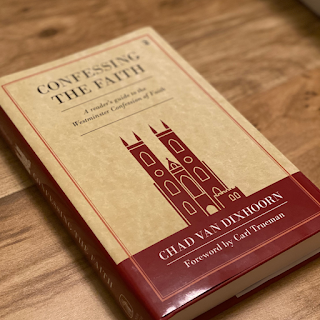
WCF Chapter One "Of Holy Scripture" Sunday School (Sept.-Oct. 2021)
Our text for Sunday School (also "The Confession of Faith and Catechisms") Biblical Theology Bites What is "Biblical Theology...
-
January 12, 2012 Update: The old link no longer works. The old link is still below but the new leak is right below the old link. Thanks to t...
-
 Our text for Sunday School (also "The Confession of Faith and Catechisms") Biblical Theology Bites What is "Biblical Theology...
