Austrian this, Keynesian that. Why should one embrace one over the other?
Kevin Swanson doesn't get into that, but he does say that our practical atheism is the reason why America is doing so badly nowadays.
Listen below.
It's true that Austrian economics is more in line with the biblical worldview, but what authority do Austrian economists stand on?
Mises and Rothbard.
In other words, men.
In the same vein, we have also embraced man's erroneous views of laws and economics -- that is why we will be in a depression.
Showing posts with label Federal Reserve. Show all posts
Showing posts with label Federal Reserve. Show all posts
Monday, September 28, 2015


Monday, September 21, 2015
Bill Bonner enters the mind of Janet Yellen
 |
| Photo Courtesy of The Associated Press |
Impersonating Yellen, Bill Bonner sketches the thoughts running through her mind as she mulls raising interest rates.
He writes:
What if they say it’s my fault? What if they call it the Yellen Depression?That is from part one.
Oh, no… It’s not fair… It’s not fair… Boo-hoo… sob… sob… I should have stayed at Harvard. I’d have tenure. I’d have a nice pension. George and I could go the Martha’s Vineyard in the summer. It would be such a nice life.
But there is also a part two.
There he writes:
"But if the economy is as healthy as I say it is, it isn’t going to be bothered by a quarter-point rate hike. And if it isn’t as healthy… and the rate hike throws it into a tizzy… then all those seven long years of ZIRP did zip for the economy and rates may as well be raised anyway, no?" (Janet smiles; she is pleased with her turn of phrase.)"Read Part One...
And part two.
Saturday, February 21, 2015
Does the Federal Reserve cause booms and busts?
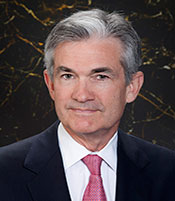
I recently asked Federal Reserve Governor Jerome H. Powell what he would say to the critics of the Federal Reserve who say that the Fed is the cause of the boom and bust cycle. I figured that any answer would do. This was his response:
“The question was do we cause booms. I guess I would really look at that question this way: What would life be like without the Fed. In other words, I wouldn’t expect perfection from of any government organization, or of any organization of any kind.
So the fed will never get things perfect and the fed has made mistakes. Right? We allowed inflation to get out of control in the 70s. Policy improves over time, we hope. Exogenous events happen and they make fools of everybody and then they’ll make geniuses out of everybody. So don’t expect perfection. But over time it has made sense – I think the Fed has done a good and improving job in keeping inflation low now for more than 30 years, and essentially having pretty good results.
Now are you going to point – now you ought to be pointing at the financial crisis and say “how did that work out?” The financial crisis is not something that -- any government agency that had a responsibility for the economy can feel really good about. So mistakes get made.
But I guess the question I would ask back is what would life be life with no – if you look back pre-fed, there were very severe depressions—depressions that looked a lot more like the Great Depression.
In this depression (sic), output went down 4%. In the Great Depression, output went down 25%. That kind of thing happened a lot in the 19th century. You had these hard stops of credit. The banking system would fail. There would be a run on the banks. JP Morgan personally would come in and get his friends together and bail out the system.
But – so the judgment was finally made to create a central bank. There is no advanced economy in the world that doesn’t have a central bank that does pretty much the same thing the Fed does. No one has run an experiment in a very long time of not having a central bank. Don’t really think that’s a way to go.
Tuesday, June 10, 2014
Big businesses are "fine" with Minimum wage; Mom and Pops struggle with compliance in Seattle
“The business owners are delaying new construction, suffering losses, and raising prices to comply with Seattle’s new $15 minimum wage.” ~The Bastiat Institute
Main Points
Summary

Cities, counties and states are “laboratories of democracy.” We are supposed to see what doesn’t work in this city and that city and learn from them – not turn around and advocate the same thing nationwide.
Higher costs of living are due to inflation and a declining currency. Declining currency comes from the expansion of the money supply (inflation). Inflation comes from the Federal Reserve.
If you need any proof of the decline of the U.S. dollar, then play around with this inflation calculator from the Bureau of Labor Statistics and see how much a dollar was worth in 1914 versus what it is now.
As an example, $100 in 1913 is $2,394.67 in 2014 money. But the opposite is true: $2,394.67 in 2014 is $100 in 1913 money. In other words, it takes a lot more of today's cash to match the purchasing power of our American ancestors.
In short, higher prices are the symptoms. The Federal Reserve’s monetary policies are the cause. We should not be going after symptoms with legislative medicine because they, like real corporate medicine, have all different kinds of harmful side effects, namely, unemployment, higher prices, and a delay in business expansion by entrepreneurs.
The people who will see this and support this idea anyway will stop us and say “no, we just wanted to slowly increase the minimum wage just a few cents or dollars more each year.” But all that really does is price out the jobs below that price floor incrementally, and delays the inevitable.
 The fact that the law provides an exception to businesses with under 500 employees proves my point.
According to a CNNmoney article:
Companies such as Walmart and McDonald’s say that they are fine with the increase. That’s because they have the structure in place to do so unlike small mom and pop shops.
Watch the wonderful explanation of this point here.
So yes, year over year legislators will have worked to bump up the minimum wage and to price out jobs below $0.50, $1.40, $4.50, $6.25, $7.25, $10.25, and $15.00.
Those kinds of jobs aren’t meant for anyone to “live” on. They’re usually reserved for teens, children, and low-skilled adults. At that age, they’re not getting paid in money alone but also in skill, responsibility and reputation. Kids and teens could use jobs in the summertime and all year round.
Adults, on the other hand, need higher wage jobs to take care of themselves and their children. But the jobs and wages they desire are being squandered on a massive federal debt and are confiscated through taxes.
Let it be known that this is a policy that has the Democratic Party’s, including President Obama himself, and even a few Republicans’, hands on it and they should be held accountable.
Main Points
- Higher prices are the symptoms of a much bigger problem: the expansion of the money supply by the U.S. central bank, the Federal Reserve, and the subsequent lower purchasing power of the U.S. dollar.
- The states are laboratories of democracy.
- Mainly the Democratic Party, and a few Republicans support the minimum wage. In fact, raising the minimum wage was on the Democratic Party's 2012 Platform.
- This is a traditionally “progressive” policy.
- Corporations like McDonalds and Walmart have already admitted they can cope with this policy.
- Smaller businesses however will have a much harder time coping with this, such as those in Seattle, Washington where a $15 minimum wage has been implemented and took effect this week.
Summary
Republicans claim the minimum wage hurts businesses.
But McDonald's CEO supports the minimum wage. Why?
Because it will squeeze out the competition. The truth about the minimum wage is that it won't hurt the biggest businesses as much as it will hurt their smaller Mom-and-Pop size competitors.
In other words, "progressive" support for the minimum wage harms the "weak and the vulnerable" and benefits big corporations -- the very opposite of what they intend.
Cities, counties and states are “laboratories of democracy.” We are supposed to see what doesn’t work in this city and that city and learn from them – not turn around and advocate the same thing nationwide.
Higher costs of living are due to inflation and a declining currency. Declining currency comes from the expansion of the money supply (inflation). Inflation comes from the Federal Reserve.
If you need any proof of the decline of the U.S. dollar, then play around with this inflation calculator from the Bureau of Labor Statistics and see how much a dollar was worth in 1914 versus what it is now.
As an example, $100 in 1913 is $2,394.67 in 2014 money. But the opposite is true: $2,394.67 in 2014 is $100 in 1913 money. In other words, it takes a lot more of today's cash to match the purchasing power of our American ancestors.
In short, higher prices are the symptoms. The Federal Reserve’s monetary policies are the cause. We should not be going after symptoms with legislative medicine because they, like real corporate medicine, have all different kinds of harmful side effects, namely, unemployment, higher prices, and a delay in business expansion by entrepreneurs.
The people who will see this and support this idea anyway will stop us and say “no, we just wanted to slowly increase the minimum wage just a few cents or dollars more each year.” But all that really does is price out the jobs below that price floor incrementally, and delays the inevitable.
According to a CNNmoney article:
"One point of controversy prompted the International Franchise Association to threaten to sue the city within hours of the bill's passage.
Under the law, businesses with fewer than 500 workers are given more time to comply. That would be fine with the franchisees, if they were considered one of those smaller businesses.
Instead, the law states that a business owner has to count all employees in the U.S., likely putting those affiliated with a national franchisor in the large-business category."How in the world do the people who passed this law know what time individual business owners will be able to afford the minimum wage increase?
Companies such as Walmart and McDonald’s say that they are fine with the increase. That’s because they have the structure in place to do so unlike small mom and pop shops.
Watch the wonderful explanation of this point here.
So yes, year over year legislators will have worked to bump up the minimum wage and to price out jobs below $0.50, $1.40, $4.50, $6.25, $7.25, $10.25, and $15.00.
Those kinds of jobs aren’t meant for anyone to “live” on. They’re usually reserved for teens, children, and low-skilled adults. At that age, they’re not getting paid in money alone but also in skill, responsibility and reputation. Kids and teens could use jobs in the summertime and all year round.
Adults, on the other hand, need higher wage jobs to take care of themselves and their children. But the jobs and wages they desire are being squandered on a massive federal debt and are confiscated through taxes.
Let it be known that this is a policy that has the Democratic Party’s, including President Obama himself, and even a few Republicans’, hands on it and they should be held accountable.
Saturday, February 22, 2014
Vladimir Putin learns the wrong lesson from the Soviet Union's collapse
As I was watching the opening ceremony for the 2014 Winter Olympics in Sochi, a commentator said that Vladimir Putin thought the collapse and break-up of the Soviet Union was devastating, or something to that effect, and that Russia lost a lot of "good Russians."
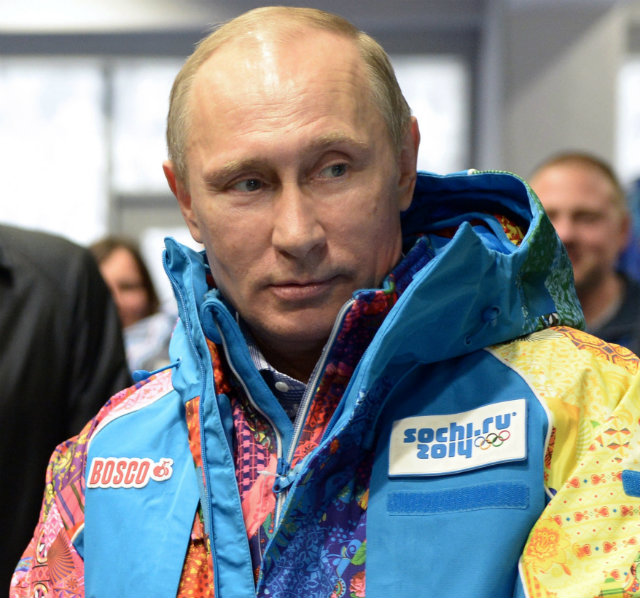
Bizarreness of that statement put aside, it deflects from real analysis of the Soviet Union's collapse in 1991.
What we should make of the Soviet Union's collapse was that we saw the complete and utter collapse of a nation based on an idea: Socialism.
The "former glory of the Soviet Union" was no glory at all because socialism -- no matter how many years and decades it will take -- always plants the seeds for economic destruction. So going back to it would be like a "dog going back to its vomit" (Proverbs 26:11), and fool repeating his folly.
One other point here.
We are not unlike the Soviet Union.
As Thomas Woods explained in his 2009 book "Meltdown": "[the U.S. Federal Reserve System] is dedicated to central economic planning, the great discredited idea of the twentieth century. Except instead of planning the production of steel and concrete, as in the Old Soviet Union, it plans money and interest rates, with consequences that necessarily reverberate throughout the economy."
We are in the midst of a grand experiment that will end in nothing less than devastation for a lot of people. As I explained in previous statuses**, the time for a "soft landing" was over a decade ago. We should end our foolishness now to avoid an even harder landing later.
**Originally written as a Facebook status
Saturday, November 23, 2013
The Books I Used To Write the Second-Longest Paper I Ever Wrote

When I was a senior in college, I wrote the second-longest essay of my life -- and it wasn't for a class. It was for a cash prize of $5,000.
In December 2009, I heard about the Atlas Sound Money Project Essay and, broke as the economy, I jumped for the cash prize. I did not win the first prize. A kid from Dartmouth did, if my memory serves me correctly. I also did not win the one of the two second prizes ($1,000), or one of the three third prizes ($500).
I had to choose between the following topics:
I choose the last one.Essay Topics:- “Money and the Free Society: Can Money Exist Outside of the State?”
- “The Ethical Implications of Monetary Manipulation”
- “Monetary Policy and the Rule of Law in the United States”
But cleaning up my desk this evening (how it surfaced to my desk 4 years later, I have no idea), I decided to discard the paper I had notes on and preserve the memory through this blog post.
Here are the books I used to write the 20-page essay, which was supposed to be "accessible to the educated laymen, but rigorous enough as to be used in college and university courses." That had my writing style written all over it.
These aren't the only sources I used. I also completed Robert P. Murphy's "Politically Incorrect Guide to Capitalism," some excerpts from some newsletters I was receiving at the time, and more. Besides the Murphy book, only other books I read in their entirety for this essay was "The Alpha Strategy" (which I have offered free of charge since November 2009), "Gold Wars," "Honest Money." I skimmed through the Sowell Book. I probably didn't cite the Faustino Ballve book nor the How the Fed Works book.Economics Reading List for Sound Money Essay-The Alpha Strategy-How the Fed Works (50 pages)-Essentials of Economics-Gold Wars-Honest Money (Esp. Biblical Monetary System)-Housing Boom and Bust
I also have some handwritten notes on this paper, such as "banks are good - fractional reserve isn't," "sell back gold to the public," "FDIC out of commission," "FED = Insurance Agency," "prevent recessions," "prices of goods will fall," "gov = tax in gold," " = pay in gold," and "no government mandate for gold-only. Gold is standard, but other metals are usuable (sic)." Corresponding page numbers were in parentheses next to these notes.
The Atlas Foundation's original blog post announcing the competition was published on December 2, 2009. The deadline to submit the essay was January 15, 2010. You can read the blog description here.
I'll publish the essay on a later date.
Friday, December 7, 2012
Harry Reid Must Talk With Fed Chairman Ben Bernanke Before Considering Fed Audit
Washington (CNSNews.com) – Senate Majority Leader Harry Reid says he would have to have a “real serious conversation” with Federal Reserve Chairman Ben Bernanke before he considers bringing the Federal Reserve Transparency Act to the Senate Floor.
......
As CNSNews.com previously reported , Reid was once a strong supporter of auditing the Federal Reserve System - in 1995. Then being discussed was then-Senator Bryon Dorgan’s (D-N.D.) amendment that would have required the Federal Reserve to a prepare a report to Congress and disclose the financial impact of changing interest rates on the public and private sector.In 1995 Reid went into great detail about how the Federal Reserve wasn’t talked about enough, how it not only affects the federal government because of the money it borrows but also the private sector because “higher interest rates effect everybody,” and how he’s called for an audit of the Federal Reserve System and offered “that amendment every year.”
“Every year the legislation gets nowhere,” Reid said in 1995. “I think it would be interesting to know about the Federal Reserve. I think we should audit the Federal Reserve.”
Reid: I’d Have a 'Serious Conversation' with Bernanke Before Considering Fed Audit | CNS News
Saturday, May 19, 2012
Murray Rothbard on the FED's Own Propaganda
"There is, however, one and only one aspect of the common legend that is indeed correct: that the overwhelmingly dominant cause of the virus of chronic price inflation is inflation, or expansion, of the supply of money. Just as an increase in the production or supply of cotton will cause that crop to be cheaper on the market; so will the creation of more money make its unit of money, each franc or dollar, cheaper and worth less in purchasing power of goods on the market."Murray N. Rothbard, The Case Against the Fed
Thursday, May 10, 2012
Wednesday, April 11, 2012
Thursday, March 1, 2012
Paul: "The Fed's going to self-destruct eventually anyways"
Rep. Ron Paul (R-Texas) took a break from his presidential bid to pursue one of his favorite pastimes — criticizing the Federal Reserve.I'm glad The Hill got this. But I reported on this a lot sooner--perhaps even first--on my own blog back in November and the story was technically published in December (due to a conflict).
Paul returned to Capitol Hill on Wednesday to question Fed Chairman Ben Bernanke, who was appearing before the House Financial Services Committee to deliver his semiannual testimony.
Here's the relevant excerpt:
In his speech, Paul said that he would not end the Federal Reserve in one day because it will “eventually shut itself down” when it destroys the currency. Rather he will work to break the FED’s monopoly on issuing currency by legalizing sound money including gold and silver and repealing legal tender laws.Paul returns to DC to assail Bernanke - The Hill's On The Money
Thursday, January 12, 2012
Video: Ron Paul Speaking @ Cato's 29th Annual Monetary Policy Conference
I was there.
For an exclusive story I wrote on this go here.
The lead is below:
Washington (GoinsReport.com) – When asked whether he agreed with GOP presidential candidate Herman Cain on his suggestion that Federal Reserve should go back to a single mandate focusing on price stability, GOP Presidential Candidate Ron Paul said that he “hardly” agrees.
Price stability refers to the concept that prices levels are constant enough that people won’t take into account price inflation when making decisions as a consumer – not that the value of the dollar will remain the same.
On numerous occasions this year, including at the CNN-Tea Party Republican debate in September and during a press conference with reporters at TeaCon 2011, Herman Cain said that he did not want to end the FED but return it to a single mandate where the central bank allegedly only focused on price stability.
Thursday, December 8, 2011
Ron Paul “Hardly” agrees with Herman Cain on Federal Reserve

Watch video here
Washington (GoinsReport.com) – When asked whether he agreed with GOP presidential candidate Herman Cain on his suggestion that Federal Reserve should go back to a single mandate focusing on price stability, GOP Presidential Candidate Ron Paul said that he “hardly” agrees.
Price stability refers to the concept that prices levels are constant enough that people won’t take into account price inflation when making decisions as a consumer – not that the value of the dollar will remain the same.
On numerous occasions this year, including at the CNN-Tea Party Republican debate in September and during a press conference with reporters at TeaCon 2011, Herman Cain said that he did not want to end the FED but return it to a single mandate where the central bank allegedly only focused on price stability.
During the CNN Tea Party debate in September, Cain said “For many, many decades the FED did its job when it was singularly focused on sound money.”
At TeaCon 2011 he said, “it [the FED] really needs to just focus on monetary price stability the way it did from 1913 all the way up to the year 2000. It got off track when the federal national debt hit 14 trillion dollars and when foreign countries cooled off on buying our debt.”
After reading the quotes from Herman Cain, GoinsReport.com asked Rep. Ron Paul (R-Texas) “Do you agree with that analysis and do you agree with his history?”
Paul said: “Well, hardly. He’s part of the Federal Reserve System and I want to get rid of it. So he’s trying to patch it up. No, I wouldn’t agree with it.”
The Texas congressman made his remarks Wednesday morning (Nov. 16) after the 29th Annual Monetary Policy conference in Washington, DC.
In his speech Paul was skeptical of the idea moving the FED’s dual mandate of using monetary policy to maximize employment and achieving price stability to a single mandate focusing on price stability alone.
“Since I don’t like the Fed, I’m not interested in worrying about what the mandate should be because they’re not going to do it anyway,” Paul said.
“They’re mandate is that they’re supposed to have full employment. They’re failing there. They’re supposed to have stable prices. They’re failing there. So why do we have any trust whatsoever in what they do,” he continued.
He added that “deep down in their hearts” their real goal is to accomplish the liquidation of debt with inflation.
“That’s not too hard to understand that if they can get 50 percent inflation rate in a year or two that takes our $15 trillion debt and cuts it in half,” Paul said.
In his speech, Paul said that he would not end the Federal Reserve in one day because it will “eventually shut itself down” when it destroys the currency. Rather he will work to break the FED’s monopoly on issuing currency by legalizing sound money including gold and silver and repealing legal tender laws.
“My idea is sort of a copy of what Hayek’s had talked about,” he said. “Why don’t we denationalize money, legalize competition, allow free markets to work, allow free market banking to work?”
He added that we should repeal taxes on gold and silver and even allow private mints to issue gold.
GoinsReport.com also asked Mark Calabria, a Cato Institute policy scholar in attendance, to give his opinion about Herman Cain’s statements about the Federal Reserve.
Calabria answered in two parts.
On Herman Cain’s timing of when the Federal Reserve abandoned a policy of price stability he said, “I would disagree somewhat in that particularly during the 60s and 70s we where seeing double-digit inflation. We certainly weren’t seeing a very good track record from the Federal Reserve.”
He added that because of the FED’s involvement in the Great Depression, which is still debated by economists today, “it would probably be generous to say that the FED has been a success even half the time it’s been around.”
In support of that, he highlighted the FED’s role in contributing to the real estate bubble and stock market bubble in the 1920s. He also said that problems the FED got into in 60s and 70s were a result of abandoning price stability as their primary goal.
Additionally, he said that he agreed with Cain’s comments that if the FED focused on price stability alone then they would do a better job.
Calabria said the FED got off track “long before” the U.S. national debt hit $14 trillion, a point it hit in late 2010, and when foreign countries slowed their purchases of U.S. debt. He added that when the debt started to skyrocket “they got even more off track.”
For him, the Phillips curve framework where “they believe that a little more inflation gets them a little less unemployment” took the FED off track. As an example, he cited the Federal Reserve cutting interests rates after the dot-com bubble and again after Sept.11 out of concern for reducing unemployment.
Calabria recently testified in October before the House Subcommittee on Domestic Monetary Policy and Technology Committee on Financial Services which Paul serves as chairman.
At the TeaCon 2011 press conference, Cain also said that the Federal Reserve System is not unconstitutional – a point in which Congressman Paul would sharply disagree with as well.
Rick Santorum has also said that he would, like Herman Cain, focus on bringing the Federal Reserve to a single mandate.
Wednesday, November 16, 2011
Fed Now Largest Owner of U.S. Gov’t Debt—Surpassing China | CNSnews.com
In its latest monthly report, the Federal Reserve said that as of Sept. 28, it owned $1.665 trillion in U.S. Treasury securities. That was more than double the $812 billion in U.S. Treasury securities the Fed said it owned as of Sept. 28, 2010.Fed Now Largest Owner of U.S. Gov’t Debt—Surpassing China | CNSnews.com
Meanwhile, as of the end of this September, entities in mainland China owned $1.1483 trillion in U.S. Treasury securities, according to data published today by the U.S. Treasury Department. That was down slightly from the $1.1519 trillion in U.S. Treasury securities the Chinese owned as of the end of September 2010.
At the end of September 2010, the Chinese owned about $707 billion more in U.S. Treasury securities than the Fed owned at that time. At the end of September 2011, the Fed owned about $516.7 billion more in U.S. Treasury securities than the Chinese owned.
Monday, November 14, 2011
Cain: "Fed focused on price stability from 1914 to 2000;" Fact: 1914-1977
(GoinsReport.com) -- In mid-October, former Federal Reserve chairman Herman Cain mistakenly said that the Federal Reserve focused on price stability alone for a little more than three quarters of the 20th century, although by law the dual mandate law didn't come into effect until the late 1970s.
Update: The Fed didn't actually do a good job of focusing on price stability as the high inflation in the 70s attest.
Thursday, November 3, 2011
Ron Paul: Fed is finally ‘on the defensive’ - The Hill's Video
From The Hill:
“I’m attacking the status quo like never before,” he said. “I mean the whole entitlement system, and I think there’s a whole lot of support out there for what I’m talking about and they realize that and they’re not going to give me a boost because I’m challenging the whole banking system, the military industrial complex, the welfare state, our foreign policy. I want to go back to following strictly the Constitution.”Ron Paul: Fed is finally ‘on the defensive’ - The Hill's Video
Monday, October 10, 2011
Two Books on The Federal Reserve (and how to prepare for inflation)
The Alpha Strategy
I have been sharing this link to The Alpha Strategy since 2009. It is the book that got me started in economics before I went on to study more works on free-market capitalism. It was my "gateway drug" so to speak.
As I've explained then:
Modern Money Mechanics: A Workbook on Bank Reserves and Deposit Expansion
This book should be read after you read the Alpha Strategy. It goes more into detail on the material that is covered in pages 16-21 of The Alpha Strategy (sections titled "Banking" "How Banks Create Money" "The Federal Reserve System" "Turning Federal Debt into Money").
It is an out-of-print book that was written by the Federal Reserve Bank of Chicago. It is for more advanced readers. However, it is only 50 pages.
The purpose of the book is stated in the introduction:
My expectation of you as a reader is not for you to go off and study economics like I did.
My expectation of you as a reader is to become an informed citizen. That is having enough knowledge to make informed decisions in life -- and especially at the polls.
I have been sharing this link to The Alpha Strategy since 2009. It is the book that got me started in economics before I went on to study more works on free-market capitalism. It was my "gateway drug" so to speak.
As I've explained then:
This book is probably the most informative book on inflation (and how to prepare for it) than any other book available. It is written with the layman in mind. It is only 99 pages long and available in PDF form.I go on:
The book was written by John A. Pugsley in 1980. In 1981, it was on the New York Times bestseller list for about nine weeks. It contains some of the same material covered by Peter Schiff in his 2007 and 2009 "Crash Proof" series.
The Alpha Strategy talks more about the history of inflation, its causes, and how to prepare for it.To read the rest of my description, go here and then download the book.
Crash Proof seems to be tailored toward those who are already investors and includes more recent information on the housing bubble, the stock market crash, and the underlying causes of the recent financial meltdown.
Modern Money Mechanics: A Workbook on Bank Reserves and Deposit Expansion
This book should be read after you read the Alpha Strategy. It goes more into detail on the material that is covered in pages 16-21 of The Alpha Strategy (sections titled "Banking" "How Banks Create Money" "The Federal Reserve System" "Turning Federal Debt into Money").
It is an out-of-print book that was written by the Federal Reserve Bank of Chicago. It is for more advanced readers. However, it is only 50 pages.
The purpose of the book is stated in the introduction:
The purpose of this booklet is to describe the basic process of money creation in a "fractional reserve" banking system. The approach taken illustrates the changes in bank balance sheets that occur when deposits in banks change as a result of monetary action by the Federal Reserve System - the central bank of the United States. The relationships shown are based on simplifying assumptions. For the sake of simplicity, the relationships are shown as if they were mechanical, but they are not, as is described later in the booklet. Thus, they should not be interpreted to imply a close and predictable relationship between a specific central bank transaction and the quantity of money.You can download it here.
The introductory pages contain a brief general description of the characteristics of money and how the U.S. money system works. The illustrations in the following two sections describe two processes: first, how bank deposits expand or contract in response to changes in the amount of reserves supplied by the central bank; and second, how those reserves are affected by both Federal Reserve actions and other factors. A final section deals with some of the elements that modify, at least in the short run, the simple mechanical relationship between bank reserves and deposit money.
My expectation of you as a reader is not for you to go off and study economics like I did.
My expectation of you as a reader is to become an informed citizen. That is having enough knowledge to make informed decisions in life -- and especially at the polls.
Sunday, October 9, 2011
Ron Paul Values Voter Summit Speech (Audio)
U.S. REPRESENTATIVE RON PAUL (R-TX): Thank you. Thank you. So early in the morning, too. I appreciate that. Thank you very much for coming.
And I appreciate very much this opportunity to visit with you to talk about families. Obviously family values are very, very important. And, as was mentioned in the introduction, I have delivered a few babies. And that does contribute to family, let me tell you. (Laughs.)
But also I’m from a rather large family. I have four brothers. But we have five children and 18 grandchildren and five great-grandchildren as well. (Cheers, applause.)
But, you know, the one thing that is fascinating to me when we bring new life into the world or a new baby comes into the family has always been the reaction of the siblings – maybe one, two, or three, four years old. I’m always fascinated with the intrigue of the siblings looking at a small baby. And I thought, well, that was natural and good and really symbolizes what the family is all about.
Unfortunately, our families have been under attack. And I have a few ideas about why that has occurred and what we might do about it. But the value of the family was something that was early described in the Bible. And there’s one reference to the family that I thought was very important. That was in Samuel, 1 Samuel, chapter eight. And this is when the people, not the elders, came to Samuel when he was very old and they knew he would be passing on, so the people came and said to Samuel, what we need is a king. We need a king to take care of us. We want to be safe and secure.
And Samuel, although he knew he wasn’t going to be around long, he advised the people of Israel not to accept the king, because the king, he warned, would not be generous. He would undermine their liberties. There would be more wars. There would be more taxes. And besides, accepting the notion of a king would reject the notion that, up until that time, since they had left Egypt, their true king was their God and the guidance from their God.
But the governing body was the family. And they did not have kings, but they had judges. And that’s what Samuel was. But this was the time there was a shift away from the judges and the family into a king. And I think a lot of that has happened to us in this country. We have too often relied on our king in Washington, and we have to change that. (Cheers, applause.)
Samuel warned that the king would want to make servants of the people. And he even talked about taxes going up and he talked about the use of young men being drafted and he talked about the women and young women being used by the king. And the warning was not heeded, as Samuel didn’t expect it to be heeded. But he also said that if you depend on the king, the morality of the people will be rejected, the emphasis on the people themselves; the morality should come from the people and not from the king. And generally it doesn’t work that way.
You know, morality of the people or the lack of morality of the people can be reflected in the law. But the law never can change the morality of the people. And that is very important. (Cheers, applause.)
In the 1960s and the 1970s, there were dramatic changes in our country. During the Vietnam War there was a lot of antiwar sentiment. There were a lot of drugs. This was the decade that abortion was done flagrantly against the law. And, lo and behold, the laws got changed after the morality changed.
But it was also - about the time we had Roe versus Wade, we also had the breakdown of our monetary system, the rejection of the biblical admonition that we have honest weights and measures and honest money. And not to have honest weights and measures meant we were counterfeiting the money and destroying the value of the money, which implies, even in biblical times, they weren’t looking for a central bank that was going to counterfeit our currency. (Cheers, applause.)
But the culture certainly changed. The work ethics changed. The welfare state grew. And it wasn’t only for the poor who were looking to be taken care of, but we finally ended up with a system where the lobbyists were from the rich corporations and the banks that would come to Washington and expect to get their benefits. And the whole idea of a moral society changed.
But, you know, biblically there’s a lot of admonitions about what the family should be in charge of. Certainly the 10th commandment tells us something about honoring our parents and caring for them. It didn’t say work out a system where the government will take care of us from cradle to grave. No, it was an admonition for us to honor our parents and be responsible for them, not put them into a nursing home and say the federal government can take care of them. Besides, sometimes that leads to bankruptcies and the government can’t do it anyway. So that responsibility really falls on us.
In the Bible, in the Old Testament as well as the New Testament, Christ was recognized to be the prince of peace. He was never to be recognized as the promoter of war. And he even said, “Blessed are the peacemakers, for they shall be the children of God.” He never said blessed are the war makers. It was the peacemakers that we must honor and protect. (Cheers, applause.)
Christ was very, very clear on how we should treat our enemies. And some days I think we quite frequently forget about that. Early in the history of Christianity, they struggled with the issue of war and peace, because Christ taught about peace. Did that mean Christ was advocating pacifism? The early church struggled with this and came to the conclusion, at least in those early years, that Christ was not a pacifist, but he was not a war promoter.
And this is when they came up with the just-war principles, saying, yes, war could be necessary, but only under dire circumstances, and it should be done with great caution. All other efforts should be exhausted before we go to war, and always under the proper authority. And today I think the proper authority is not the U.N. or the NATO forces to take us to war. (Cheers, applause.)
We are taught in the New Testament about caring for the poor and caring for our families and our neighbors and friends. But never did Christ say, you know, let’s go and lobby Rome to make sure we’re taken care of. It was a personal responsibility for us. Christ was confronted at one time by a prostitute, but he didn’t call for the centurions. He didn’t call for more laws. But he was very direct and thought that stoning was not the solution to the problem of prostitution.
So do laws take care of these things, or do we need a better understanding of our Christian values and our moral principles?
Life is most precious. I talk about life and liberty. I defend liberty to the nth degree, as long people aren’t hurting and killing each other and stealing and robbing. But you cannot defend liberty unless you have a clear understanding of life. And believe me, as an experienced physician and knowing the responsibility of taking care of life, from the earliest sign of life – I know, legally and morally, I have a responsibility to take care of two lives. And therefore you cannot be a great defender of liberty if you do not defend and understand what life is all about and where it comes from. (Cheers, applause.)
You know, many great religions, and especially both the Old and New Testament, talks about a golden rule. And I think it’s an important rule. We want to treat – we should treat other people the way we want to be treated. And I would like to suggest that possibly we should be thinking about having a foreign policy of the golden rule and not treat other countries any way other than the way we want to be treated. (Cheers, applause.)
There were great dreams by Isaiah in the Old Testament about the time that would come when the swords would be bent into plowshares and spears into pruning forks, the dream of ending the wars and to the point where peace is prosperous. And I have come to a strong conviction that one of the most greatest threats to the family is war. It undermines the family. (Cheers, applause.)
Just in our last decade, an undeclared war that we’re dealing with, we’ve lost over 80,000 – 8,500 men and women in our armed services. We have 40,000 who have returned, many of them with severe amputations. And it’s, in essence, forgotten by the general population of this country. We have literally hundreds of thousands begging and pleading for help.
I talked to a young man the other day and he was telling me about losing all his buddies and his frustration with the war and not having a goal of winning the war and not knowing when it would end. And yet his conclusion was – almost in tears he said to me, he says, I lost my buddies over there, but now I’m losing many of them to suicide.
And when you think of this, of what the consequences of war, the death and destruction, what does it do to the families? What does it do to the husbands and the wives and the mothers and the daughters who have to deal with these problems? So, yes, it is very, very damaging. War costs a lot of money. It causes a lot of poverty. Poverty and the economic crisis in this country is undermining the family. But $4 trillion of debt has been added in the last 10 years to fight a war that seems to have no end.
Wars generally lead to inflation, the destruction of money. We don’t honor the biblical principles of honest money. We invite this idea that we can spend endlessly and we can print the money, and literally it undermines the family and undermines the economic system. When you lose a job, it’s harder to keep the family together.
Divorce rates are very, very high among the military, because these young men are being sent back two and three and four times. And there was one story told me about a little boy, a little boy who was 10 years old, and his dad was getting ready to go back again. He was screaming, I hate you, daddy, I hate you, daddy, because he was leaving him.
So this is why, in the early church, they talk about being very careful about going into war, and also to be thinking about the admonition that peace is far superior to war. That should be our goal. (Cheers, applause.)
The goal of a free society, from my viewpoint, is to seek virtue and excellence. And only we as individuals can do that. When we turn this over to the government, when we seek our king and depend on our king, it can only be done at the sacrifice of liberty. And that means eventually all liberties – our personal liberties, our civil liberties, our religious liberties, our right to teach our children and our responsibility to teach our children, whether it’s home schooling or religious school - it’s always under attack.
The more we turn it over to the government – it was a sad day in this country when we went this full measure about acknowledging the authority of the federal government to educate our children. There was a time when the Republican Party said that we shouldn’t even have a Department of Education. And I believe it should go back to the family, not the federal government. (Cheers, applause.)
If we – if we do not get our moral values from our government, which I think it’s impossible to get it from them, where does it come from? First, it comes from us as individuals. We have the responsibility for dealing with our eternity and salvation. But we have our responsibility to ourselves to do the best we can with our own lives.
But then our next step is our families; you know, our children and our parents, and then our neighbors and our churches. That’s where the moral values should come from. And, quite frankly, that is where I think we have slipped. So you can pass all the laws that you want. You can fight more wars than ever that’s going to bring us peace and prosperity. But if the basic morality of the people does not change, it will not matter. We must change our hearts if we expect to change our family and treat our family values as they should be. (Applause.)
We have been blessed in this country by having the freest and the most prosperous. We’ve had a good Constitution, far from perfect. But today we are living way beyond our means. We are living in debt. And debt is not a biblical principle, whether it’s personal debt or whether it’s a national debt. We owe $3 trillion to people overseas. We are suffering from a mountain of debt because we have accepted this idea that we have this responsibility to mold the world, mold the people and mold the economy.
Government is incapable of doing that. The responsibility of the government is to provide the environment which is proper to allow us to thrive, for us to work hard and have the incentive. If we have our right to – (applause) – if we have a right to our life and liberty, why is it that we don’t fight for the right to keep the fruits of our labor? (Cheers, applause.)
If we accepted that, there would be no demands for the king. The people – the early Israelites demanded the king to be taken care of. But we have too, and we have accepted this notion as a country and as a whole that the king will take care of us.
But I prefer the different king, the original king, the instruction that comes from our creator, not from our government. Our government should be strictly limited to the protection of the liberties that allow us to thrive. (Cheers, applause.) And our liberties and our economy, they are under attack today. There is no doubt about it.
So we will have to meet up and make these decisions. To me, the most important decision that we have to ask, just as they asked, you know, in biblical times, as well as at the time of our founding of this country, what should be government like? What should the role of government be? It isn’t, you know, where do you cut this penny or this penny, and what do we do here and there, and tinker around the edges. It should be what should the role of government be? The founders said the role of government ought to be the protection of liberty. That is what the role of government ought to be. (Cheers, applause.)
But the experiment is about to end unless we reverse this trend. I would say that we have gone downhill nearly for 100 years, especially for the last 10, and especially for the last four, when we think of our economy. But the real challenge is, are we going to transition from the republic to the empire and to dictatorship? And there are so many signs that we are, you know, transforming into empire and dictatorship. And just think of the bearing down on our personal liberties today. Think about what happens when we go to the airports. Think about now you have no privacy whatsoever. Now the government can look into every single thing.
So we are living in an age when government is way too big. And it’s time this government act properly, and that is to protect our freedoms. (Cheers, applause.) The – if you read the Constitution carefully, you will find out that the Constitution is directed at the government. There aren’t restraints placed in the Constitution on you. The restraints are that you don’t hurt and kill people, that you fulfill your promise that you’re honest and you fulfill your moral obligation. The restraints are placed on the federal government.
So as long as we allow the federal government to grow and we don’t obey those restraints, things will get worse. But the good news is there’s a whole generation of Americans right now rising up and saying we were on the right track at the right time. Let’s get back on that track. Let’s restore liberty to this country and prosperity and peace. (Cheers, applause.)
Thank you.
(Music.)
(END)
Source: Time.com
Friday, October 7, 2011
The Ten Planks of Communism
Does the 5th one look familiar?
According to The Communist Manifesto, Communism has ten essential planks:Source: All About Philosophy
Abolition of Private Property.
Heavy Progressive Income Tax.
Abolition of Rights of Inheritance.
Confiscation of Property Rights.
Central Bank.
Government Ownership of Communication and Transportation.
Government Ownership of Factories and Agriculture.
Government Control of Labor.
Corporate Farms and Regional Planning.
Government Control of Education.
Subscribe to:
Comments (Atom)
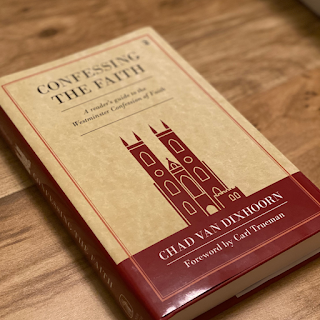
WCF Chapter One "Of Holy Scripture" Sunday School (Sept.-Oct. 2021)
Our text for Sunday School (also "The Confession of Faith and Catechisms") Biblical Theology Bites What is "Biblical Theology...
-
January 12, 2012 Update: The old link no longer works. The old link is still below but the new leak is right below the old link. Thanks to t...
-
 Our text for Sunday School (also "The Confession of Faith and Catechisms") Biblical Theology Bites What is "Biblical Theology...
