I'm listening to Th3 Saga battle Chilla Jones right now, and Th3 Saga and I wrote nearly the same Final Fantasy 7 line.
The same thing happened with Church Clothes 3: I wrote a similar Harriet Tubman line as Lecrae did on "Freedom." Same with Jackie Hill Perry on "Misconceptions Part 3."
And these are my 2 most recent poems.
Well, at least my pen is moving in the right direction.
Showing posts with label Writing. Show all posts
Showing posts with label Writing. Show all posts
Friday, February 12, 2016


Tuesday, January 12, 2016
What the elite are doing that you are not
The elite -- or the successful -- are constantly doing one thing that you are not:
They keep making goals after achieving old goals.
As soon as they accomplish one goal, they are on to setting another goal.
On and on this process goes.
They keep making goals after achieving old goals.
As soon as they accomplish one goal, they are on to setting another goal.
On and on this process goes.
Wednesday, April 15, 2015
David Klinghoffer quotes my work in Evolution News and Views


I own Klinghoffer's "The Unofficial Guide to Cosmos: Fact and Fiction in Neil deGrasse Tyson's Landmark Science Series" which I started to read about a month or so ago.
Saturday, February 21, 2015
Does the Federal Reserve cause booms and busts?
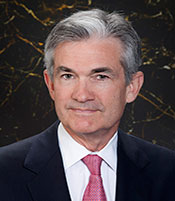
I recently asked Federal Reserve Governor Jerome H. Powell what he would say to the critics of the Federal Reserve who say that the Fed is the cause of the boom and bust cycle. I figured that any answer would do. This was his response:
“The question was do we cause booms. I guess I would really look at that question this way: What would life be like without the Fed. In other words, I wouldn’t expect perfection from of any government organization, or of any organization of any kind.
So the fed will never get things perfect and the fed has made mistakes. Right? We allowed inflation to get out of control in the 70s. Policy improves over time, we hope. Exogenous events happen and they make fools of everybody and then they’ll make geniuses out of everybody. So don’t expect perfection. But over time it has made sense – I think the Fed has done a good and improving job in keeping inflation low now for more than 30 years, and essentially having pretty good results.
Now are you going to point – now you ought to be pointing at the financial crisis and say “how did that work out?” The financial crisis is not something that -- any government agency that had a responsibility for the economy can feel really good about. So mistakes get made.
But I guess the question I would ask back is what would life be life with no – if you look back pre-fed, there were very severe depressions—depressions that looked a lot more like the Great Depression.
In this depression (sic), output went down 4%. In the Great Depression, output went down 25%. That kind of thing happened a lot in the 19th century. You had these hard stops of credit. The banking system would fail. There would be a run on the banks. JP Morgan personally would come in and get his friends together and bail out the system.
But – so the judgment was finally made to create a central bank. There is no advanced economy in the world that doesn’t have a central bank that does pretty much the same thing the Fed does. No one has run an experiment in a very long time of not having a central bank. Don’t really think that’s a way to go.
Tuesday, February 3, 2015
Life is a series of choices

Life is full of choices -- decisions.
Everyday, every moment we choose to do one thing over another. We show our preferences by our actions, not by our lips. We choose to pursue our passions rather than stay idle. We choose to be on social media rather than not be on it by our actions. We choose to keep relationships going by choosing that person over and over again, as the author above says. We choose to pay for things that we want rather than go without, and this shows our preference for those things. We choose to spend time doing this, rather than doing that, and these actions show where our heart is.
This doesn't make professions ("I love you," "I want to start my own business," "I want be more productive") unnecessary, for who in a romantic relationship wouldn't want to hear that? Who in a business partnership wouldn't want to know that their partner is serious? But these professions are necessarily followed by action.
Tuesday, October 28, 2014
On being an autodidact and listening to the Holy Spirit
I recently said something about being self-taught, or an autodidact. I do have one Person that has been guiding me this entire time: The Holy Spirit.
He has been my greatest teacher. I didn't put those books in my hands. And it has been a blessing seeing all of these things come together.
It ain't all about me. I'm sorry for making it about me sometimes.
Monday, October 27, 2014
The Ghost Protégé
One
of the top Christian libertarian writers in the world has now written two
articles prompted by and mentioning me – seven and a half pages on a Word
Document, single-spaced, and about 3,613 words.
This
is ghost apprenticeship, as they were written to guide my professional and
entrepreneurial endeavors, and I am the ghost. Or maybe I should call it
“distance apprenticeship.” Think letters to a Young….self-taught economist,
self-taught philosophical theologian, writer, and Reformed Christian, wrapped
all in one – and through a computer.
He
said of my Maryland-based project, which will remain unnamed, that it “is a
very good project.” Elsewhere, he wrote that he hopes I have something to say.
For
this I am thankful.
Sincerely,
The
Ghost Protégé
Monday, January 13, 2014
How to become really knowledgeable in a field
- Get a Goodreads account.
- Read an introductory level book.
- Read the "recommended reading" lists or "further reading" notes that are at the end of many introductory level books.
- Put all those books in your Goodreads account's "to read" list.
- Read those books.
- Add the books in those books' "recommended reading" or "further reading" lists to your Goodreads account's "to read" list.
- Read those books.
- Repeat steps 5-7 until you have become really knowledgeable in a field or at least expanded your basic knowledge of that field.
- Tip: I also "follow the footnotes" and put the books in the bibliography or footnotes at the bottom of the pages to my "to read" list on my Goodreads account.
Monday, December 30, 2013
New things on the site for 2014
Most of the following are things that I started to do in 2013.
Economics Notes. As I complete my economics courses, I plan on blogging about what I learned in the process. So be prepared to see things about economic philosophy, the Federal Reserve system, the Great Depression, and free-market economics current application to U.S. politics. Because I discontinued my weekly health care posts in late 2012 (see below), I will occasionally, if not frequently, write about solutions to U.S. health care. Similarly, I will also write about the environmental policy occasionally.
Book reviews are in the works as well (see Theology notes section for style).
Theology Notes. I'm not taking any classes, but I do read theology and Christian apologetics books from time to time. And of course, there's always my weekly bible study. I plan on writing reflections on theology and book reviews of theology books. I plan to emulate book reviewers from various sources including Books and Culture, The New Yorker, and The American Spectator, but primarily the first two.
Miscellaneous Notes. I need some freedom to cover a large range of topics; so to serve that need I will be creating this section. This may cover poetry (I've been reading lots of poetry books), literature (novels, short stories), nutrition, pop culture, Christian culture, philosophy, and journalism, but I really am not sure.
Discontinued in 2013
Last year, I discontinued my "Weekly Health Review," a weekly wrap-up of important health care related news. However, I made it to Vol. 14 before doing so. Overall, those posts were pretty popular features of this site. Looking at the posts' view counts, they ranged from 18-70+ views each, but they mainly were between the 30-40 view range.
Economics Notes. As I complete my economics courses, I plan on blogging about what I learned in the process. So be prepared to see things about economic philosophy, the Federal Reserve system, the Great Depression, and free-market economics current application to U.S. politics. Because I discontinued my weekly health care posts in late 2012 (see below), I will occasionally, if not frequently, write about solutions to U.S. health care. Similarly, I will also write about the environmental policy occasionally.
Book reviews are in the works as well (see Theology notes section for style).
Theology Notes. I'm not taking any classes, but I do read theology and Christian apologetics books from time to time. And of course, there's always my weekly bible study. I plan on writing reflections on theology and book reviews of theology books. I plan to emulate book reviewers from various sources including Books and Culture, The New Yorker, and The American Spectator, but primarily the first two.
Miscellaneous Notes. I need some freedom to cover a large range of topics; so to serve that need I will be creating this section. This may cover poetry (I've been reading lots of poetry books), literature (novels, short stories), nutrition, pop culture, Christian culture, philosophy, and journalism, but I really am not sure.
Discontinued in 2013
Last year, I discontinued my "Weekly Health Review," a weekly wrap-up of important health care related news. However, I made it to Vol. 14 before doing so. Overall, those posts were pretty popular features of this site. Looking at the posts' view counts, they ranged from 18-70+ views each, but they mainly were between the 30-40 view range.
Saturday, November 23, 2013
The Books I Used To Write the Second-Longest Paper I Ever Wrote

When I was a senior in college, I wrote the second-longest essay of my life -- and it wasn't for a class. It was for a cash prize of $5,000.
In December 2009, I heard about the Atlas Sound Money Project Essay and, broke as the economy, I jumped for the cash prize. I did not win the first prize. A kid from Dartmouth did, if my memory serves me correctly. I also did not win the one of the two second prizes ($1,000), or one of the three third prizes ($500).
I had to choose between the following topics:
I choose the last one.Essay Topics:- “Money and the Free Society: Can Money Exist Outside of the State?”
- “The Ethical Implications of Monetary Manipulation”
- “Monetary Policy and the Rule of Law in the United States”
But cleaning up my desk this evening (how it surfaced to my desk 4 years later, I have no idea), I decided to discard the paper I had notes on and preserve the memory through this blog post.
Here are the books I used to write the 20-page essay, which was supposed to be "accessible to the educated laymen, but rigorous enough as to be used in college and university courses." That had my writing style written all over it.
These aren't the only sources I used. I also completed Robert P. Murphy's "Politically Incorrect Guide to Capitalism," some excerpts from some newsletters I was receiving at the time, and more. Besides the Murphy book, only other books I read in their entirety for this essay was "The Alpha Strategy" (which I have offered free of charge since November 2009), "Gold Wars," "Honest Money." I skimmed through the Sowell Book. I probably didn't cite the Faustino Ballve book nor the How the Fed Works book.Economics Reading List for Sound Money Essay-The Alpha Strategy-How the Fed Works (50 pages)-Essentials of Economics-Gold Wars-Honest Money (Esp. Biblical Monetary System)-Housing Boom and Bust
I also have some handwritten notes on this paper, such as "banks are good - fractional reserve isn't," "sell back gold to the public," "FDIC out of commission," "FED = Insurance Agency," "prevent recessions," "prices of goods will fall," "gov = tax in gold," " = pay in gold," and "no government mandate for gold-only. Gold is standard, but other metals are usuable (sic)." Corresponding page numbers were in parentheses next to these notes.
The Atlas Foundation's original blog post announcing the competition was published on December 2, 2009. The deadline to submit the essay was January 15, 2010. You can read the blog description here.
I'll publish the essay on a later date.
Friday, October 12, 2012


Saturday, May 5, 2012
Old Thoughts Brought to the Fore: Sitting in A Congressional Hearing
Is sitting in this Congressional hearing and I can't help but think these politicians waste so much time punishing productivity and non-violent, non-crimes.
If this is the best liberalism/managerialism has to offer, and what people accept as "good for us", then we have a long way to go before we restore economic prosperity in this country.
Thursday, December 8, 2011
Ron Paul “Hardly” agrees with Herman Cain on Federal Reserve

Watch video here
Washington (GoinsReport.com) – When asked whether he agreed with GOP presidential candidate Herman Cain on his suggestion that Federal Reserve should go back to a single mandate focusing on price stability, GOP Presidential Candidate Ron Paul said that he “hardly” agrees.
Price stability refers to the concept that prices levels are constant enough that people won’t take into account price inflation when making decisions as a consumer – not that the value of the dollar will remain the same.
On numerous occasions this year, including at the CNN-Tea Party Republican debate in September and during a press conference with reporters at TeaCon 2011, Herman Cain said that he did not want to end the FED but return it to a single mandate where the central bank allegedly only focused on price stability.
During the CNN Tea Party debate in September, Cain said “For many, many decades the FED did its job when it was singularly focused on sound money.”
At TeaCon 2011 he said, “it [the FED] really needs to just focus on monetary price stability the way it did from 1913 all the way up to the year 2000. It got off track when the federal national debt hit 14 trillion dollars and when foreign countries cooled off on buying our debt.”
After reading the quotes from Herman Cain, GoinsReport.com asked Rep. Ron Paul (R-Texas) “Do you agree with that analysis and do you agree with his history?”
Paul said: “Well, hardly. He’s part of the Federal Reserve System and I want to get rid of it. So he’s trying to patch it up. No, I wouldn’t agree with it.”
The Texas congressman made his remarks Wednesday morning (Nov. 16) after the 29th Annual Monetary Policy conference in Washington, DC.
In his speech Paul was skeptical of the idea moving the FED’s dual mandate of using monetary policy to maximize employment and achieving price stability to a single mandate focusing on price stability alone.
“Since I don’t like the Fed, I’m not interested in worrying about what the mandate should be because they’re not going to do it anyway,” Paul said.
“They’re mandate is that they’re supposed to have full employment. They’re failing there. They’re supposed to have stable prices. They’re failing there. So why do we have any trust whatsoever in what they do,” he continued.
He added that “deep down in their hearts” their real goal is to accomplish the liquidation of debt with inflation.
“That’s not too hard to understand that if they can get 50 percent inflation rate in a year or two that takes our $15 trillion debt and cuts it in half,” Paul said.
In his speech, Paul said that he would not end the Federal Reserve in one day because it will “eventually shut itself down” when it destroys the currency. Rather he will work to break the FED’s monopoly on issuing currency by legalizing sound money including gold and silver and repealing legal tender laws.
“My idea is sort of a copy of what Hayek’s had talked about,” he said. “Why don’t we denationalize money, legalize competition, allow free markets to work, allow free market banking to work?”
He added that we should repeal taxes on gold and silver and even allow private mints to issue gold.
GoinsReport.com also asked Mark Calabria, a Cato Institute policy scholar in attendance, to give his opinion about Herman Cain’s statements about the Federal Reserve.
Calabria answered in two parts.
On Herman Cain’s timing of when the Federal Reserve abandoned a policy of price stability he said, “I would disagree somewhat in that particularly during the 60s and 70s we where seeing double-digit inflation. We certainly weren’t seeing a very good track record from the Federal Reserve.”
He added that because of the FED’s involvement in the Great Depression, which is still debated by economists today, “it would probably be generous to say that the FED has been a success even half the time it’s been around.”
In support of that, he highlighted the FED’s role in contributing to the real estate bubble and stock market bubble in the 1920s. He also said that problems the FED got into in 60s and 70s were a result of abandoning price stability as their primary goal.
Additionally, he said that he agreed with Cain’s comments that if the FED focused on price stability alone then they would do a better job.
Calabria said the FED got off track “long before” the U.S. national debt hit $14 trillion, a point it hit in late 2010, and when foreign countries slowed their purchases of U.S. debt. He added that when the debt started to skyrocket “they got even more off track.”
For him, the Phillips curve framework where “they believe that a little more inflation gets them a little less unemployment” took the FED off track. As an example, he cited the Federal Reserve cutting interests rates after the dot-com bubble and again after Sept.11 out of concern for reducing unemployment.
Calabria recently testified in October before the House Subcommittee on Domestic Monetary Policy and Technology Committee on Financial Services which Paul serves as chairman.
At the TeaCon 2011 press conference, Cain also said that the Federal Reserve System is not unconstitutional – a point in which Congressman Paul would sharply disagree with as well.
Rick Santorum has also said that he would, like Herman Cain, focus on bringing the Federal Reserve to a single mandate.
Sunday, November 27, 2011
My Article Featured on Ron Paul 2012 Website

Many thanks to Charleston City Paper Blogger Jack Hunter for picking up on this. Read the blog post here.
Tuesday, November 1, 2011
Monday, May 16, 2011
Chris Matthews to Ron Paul: "Ok, You Won."

My article on Ron Paul about his appearance on Hardball with Chris Matthews was featured on the Charleston Tea Party website. Here is an excerpt:
It would be wise for conservatives to not ignore these crucial points of history. Because conservatives (and liberals) ignoring history does not mean we won’t repeat it.
Article: Chris Matthews to Ron Paul: “Ok, You Won.”
Wednesday, April 13, 2011
My Latest Published Article on Eric Cantor
Check out my reporting on Eric Cantor's position on raising the statutory debt limit!
House Majority Leader Cantor Won’t Say How Much Additional Federal Debt He’d Support | CNSnews.com By Me.
Then check out CNSNews.com's editor-in-chief's article on Eric Cantor's rhetoric back in 2010.
Cantor in 2010: ‘Beyond Comprehension’ To Lift Debt Limit to $14.294 Trillion | CNSnews.com By Terence P. Jeffrey
House Majority Leader Cantor Won’t Say How Much Additional Federal Debt He’d Support | CNSnews.com By Me.
Then check out CNSNews.com's editor-in-chief's article on Eric Cantor's rhetoric back in 2010.
Cantor in 2010: ‘Beyond Comprehension’ To Lift Debt Limit to $14.294 Trillion | CNSnews.com By Terence P. Jeffrey
Thursday, March 24, 2011

Wednesday, March 23, 2011
Featured on InfoWars, Too

Man, this "googling" has to stop. I just found out Infowars picked up my piece on Kathleen Sebelius saying the Obama Administration was going to fully implement the law despite Judge Vincent of Florida issuing his stay.
Read it here.
Subscribe to:
Comments (Atom)
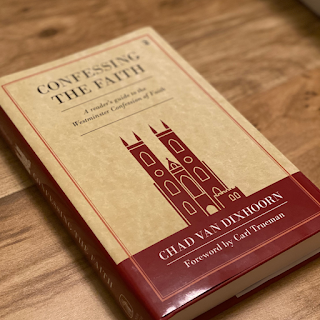
WCF Chapter One "Of Holy Scripture" Sunday School (Sept.-Oct. 2021)
Our text for Sunday School (also "The Confession of Faith and Catechisms") Biblical Theology Bites What is "Biblical Theology...
-
January 12, 2012 Update: The old link no longer works. The old link is still below but the new leak is right below the old link. Thanks to t...
-
 Our text for Sunday School (also "The Confession of Faith and Catechisms") Biblical Theology Bites What is "Biblical Theology...
