Showing posts with label economics. Show all posts

Monday, July 12, 2021

10 Free Books for Understanding the Economy Today

If you want to learn how we have gotten to where we are today, then you've landed at the right spot. 

These books were some of the first books I ever read on economics. 

They were preceded only by "The Alpha Strategy" (My Most Visited Post! Free Download! A great book for today in these inflationary times), the Politically Incorrect Guide to Capitalism, The Gold Wars (free download), Economics in One Lesson (free download), Meltdown, End the Fed, and Crash Proof 1.0.

I gotta be honest. I read all the way up to Modern Money Mechanics and didn't finish the rest of the list. But even half the books below and the books above will give you a working economic knowledge for life. 

Any citizen will be an economically literate citizen even if he or she reads only half of these books.

These economics books are free for downloading. Read them in this order.

Gary North, Inherit the Earth

Gary North, Honest Money

Murray Rothbard, What Has Government Done to Our Money?

Gary North, Mises on Money

Murray Rothbard, The Case Against the Fed

Murray Rothbard, The Mystery of Banking

Federal Reserve Bank of Chicago, Modern Money Mechanics

Gene Callahan, Economics for Real People

Robert P. Murphy, Lessons for the Young Economist

Murray Rothbard, Man, Economy, and State; Robert P. Murphy, Study Guide for Man, Economy, and State

Source: Ten Free Economics Books for Understanding What Is Going On Today | Specific Answers 

I hope you enjoy the books! 

Next up will be books that will help you become a functional Christian.

Tuesday, September 22, 2015

Video: The Truth About Bernie Sanders

Get a free E-book on Bernie Sanders here.

[Editor's Note: Regular readers of this blog should this is part of the"Why You Should Not Vote For Bernie Sanders" series. 
The reason I am doing this is because a number of my (young) friends are falling for the rhetoric and promise of Democratic Socialism. It (often rightly) rails against big business It (almost) never rails against the government framework which made big business possible. 
It is embodied in the persons of Elizabeth Warren and Bernie Sanders. Unfortunately, they're both wrong.
My posts will be informed by the Thomas Woods' new E-book Bernie Sanders is Wrongother informed economic articles, and my personal reflection, except in cases where I find good videos, as was the case with the second post above.
This is Part 2 of many…and I mean many.]

Friday, May 1, 2015

Put the economic crisis in perspective


Put the economic crisis in perspective:

The government has been using stimulus to thwart a recession since I was 13.

I'm 27 now. They've been pushing off a recession for over half of my lifetime.


By pushing off the recession with stimulus, they make the inevitable correction even worse.

What if we had one bad recession in 2001 and then that was it? What if we all had to toughen it out for one bad year when the economy was much stronger?

What happens now that the crisis is still forthcoming and people don't have the incomes and savings to brace for it?

Imagine if all of the people who went to college from 2001 to 2015 -- including myself -- had to make decisions to go to school based upon real price sensitivity, based upon what they could actually afford, versus enrolling in federal student loan programs? How financial freer would those people be?

The solution is to drastically cut spending, preferably Ron Paul 2012 presidential platform style by $1 trillion, end local, state, and federal bureaucracies, drastically lower taxes (no regressive flat tax, conservatives), and end the American Empire overseas and at home. Oh, and of course, End the Fed.

There's also other things that could be done but that's for another blog post. But for starters, we could legalize capitalism.

Thursday, April 16, 2015

Good bye, old blog description

Starting today, the blog description is no longer "Educating Christians about The Currency Crisis - and Other Worldview Issues."

Instead, it is  "Politics + Poetry + Philosophy."

Tuesday, March 24, 2015

Thursday, March 12, 2015

Tuesday, March 3, 2015

How to Prepare for the Coming Economic Crisis or the Next Great Depression

Via David Stockman's Contra Corner:

David Stockman, architect of President Reagan’s economic turnaround known as ‘Morning in America’, warns of the looming collapse of free market prosperity and the destruction of American wealth. Plus: Emergency actions viewers can take now to protect themselves from the crisis.

As I've said previously, the recession is not over. In 2011, I remember posting an article on Facebook from Lew Rockwell talking about America entering another great depression.  It drew the ire of skeptics.

In fact, my motivation for starting The Goins Report in 2009 was precisely because I began to understand free-market economics, and I knew that the president's stimulus plan, and all other forms of violent economic intervention into the markets, was not going to save us...period.

My friends very incorrectly even thought I was a George Bush supporter because I came of age intellectually at the end of 2008 and opposed Obama's policies from the beginning. But if I had come of age a year earlier, or two years earlier, I would have been just as vocal about George W. Bush.

So I went on the intellectual warpath and began to warn friends about the intrinsic shortcomings of government economic policy.

And I proceeded to prepare myself for the downturns and dollar crises that I thought would come.

But now I want to share a link with you to help you, while there is still time.

Since 2010, I have had a page with links to movies that warned that the economic crisis is not over.

Since 2009, I have provided a free-book warning on how to protect yourself from the Federal Reserve's disastrous inflationary policies. In fact, it is my most visited blog post with over 1,000 hits.

Time and again, the true free-markets economists have warned that the current economy "recovery" is no recovery at all. While I can not say when, or where, or what will cause the next economic bubble to pop -- and indeed no good free-market economist tries -- I know that the ball is up in the air, and it is being continuously hit upwards by government and central bank policies. But every volley ball game has to end. The ball must come down eventually.

But it doesn't have to come down on you or your side of the court.

You can be on the winning team.

"The prudent sees danger and hides himself, but the simple go on and suffer for it." Proverbs 22:3 (ESV)

That is the Bible's wisdom for our day.

Don't be simple; be prudent. Watch the video.  Download this free book. Prepare.

Saturday, January 11, 2014

On the apologetic abilities of ex-believers

“Bart Ehrman’s career is testament to the fact that no one can slice and dice a belief system more surgically than someone who grew up inside it.” —Salon.com via New Testament scholar Bart Ehrman's old website.

There is a lot of truth to this maxim; but its applicability, as it suggests, extends far beyond just ex-Christians like Ehrman. It even extends beyond religion.


Thomas Sowell, for example, was a marxist that didn't come around to free-markets until he saw his god, his economic religious system, his beliefs he was immersed in, fail. This happened while he was interning for the U.S. federal government in the Department of Labor (I think).

He now is, as he has been for decades, dismantling the left-wing worldview in his weekly columns and books.

American humorist P.J. O' Rourke was also a man of the left, until he got a job, he's quipped a few times.

Christopher Hitchens, whom I will mention again below, was once a committed Trotskyist and socialist in the 1970s and 80s and later came to embrace, well, something.

It's not clear that he is writing approvingly, but in the foreword to Choice: The Best of Reason, Hitchens writes:
But the subsequent industrial and technological revolutions have displaced a good deal of power and initiative away from states and corporations--and the unspoken alliance between them--and toward the individual worker and producer. More than this, they have greatly attenuated the frontiers of states and nations and made it easier to be an everyday "internationalist" than many once-leftist parties would have believed possible. [1]
At the very bottom, this is a major admission of the success of capitalism from a former socialist.

Ex-Christians turned atheists, Ex-atheists turned Christians

There are also many ex-atheists who spend much of their life dedicated to sharing the gospel of Jesus and God's coming kingdom to unbelievers. C.S. Lewis, whom I've never actually read yet, except for that liar, lunatic, or Lord line,* comes to mind (I don't think that's too much of a simplification of my past).

Lewis, went on to write many books defending Christianity, such as Mere Christianity, and creatively shared the Christian worldview in his works of fiction, the most notable probably being the Chronicles of Narnia series. (I hear the space trilogy series is pretty good too.)


Some less prominent examples such as David Wood and  former Ex-Atheist.com proprietor A.S.A. Jones; others include Peter Hitchens, Alister McGrath, Francis Collins, John Harwick Montgomery, Marvin Olasky, and novelist A.N. Wilson.


Heck, even the late philosopher Antony Flew, who did not become a Christian his last years, became a deist (his words), and put out a book about how he believes in God, albeit a sort of "Aristotelean god."

Richard Dawkins and the late Christopher Hitchens and are on the opposite end of the spectrum. Dawkins admitted to losing his "last vestiges of religious faith" (if I can recall that correctly from The God Delusion Debate DVD with John Lennox) in his teenage years; Hitchens, in his adolescence (around 9).


Dawkins was actually very explicit about why he believed as a young Christian. Via Wikipedia:
"the main residual reason why I was religious was from being so impressed with the complexity of life and feeling that it had to have a designer, and I think it was when I realised that Darwinism was a far superior explanation that pulled the rug out from under the argument of design. And that left me with nothing."
And then, he spends his entire life not striding against religion -- no, that came in recent years -- but in the scientific field explaining the Darwinian origins of life; fleshing out that theory, defending that theory, and re-telling the gospel of Darwin for each generation anew with such works as The Selfish Gene (1976), The Extended Phenotype (1982), The Blind Watchmaker: Why The Evidence of Evolution Reveals A Universe Without Design (1986),  River Out of Eden, (1995) Climbing Mount Improbable (1996), Unweaving the Rainbow (1998), The Ancestor's Tale (2004), The Greatest Show on Earth: The Evidence for Evolution (2009), and The Magic of Reality: How We Know What's Really True (2011), never letting the gospel get stale.

In other words, he spent his career "surgically" explaining away design -- the very thing he used to believe in.

And if you were wondering why I described Dawkin's work as gospel, it's because I just saw the video below. N.T. Wright, in his own right, is a master at explaining the gospel to new generations of Christians. Pick up his "For Everyone" series to see what I mean.


[Editor's Update January 13, 2013 7:30 PM] It's somewhat of a genetic fallacy to say that because someone is an ex-believer in some religious belief or some economic philosophy, such as those mentioned above, that their new beliefs are true. However, the fact that they did leave one faith and now believe in something else should raise some eyebrows. 

*I know Lewis is not actually quoted in that link. However, I decided to link to perhaps one of the first websites that introduced that line of argument to me;  The Case For Christ DVD possibly being the other source for me.

Wikipedia has the quote in it's entirety and actually much to say about it from many sides.

[1] Gillespie, Nick. "Foreword." Foreword. Choice: The Best of Reason. Dallas: BenBella, 2004. 4.

Sunday, November 11, 2012

Ron Paul on FEMA and NFIP

"Many assume it is compassionate to entrust government central planners with disaster recovery. However, the greatest compassion brings results, not just good intentions."
Ron Paul || The Economics Of Disaster

Monday, August 27, 2012

The Make-Up Police Are Coming to Shut You Down


From Facebook:
A long time ago in the early days of The Goins Report (2010), I wrote a series of blog posts arguing that women should be legally allowed to braid their own daughters hair or neighbor's hair -- because logic dictates that if you need a license to be a hairstylist to do hair in a building, what stopping the gov't from shutting down a hair salon run out of a home?

This time, the make-up police are out!
Here are those three blog posts I was referring to:

[1] Libertarian Views of Law: Why You Can't Legally Braid Your Neighbor's Hair 
[2] Libertarian Views of the Law: A response to the Hair Post
[3] Vindicated! How Ron Paul's Life Proves My Point

Tuesday, September 27, 2011

College Students Reject Jesse Jackson's Ideas

Finally, someone spoke up against the reverend:
During the moments preceding Jackson’s speech and continuing into his introduction, students representing the OU organizations Students for Liberty and Young Americans for Liberty passed out fliers urging those in attendance to “help the poor; reject Jackson’s ideas.”

“We heard Jackson was coming to speak, and we thought, ‘Well, he’s kind of wrong about everything,’” said Nathan Kelly, a junior studying English education and a member of Students for Liberty.
And these kids are smart! They don't just offer something for nothing:
ederal assistance for poverty creates dependence on the government rather than effectively eliminating poverty, he said.

Instead, local initiatives that create ways for the poor to help themselves should be emphasized, Hennen said. These include abolishing minimum wage laws and removing barriers on trading.

“Instead of throwing money at the problem, Rev. Jackson could advocate a platform of individual empowerment and sound economic logic to mitigate the destructive forces of poverty,” the flier states. “We applaud Rev. Jackson’s crusade against poverty, but his remedies amount to a weak placebo.”
Students urge crowd at poverty rally to ‘reject Jackson’s ideas’ | The Post @ Ohio University

Tuesday, September 6, 2011

Self-Education: Graduate-Level Economics Education

For the most part, it's dirt cheap.

Graduate-Level Economics Education
Mises: Human Action
Rothbard: Man, Economy, & State
Rothbard: History of Money & Banking in the U.S.
Rothbard: History of Economic Thought
Rothbard: Mystery of Banking
Hazlitt: Failure of the "New Economics"
Hayek: Constitution of Liberty
Kirzner: Market Theory & the Price System
Kirzner: Capitalism & Entrepreneurship
Kirzner: Perception, Opportunity, & Profit
Kirzner: The Meaning of Market Process
Bauer: Dissent on Development
McCloskey: The Bourgeois Era (first 2 volumes)
Ropke: Economics of the Free Society
Many books can be found at the Mises Store.

Wednesday, October 27, 2010

Libertarian Views of the Law: A response to the Hair Post

The Right to Earn A Living, by Timothy Sandefur, Released September 2010

This is a response to a comment on September 16th's Libertarian Views of Law, "Why You Can't Legally Braid Your Neighbor's Hair"

Someone left the following comment:

I would take a middle of the road approach.
The above example was definitely an example of "over regulation". That being said, I am not in favor of no regulation.

In this case, I believe that if the business was
a) conducted in a safe and sanitary manner
b) incorporated or otherwise legally formed in that jurisdiction
c) workers were legal citizens being paid employed legally and paid legally

That where the regulation should stop.
Technique, style, etc. do not need to be regulated.


What this person didn't say was whether businesses that don't comply with these regulations should be allowed to come into existence or not. I will assume they meant to disallow the business to come into existence without compliance to these regulations. Let me offer this scenario and show why the business owner's best interests will lend to self-regulation of the business:

The Story of Little Suzy Que

Little Suzy Que was down on her luck. One day, she decided she wanted to earn a living doing her friends hair. She was only in the 7th grade when she wanted to get started on her new hairstyling endeavors.

It is day one and she anticipates her first customer.

The first customer arrives at Suzy's home mid-afternoon. Suzy, being the great customer service provider she is, and wanting her customer to return for more business, greets her.

Lana, the first customer, looks around Suzy's home. It is clean, sanitary, and even has the smell of incense in the air. Suzy knew that Lana is a picky person and an uber-germophobe, so she kept the place clean in preparation for Lana. If she didn't Lana wouldn't have entered Suzy's home and Suzy would have lost a sale. Suzy's best interests to gain customers kept her workplace tidy and organized; and kept business conducted in a safe and sanitary manner.

The Moral of the Story

Because Suzy wanted customers, she had to have the type of place that attracted customers. She couldn't have a hell-hole for a salon.

This not only applies to hair salons, it applies to the food industry as well.

For instance, let's imagine how McDonald's would have had to have act in its earlier stages to develop its initial customer base. Well, since it was a new restaurant, it had to be clean. It couldn't not be clean--say have roaches and mice scurrying around--because that would be unattractive to customers (who are quite the clean freaks); they would lose sales every time from someone who would otherwise eat there if it were clean. In order to retain customers, Mickey D's had to be clean and it had to serve good food (in other words, food that people want).

A possible objection could be that customers can see the immediate dining area, but they can't see behind the counter, including all those areas where the food is being made. Well, once again, I think, the problem is solved by the manager's, workers', and cooks' self-interest.

If the place is unsanitary, workers may be fired for not following their own-internal regulations and keeping their stations clean and managers would lose business if people are sick. (If customers do become sick because of the food, then I would not discourage a lawsuit.) The ultimate price to pay for their unscrupulousness is business failure.

Another possible objection could be "what if they don't have any internal regulations?" Well, then surely a lawless business would not last long. It would possibly put itself out of business from all the nausea-heartburn-indigestion-upset-stomach-diarrhea-having-Pepto-Bismol-needing customers filing lawsuits.

The next objection I can think of, at this point, is that there needs to be a regulation pressing for them to prevent these people from becoming sick somehow, which is just a rehashing of both a) and b) above. All I can say to that is, what if the company is allowed to come into existence and one uneventful day they accidentally get someone sick? The company can investigate the causes and change their behavior (which would be pressing since things like this are easily leaked to local media outlets within hours). (In light of this, how would someone prevent a business from coming into existence anyway? Cooking tests? Licenses? The licenses question is answered by the word-of-mouth / competency answer that was whole point of the original hair post. We have made a complete circle.)

All of this is to say that people operating within their best interests are inclined to provide good quality services. No regulator needs to tell them that if they are serving out of a hell hole they need to fix the place up. No self-respecting customer would go there. If they go there, then they aren't really all that self-respecting.

"But shouldn't we protect people from their own stupidity if they decide to eat there?" Well, not exactly. We deprive them of the experience to learn from their mistakes - they aren't learning to be scrupulous, aware citizens when we prevent them from shopping at a certain establishment.

Conclusion

There a plenty of things that people do without licenses that can be done for money. If a college student wants to cut hair, or braid hair, or cook food, to maintain himself or herself during his or her college years, shouldn't he or she be able to do so? (To push this logic to the extreme, would we suggest putting hair salons out of business just because we decide to allow mothers to style their daughter's hair? Or would we not allow people to cook for their families if they didn't have a license?)

People who want licenses for everything really don't want to put people out of work, they just want confidence that a person can effectively do the work they were hired to do. But don't block a job from coming into existence simply because they don't have a license.

Find out how in the tentatively-titled (and yet to be published) "The Heart of the Matter: Why You Have a Problem with Human Nature (and not with Capitalism).

George Reisman: A Free-Market Program for Recovery


In November of 2009, George Reisman gave this speech that articulated how we can get out of this current mess. I have watched this speech three times since then; the main reason is because, well, I fell asleep each time. Mr. Reisman sounds a lot like Jimminy Cricket, or at least some soothing narrator you would hear in an old Disney film. And although this speech is only 41 minutes, about four minutes shorter than a university lecture, the speaker is boring enough to put you to sleep.

Nevertheless, it is an important speech. And just like how we may have that one professor who puts us to sleep, it is during those times when we are falling asleep in class that the professor may be saying some of the most important things.

Listen to the professor.

And on a blog named after him, you can read this entire speech. I'd recommend, to stay awake, following the above video and reading the speech at the same time.

Try it out! You might learn something.

Thursday, October 21, 2010

Empirical Case against Stimulus

The interesting thing about this debate--and indeed all debates recently--is that two sides can be facing off against each other in what seems like an everlasting shouting match; two opponents ardently and consistently square off against each other in seemingly perennial disagreement.


For example, today on Hardball with Chris Matthews Pennsylvania Governor Ed Rendell, will shout "the stimulus is working"(to be fair, Rendell is a very nice fellow, and he speaks enthusiastically and passionately, although mistakenly, about the stimulus. He was not, as I sarcastically put it, "shouting"); on the other side a Republican will shout "the stimulus is not working."

Both parties usually go on to give support for their arguments, as Rendell does within the first 30 seconds of the above video.

And while a Republican--or any third or fourth party--is no where to be found but in the audience, we can imagine the argument they will give: the stimulus has yet to bring unemployment down; they just increased the federal deficit, etc.

Which one is right? They are two contradictory claims.

The reason of a post of this nature is to (1) ask why are people coming up with different conclusions with the same data and (2) how are people reasoning to come to these conclusions--if there is any difference between the two questions.

In a recent essay, Robert P. Murphy takes on Paul Krugman. He almost sounds--dare I say it--Republican. Whatever he sounds like, he speaks like a true free-market economist (or "Anti-Keynesian"):

Do you notice the pattern? The anti-Keynesians point to actual success stories as evidence of the potency of their policies. The Keynesians, in contrast, point to awful economies and claim that they'd be even worse were it not for the Keynesian "medicine."


Ok, so this isn't my best post. It's 1:28 AM and I merely wrote all that because I wanted you to read the rest of Murphy's essay. It's much more well written than this post. Ok, ok, ok. So all I really wanted you to do is see how people reason. (I know, why didn't I just say that in the first place.)

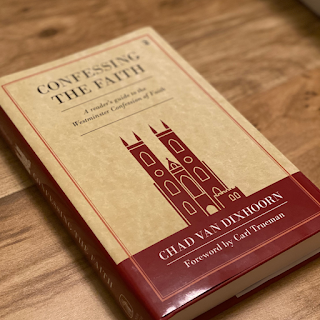
WCF Chapter One "Of Holy Scripture" Sunday School (Sept.-Oct. 2021)

Our text for Sunday School (also "The Confession of Faith and Catechisms") Biblical Theology Bites What is "Biblical Theology...