Showing posts with label Recession. Show all posts

Wednesday, October 28, 2015

Good read: There’s More to Money than Hyperinflation

Picture Taken from the Mises Institute's Instagram

The thing is, we don’t need Weimar-style money printing to redistribute wealth and encourage bubbles: even small credit expansions produce inequalities and malinvestments, whether hyperinflation eventually happens or not. Mises and other Austrians have been arguing this point for decades.
The problems run deeper than the threat of total disaster. In fact, that’s the whole point: if bad monetary policies always produced immediate catastrophe, people would long ago have seen the failings of central banks and done something to replace them. But because the distortions caused by monetary expansion seep slowly and discontinuously through the economy, their true origins remain unseen, even when the bubbles they create become obvious to the world.

There’s More to Money than Hyperinflation || Mises Institute 

Saturday, February 21, 2015

Video: Ron Paul gives trenchant foreign policy analysis in "The State of Liberty 2015"


If you are short on time, begin at the 30-minute mark. Dr. Paul gives an excellent analysis of foreign policy.

Near the beginning, he also touches on Ferguson and police militarization and police culture.

Does the Federal Reserve cause booms and busts?


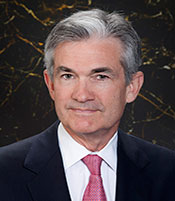
I recently asked Federal Reserve Governor Jerome H. Powell what he would say to the critics of the Federal Reserve who say that the Fed is the cause of the boom and bust cycle.  I figured that any answer would do.  This was his response:
The question was do we cause booms. I guess I would really look at that question this way: What would life be like without the Fed. In other words, I wouldn’t expect perfection from of any government organization, or of any organization of any kind.

So the fed will never get things perfect and the fed has made mistakes. Right? We allowed inflation to get out of control in the 70s. Policy improves over time, we hope. Exogenous events happen and they make fools of everybody and then they’ll make geniuses out of everybody. So don’t expect perfection. But over time it has made sense – I think the Fed has done a good and improving job in keeping inflation low now for more than 30 years, and essentially having pretty good results.

Now are you going to point – now you ought to be pointing at the financial crisis and say “how did that work out?” The financial crisis is not something that -- any government agency that had a responsibility for the economy can feel really good about. So mistakes get made.

But I guess the question I would ask back is what would life be life with no – if you look back pre-fed, there were very severe depressions—depressions that looked a lot more like the Great Depression.
In this depression (sic), output went down 4%. In the Great Depression, output went down 25%. That kind of thing happened a lot in the 19th century. You had these hard stops of credit. The banking system would fail. There would be a run on the banks. JP Morgan personally would come in and get his friends together and bail out the system.

But – so the judgment was finally made to create a central bank. There is no advanced economy in the world that doesn’t have a central bank that does pretty much the same thing the Fed does. No one has run an experiment in a very long time of not having a central bank. Don’t really think that’s a way to go.

Tuesday, May 6, 2014

Like after Fukushima, after 2014 snowstorms financial "experts" are blaming the weather for bad economy

There has been an increasing trend among financial "experts," TV talking heads, and economists to blame the weather on our crappy economy.

I first began to notice this trend in 2011 after the Fukushima Daiichi nuclear disaster when then Federal Reserve Chairman Ben Bernanke, testifying before Congress, attributed part of our slow growth to that earthquake caused event.

But now this explanation is back in full force, and we are supposed to believe that snow is the reason for the bleeding (Reason for the season? Christmas? Snow? Get it lol).

And we are supposed to believe this in spite of the fact that where the weather was arguably the worst, the chilly Northeast, house sales performed the best in the country. The NE saw a 12.5% increase in February, which was awful weather wise, to March. Meanwhile, the mid-West (-21.5%), the south (-14.4%), and the west (-16.7%), all received negative growth.

According to their line of reasoning, the rest of the states are need in some snow right now; and the ones that did get snow, they need more.

Monday, October 14, 2013

Schiff: Obama's wrong when he says we have to raise the debt ceiling because we have to pay our bills

President Obama has often repeated that not raising the debt ceiling is an acknowledgement that the United States (Government) can't pay its bills.

What's the contrary position?
"When President Obama says that have to raise the debt ceiling, because America always pays its bills, he's wrong. The reason we have so much debt, is because we never pay our bills. And the reason that we have to raise the debt ceiling is because we can't pay the bills. So we want to borrow more money instead. If we leave the debt ceiling alone, then we finally actually have to deal with the bills. And the problem is, we borrowed so much money, it's impossible to pay it back. And that's what president Obama doesn't want our creditors figuring out." Peter Schiff on The Street (Video)

Are modern economists right that eliminating deficit spending will decrease GDP?

From a recent op-ed in Capitalism Magazine:
According to modern economists, an elimination of deficit spending will immediately cause a dollar for dollar decrease in GDP. For example, if the government stopped sending food stamp payments to poor people, then grocery stores would lose business, employees would be laid off, and the economy would contract. But this one dimensional view fails to appreciate that the purchasing power of the food stamps had to come from somewhere. The government can’t create something from nothing. Taxation transfers purchasing power from people living in the present to other people living in the present. In contrast, borrowing transfers purchasing power from people living in the future to people living in the present. The good news for politicians is that future people don’t vote in current elections (and current voters don’t seem to appreciate the cost to their future selves of current policy).

Saturday, May 12, 2012

Yes, Virginia, There Will Be Another Recession Soon

I've been following the Economic Cycle Research Institute ever since Gary North introduced me to it. Lakshman Achuthan, co-founder and Managing Director of the ECRI is predicting another recession this year.

Those familiar with The Goins Report Facebook group page will see that I posted various links of people predicting a recession in 2012, back in late 3rd quarter/early 4th quarter 2011.

One of those links was Achuthan predicting a recession for this year. Again, that was back in 2011.

Now he's at it again. Check out the video.

Monday, August 8, 2011

Why Is the Stock Market Plunging? - Robert P. Murphy - Mises Daily

To recapitulate my argument from a previous article: Alan Greenspan's low-interest-rate policy in the wake of the dot-com crash spawned the housing bubble. Greenspan's Fed didn't actually eliminate the need for a recession, but instead postponed the crisis and made it fester. When reality hit in September 2008, Ben Bernanke was in charge of the Fed and implemented his predecessor's failed approach times ten.
Why Is the Stock Market Plunging? - Robert P. Murphy - Mises Daily

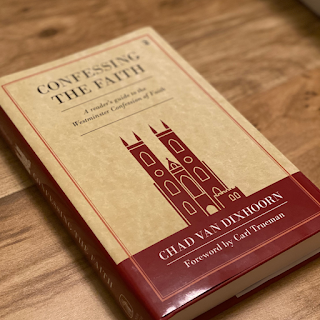
WCF Chapter One "Of Holy Scripture" Sunday School (Sept.-Oct. 2021)

Our text for Sunday School (also "The Confession of Faith and Catechisms") Biblical Theology Bites What is "Biblical Theology...