Showing posts with label Christianity. Show all posts

Monday, September 20, 2021

Peter Leithart on V-Mandate Resistance


 "
To submit to a vaccine mandate is implicitly to endorse a political order that is willing to make participation in everyday life contingent on an unwanted medical procedure." -Peter Leithart

In the rest of the commentary, he notes that his individual resistance is a measure to thwart biopolitical technocracy. He explains:

"I oppose vaccine mandates because I want to do my small part to gum up the works. I don’t mean the works of the Biden administration, but the much larger global trend toward biopolitical technocracy. As Roberto Esposito put it in Biopolitics, political authority was traditionally the authority to kill. Under the reign of biopolitics, rulers care for and manage life. Once upon a time, the ruler bore a sword; now, a syringe."

So in other words, "biopolitical technocracy" is a kind of ideology and government type that should be opposed. 

It should be opposed as fervently as one opposes fascism, or socialism, or American exceptionalism (especially the kind that wants to impose the American order on the rest of the world by bombs and bullets), or neoconservatism (and this only wants to impose the American order on the rest of the world by bombs and bullets).

Remember folks, Jesus is King so the State is not.

Read the rest here: Why I Didn't Get the COVID Vaccine | Peter Leithart

Tuesday, February 16, 2016

J. Gresham Machen: The True Christian Church is 'Radically Ethical'

In the third place, a true Christian church will be radically ethical...it will be ethical in the sense that it will cherish the hope of true goodness in the other world, and that even here and now it will exhibit the beginnings of a new life which is the gift of God.
That new life will express itself in love. Love will overflow, without questions, without calculation, to all men whether they be Christians or not; but it will be far too intense a passion ever to be satisfied with mere philanthropy. It will offer men simple benefits; it will never pass coldly by on the other side when a man is in bodily need. But it will never be content to satisfy men's bodily needs; it will never seek to make men content with creature comforts or with the coldness of a vague natural religion. Rather will it seek to bring all men everywhere, without exception, high and low, rich and poor, learned and ignorant, compatriot and alien, into the full warmth and joy of the household of faith.
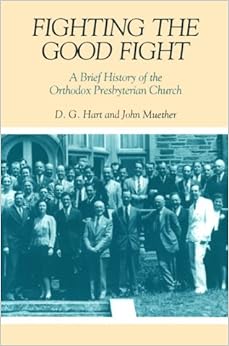
J. Gresham Machen, "The Responsibility of the Church in Our New Age," found in Fighting the Good Fight: A Brief History of the Orthodox Presbyterian Church 

Monday, September 21, 2015

Video: Fiorina Claims She's Not Part of the "Professional Political Class"


Editor's Note: I am no longer a libertarian anarchist. 

When I was, I used the Center For Stateless Society's material for my intellectual edification all of the time. This C4SS video on Carly Fiorina is very eye-opening, but it is not an endorsement of libertarian anarchism -- left or right.

The critique in the video can be maintained by any libertarian minarchist -- Christian or secular.

For one, the video shows that Hewlett-Packard was long-time beneficiary of government privileges.

HP is a part of the military-industrial complex.

Intellectual property "rights" gave HP its marketplace advantage.

If Fiorina can't point this out, how can she truly be called a "free-marketeer"?

When it comes to approving or disapproving legislation dealing with intellectual property rights, which create artificial scarcity, how will she vote? Will she veto? Will she uphold intellectual property "rights"?

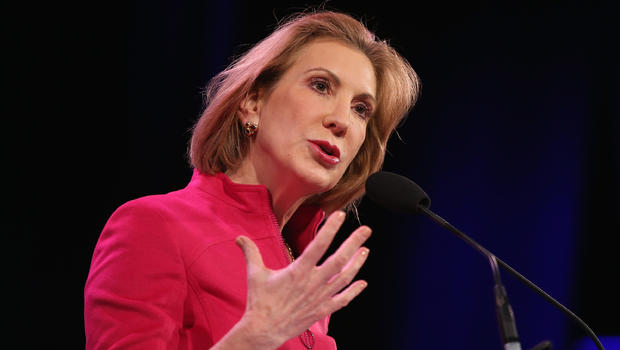
Picture Courtesy of the Getty Images
So even if she wasn't a lifelong politician, she still has benefited from the legislation of lifelong politicians.

If she doesn't understand that then there is at least one area of the economy which we can't expert her to advocate freedom.

Of course, I keep all of this in context with all of her competitors and what she proposes.

But based on her foreign policy views alone, as she voiced them on the September 16, 2015 CNN debate, I couldn't support her.

She is a war hawk. Pure and simple.

Don't believe me? 


David Stockman,  Director of Office and Budget Management under Ronald Reagan, cites Fiorina's own words from the debate and then breaks down her talking points, and then gives the real history of foreign policy that Fiorina, in all likelihood, is clueless about. 

Thursday, September 17, 2015

Can non-religious libertarians account for their libertarianism?

Please allow me to plagiarize myself without using quotation marks for a moment.

As I wrote in my last blog post, according to a poll on the Libertarian Party website, most self-identified libertarians in a recent poll are Christians.

Following Christians, the non-religious (including atheists and agnostics) make up the next largest group of liberty lovers.

In fact, those with no religion, which would include atheists and agnostics, accounted for 39 percent of those polled.

However, when you add Catholic, Baptists, Methodists, Lutherans, and "Other Christians" together, Christians collectively make up 46 percent of the poll.

Those who identified "Other Christian" made up 24 percent of the poll.

Muslims made up the smallest sliver of the poll, coming in at 1 percent.
This is all well and dandy. But the real question is can atheists and agnostics and other non-religious people account for their libertarianism?

Do non-religious libertarians have the proper foundations to ground their libertarianism?

Given their materialism, why should they be libertarians at all? On secular grounds, why should they be libertarians over Marxists? Is it all a matter of preference on the materialistic view?

The best essay that I have read that answers these questions is one I came across earlier this year by Gordan Runyan in his essay "God - the Only Ground for Freedom (or, Why Secular Libertarianism is a Bust)."

Here's a good summary paragraph from the essay:
As I have shown in my book, Resistance to Tyrants, it is only Christianity, with its special revelation, a full Bible breathed out by the one living God, that is capable of supplying the philosophical and moral foundations that will allow human freedom to weather the storms and remain standing. Christianity is the basis for genuine libertarianism. Atheistic libertarianism is the contradiction. It only ever gets anything right by stumbling into a biblical principle now and again. It is the proverbial blind squirrel that manages to accidentally find a few nuts. 
Read the rest.

Friday, August 8, 2014

Why can't we all just get along?


Why can't we all just get along?

Because we all have worldviews that necessarily conflict.

And if a worldview is true, and something within that worldview requires its holders to spread and impose that worldview, then it must.

I have I no objection to that...

...because I have no objection to truth.

So if the violent Christian-beheading Muslims within the Islamic State of Iraq (ISIS) want to impose their view through the sword -- or the gun -- I have no objective objection to that outside of the objective truth of Christianity, for I would only have my subjective opinion.

But it's precisely and only because I am a Christian that I can condemn tyranny. It is on those grounds that I can say that ISIS is departing from "The Way," that they are sinning.

The person who believes that no one should believe in conquest himself believes in conquest; it's just conquest by another name: secularism.

If secularists were really consistent then they would have been the secular version of what I was for three years: a libertarian anarchist. They can't simultaneously oppose theocratic imposition of values through the government, but then turn around and want to impose their own. (Of course, on secular terms it's really impossible to be consistent about anything)

But look at the alternative view of Christianity. Jesus advocated conquest, too. But it was a conquest by discipleship, love, Kingship, and stewardship -- all of which starts with God regenerating the individual through the Holy Spirit.

But isn't Christianity a matter of subjective opinion to the Christian as much as Islam is a subjective opinion to the Muslim?

No. Because the God of the Bible is the true one. His and only his opinion is objective in any meaningful sense of the word. Only one God is the author for external reality.

Monday, July 28, 2014

The Most Christian President in History -- and what his politics looked like

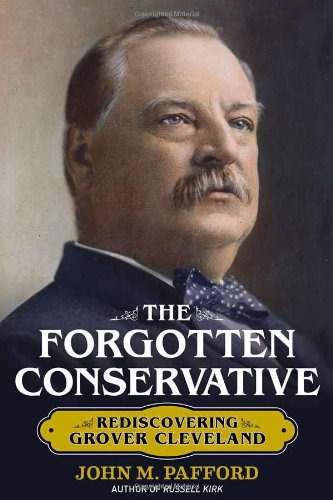
The last self-consciously Christian President was Presbyterian Grover Cleveland, who favored a gold standard, low taxes, free trade, and who vetoed more bills in two terms than any other President in history. (He had been known as the "veto mayor" of Buffalo, New York.) He served two terms, 1885-89 and 1893-97. From that point on, Christian politics slid down the road toward modern statism.
Gary North, Honest Money (p.133)


Those are his principles. Wikipedia has this nice summary:
Cleveland was the leader of the pro-business Bourbon Democrats who opposed high tariffs, Free Silver, inflation, imperialism, and subsidies to business, farmers, or veterans. His crusade for political reform and fiscal conservatism made him an icon for American conservatives of the era.[1] Cleveland won praise for his honesty, self-reliance, integrity, and commitment to the principles of classical liberalism.[2] He relentlessly fought political corruption, patronage and bossism. Indeed, as a reformer his prestige was so strong that the like-minded wing of the Republican Party, called "Mugwumps", largely bolted the GOP presidential ticket and swung to his support in the 1884 election.[3]
Libertarians tend to acknowledge Cleveland as one of the better U.S. president in American history when asked who is the best president. Mr. Libertarian himself, Murray Rothbard, the founder of modern Libertarian, thought that Martin Van Buren was the "best" (least bad) U.S. He briefly mentions Grover Cleveland and his major screw-up: the interstate commerce commission.


For more reading, check out the links below:


Saturday, February 22, 2014

God is like a mother waiting for her child to return home

God is like that mother who waits for her child to come back home from playing outdoors and makes sure the child gets washed up, nourished and ready for the next day. (Late Elementary & Middle school memories of my Mom waiting at the front door with the door wide open come to mind here)

Of course, in some sense that's where the analogy ends because kids should totally play outside. But we who know the Lord Jesus Christ have someone ready to clean us when we get dirty in sin from time to time. ~The Proprietor

Monday, December 30, 2013

New things on the site for 2014

Most of the following are things that I started to do in 2013.

Economics Notes. As I complete my economics courses, I plan on blogging about what I learned in the process. So be prepared to see things about economic philosophy, the Federal Reserve system, the Great Depression, and free-market economics current application to U.S. politics. Because I discontinued my weekly health care posts in late 2012 (see below), I will occasionally, if not frequently, write about solutions to U.S. health care. Similarly, I will also write about the environmental policy occasionally.

Book reviews are in the works as well (see Theology notes section for style).

Theology Notes. I'm not taking any classes, but I do read theology and Christian apologetics books from time to time. And of course, there's always my weekly bible study. I plan on writing reflections on theology and book reviews of theology books. I plan to emulate book reviewers from various sources including Books and Culture, The New Yorker, and The American Spectator, but primarily the first two.

Miscellaneous Notes.  I need some freedom to cover a large range of topics; so to serve that need I will be creating this section. This may cover poetry (I've been reading lots of poetry books), literature (novels, short stories), nutrition, pop culture, Christian culture, philosophy, and journalism, but I really am not sure.


Discontinued in 2013

Last year, I discontinued my "Weekly Health Review," a weekly wrap-up of important health care related news. However, I made it to Vol. 14 before doing so. Overall, those posts were pretty popular features of this site. Looking at the posts' view counts, they ranged from 18-70+ views each, but they mainly were between the 30-40 view range.

Sunday, December 29, 2013

Ancient Evidence for Belief in the Rapture (Or something rapture-like)

This hits home.

Francis Gumerlock, author of "The Early Church and the End of the World," has written an article in Bibliotheca Sacra that shows that there were "rapture" beliefs before the 1800s.  As the common misconception goes, the rapture, which I do* believe in myself, was an invention of the 1800s.

A preview of that article is available here on his website. The title of the paper is Rapture in the Apocalypse of Elijah.

I first came along a similar notion when I first began reading Pagan Christianity in 2008.

From what I've read, the book doesn't actually come out and says the rapture was created in the 1800s (However, Gumerlock's paper cites a work that might. See the first footnote.). It doesn't even use the term rapture. However, it does talk about "pretribulational dispensationalism" which is linked to rapture beliefs.

From page 71:

It is also worth noting that Moody was heavily influenced by the Plymouth Brethren teaching on the end times. This was the teaching that Christ may return at any second before the great Tribulation. (This teaching is also called "pretribulational dispensationalism.")
In the footnotes on page 71, there is some unhelpful wording:

142. John Nelson Darby spawned this teaching. The origin of Darby's pretribulational doctrine is fascinating. See Dave MacPherson, The Incredible Cover-Up (Medford, OR: Omega Publications, 1975). 

Webster's New World College Dictionary, Fourth Edition defines spawned as, among other definitions, "to bring forth or be the source of (esp. something regarded with contempt and produced in great numbers)." So you could see how as a college sophomore (I finished my sophomore year I think and I was in South Carolina for the summer. Did that make me a "rising junior?) I could get a little confused about the origins of the rapture.

While my current church teaches the "rapture," it is one of the many things I disagree with at the church. And on Gumerlock's paper, I must add that he is not saying that belief in the rapture was widespread among early Christians. In fact, from the intro it only seems like a handful (to be generous), held that belief.

Read the intro here.

*Before correction, this post said that I don't believe in the rapture. That is wrong. I do. 

Sunday, October 20, 2013

Christopher Hitchens, my home boy, and I

No, that's not me on the right. That's the person I went to the "What Best Explains Reality: Theism or Atheism?" debate with featuring Frank Turek vs. Christopher Hitchens on March 31, 2009 at TCNJ. This was moments after I met Christopher Hitchens for the second time. He had signed the original copy of a 500 word profile of him I wrote for my magazine writing class in Spring 2009.

"Do you have an extra copy?" I recall him asking.

I didn't. And in fact, I thought about leaving him a copy but there wasn't a Kinko's in sight on our way there.

If I remember correctly, I was the last person to have anything signed by Christopher Hitchens that night. It was getting late. Christopher had already signed tons of autographs. And I believe he had a plane to catch.

My homeboy, then a Christian, asked Christopher why he didn't believe in God?

It was one of those, "it's obvious there is a God, why don't you believe in him?"-type questions. It was very passionate.

I don't remember Christopher's response.

But my friend asked him the question as he was still sitting down. I had just stepped away after my paper was signed. Shortly after saying something, Christopher Hitchens stood up, and either he or his help had a gray wheeled luggage bag (or maybe I'm confusing his bag for the one Frank Turek possibly had). He told Christopher about his flight.

That one Christian guy who asks atheists why they don't believe

I was reminded of the entire 2009 TCNJ scene when an old white man, after the Q&A opened up, popped the first question to ask Richard Dawkins at the National Press Club a few weeks ago. Also admittedly an atheist -- at least for that night -- Sally Quinn, a long-time Washington Post reporter and editor, gave one of the worst interviews of Richard Dawkins I've ever seen.

Why do I say that?

Because she steered the conversation to make Richard Dawkins says things that he has literally said 1,000 times before in his speaking and debate circuits after the publication of his 2006 bestseller The God Delusion. We could Wiki some of his answers. This lady is a religion editor. You would have thought she would have done her homework. Maybe she did. Maybe she had done the kind of preparation for a test where the examiner doesn't question you on anything you had studied for. That would be apt, except she was the examiner. And examiner decided to test you on last month's material, which you certainly knew, but were prepared for something more recent (Does this hypothetical ever happen? lol)

Richard Dawkins was there on September 30, 2013 to discuss his new book "An Appetite for Wonder: The Making of a Scientist" (2013), the first half of his two-part memoir. The best she could have done was read excerpts from the book, and then ask him to expound on that.

"What did you mean when you said..." would have been a much more productive way of interviewing than pointing out he became an atheist in his teens (something he has said many times before) and contrasting that with her own awareness that she was an atheist at age 5. Instead, she barely asked about the book, in my view. As I see it, she was a Washington Post reporter getting an exclusive interview with Richard Dawkins and used her exclusive interview to self-servingly get some personal questions answered.

Anyway, after what I guess was a half-hour of virtually unproductive conversation, the Q&A started.

The aforementioned first questioner asked "Why don't you believe in the empirical evidence of the resurrection of Jesus Christ?"

The question brought me back to my friend who asked a similar question with the same underlying vein: "Dear atheist, why don't you see it?"

Thank you for saving me, Richard Dawkins

I respected the question. Both questions. But I must say the following time was spent on two non-questions, a question about when atheism is going to catch on (or something like that) and at least one conspiracy-deny conspiracy theorist. I'll get to the latter in a second.

But a woman explained that she was on the way to the nunnery when she picked up a copy of Richard Dawkins' classic The Selfish Gene, which was even required text for some classes at my alma mater of La Salle University. At that point, she had dropped everything, changed course of her life to one that was religious and would have been completely religious if she had become a nun, and embraced the secular life in all its wonder.

Another man, a former Muslim originally from a Middle Eastern country, explained that it was The Selfish Gene that was the text that changed his outlook on life.

Another guy, who apparently attempted to indulge in some camaraderie before posing his question by, I think, tipping his hat towards The Selfish Gene or maybe some other RD work, asked something to the effect of "What do you think about Government conspiracy?" I believe it dealt with the fact that governments lie. That is true. (I'm sure the question is on tape. That will correct the record.) But there was some brief mention of 9/11 conspiracy theories, but the way it was postulated it was like he was trying to have it both ways. Sure he was secular, maybe even thought of himself as a critical thinker, and whatever he researched in his personal time he may have indeed had some good points, but the way he asked his question was ambiguous, and one wouldn't know if he was pro-conspiracy theory or not (I, for one, think they're OK, if support by facts). Richard was puzzled. So was I.

It also reminds of the way Sally Quinn conducted her interview. Not that her questions had anything to do with conspiracy. They didn't. But I feel like she used the opportunity to ask questions so he could answer and, in effect, do the research for her.

And that's the same way I felt with the guy. Richard Dawkins, by all accounts, is a scientist, not a philosopher of religion, or a political philosopher. (He did mention he wanted to live in a world where people pay taxes, as if taxes were moral things in themselves. In that case, I wouldn't want to live a world that Richard Dawkins gets to construct.) So asking him a political question is kind of intellectually lazy on the questioners part, because it seems like all these people want them to do is give free advice or do the research for the person.

Can we finally--finally!--talk about the book?


In the end, I met Richard Dawkins for the first time. Saw a buddy -- who described himself as "not convinced" by Dawkins and somewhat of "a mystic" -- I recently met a few weeks ago there. And got two RD's signature. It was the only novel thing I got from the experience, and perhaps the only novel thing other attendees got from their experiences. It's not like they could get a novel interview when it's conducted by Sally Quinn. Not that day, at least.

I did entertain a few people waiting in line to get there book signed. And one guy, probably one of the only other black people in the crowd (whether Tea Party rallies or anti-war rallies, politically left or politically right, black people hardly are in the crowds where I do my serious reporting or blogging) recommended I buy Vincent Bugliosi's "The Divinity of Doubt: The God Question." It has been added to my Amazon Wish List.

I ordered The God Delusion a few days before, and so I didn't have the physical copy in front of him to sign. He signed my Amazon receipt instead, which I cut out and pasted into my copy of The God Delusion when it arrived in the mail days later.

The other thing I had RD sign was a printed page of the old Richard Dawkins website. There was a post on there about Richard Dawkins "fleas" (the number of response books to The God Delusion). The blue response book, picture above, is what I originally planned on posting that second RD signature into. I haven't done that yet. The Ipod Tutor: The Argument Against Richard Dawkin's The God Delusion is one of three response books I own. I also own secular Jew, agnostic, and mathematician David Berlinki's book "The Devil's Delusion: Atheism and it's Scientific Pretension's" and Christian and mathematician John Lennox's "God's Undertaker: Has Science Buried God?" I bought all three response books back in college prior to 2011. Perhaps all prior to 2010. I haven't completed one, although I did get through a good portion of Lennox's book back in college, with the highlights, and red and blue ink to show for it. I plan to read all four books soon, meaning within a year or two, starting with the Dawkin's book.

He (RD) was eminently pleasant, by the way.

"Do you want me to sign here?" he said. I was in awe and calmed by his pleasant demeanor.

Tuesday, September 10, 2013

Christians responding in love to widespread suffering will grow the Church, history shows


In 165 AD, during the reign of Marcus Aureilus, a devastating epidemic swept through the Roman Empire. Some medical historians suspect that it was the first appearance of small pox in the West. During the 15-year duration of the epidemic, from a quarter to a third of the empire's population died from it, including Marcus Auraleius himself in 180 in Vienna. Nevertheless, Christianity grew during this time due to the loving response of Christians in the midst of widespread suffering.   
Vince Kluth of Trinity Reformed Presbyterian Church quoting Rodney Stark's The Rise of Christianity: A Sociologist Reconsiders History

Monday, September 2, 2013

Joel McDurmon on What Christians Should be Doing on Syria

Via Joel McDurmon of The American Vision:
If you really care about Syria, Iraq, Afghanistan, Egypt, Libya and every other hell-hole governed by a despot or in the grip of civil war, there is only one appropriate response. You pray to the God who makes wars to cease from the ends of the earth to bring peace (Psalm 46:9); pray for the gospel to take root and flourish in those nations; and send out missionaries there if you can. These are the only weapons that will ever do those places any good. All others will reap yet more destruction and misery in the years to come and our nations will bear much of the responsibility for it.
I'd like to add, "Can any of you by worrying add a single hour to his life?" (Matthew 6:27)

Wednesday, August 21, 2013

Daniel McAdams on Obama's Syrian Allies Destroying Single Christian Church

The Antiochian Orthodox church of Sts. Sergius and Bacchus in the archdiocese of Aleppo was built between 1985 and 1994 on land offered by the al-Thawrah's city council. It served not only its own parishioners, but also allowed other Christian denominations to use its facilities.   Shortly after Aleppo was overrun by rebels seeking to overthrow the Syrian government, the metropolitan of the Archdiocese of Aleppo, Boulos al-Yazigi, was kidnapped (and allegedly murdered) along with the Syriac Orthodox metropolitan, Mor Gregorios Youhanna Ibrahim.
Obama's Syrian Allies Destroy Another Christian Church || Daniel McAdams of the Ron Paul Institute

Sunday, July 28, 2013

The Single Most Important Essay of My Undergraduate Career

The most important essay I was assigned to read in undergrad and definitely the most influential passage is excerpted below. I found the Bach analogy beautiful:
 "If these historical realities are not taken into account, if the texts are not encountered in all of their historicality, then there is no understanding, either of the texts as texts or of the apostle from whom they have come. What Isaac Stern once said about playing a Bach violin concerto also applies to understanding Paul and his letters. Various interpretations, he said, can be called "right"; but equally, many interpretations have to be called "wrong." No reading of a text, whether from Bach or from Paul, that neglects its historicality--that is heedless of its origins, genre, form, structure, and intentions, however imperfectly these may be discerned--can be credibly called an interpretation of that text. Whether engagement with the text and a concern to understand its claims are subordinated to an interest, say, in "the effects of reading" it, or whenever the text is simply taken over for one's own purposes, whether theological, aesthetic, or political, then the text is not being interpreted but confiscated. An interpreter must be, first of all, an advocate for the text."
 Furnish, Victor P. "On Putting Paul In His Place." Journal of Biblical Literature 113.1 (1994): 12-13.

Monday, June 3, 2013

Antony Flew: Libertarian

Many Christians know of Antony Flew because he was an atheist and debated Christian apologist William Lane Craig and resurrection scholar Gary Habermas. But Flew was also a friend of liberty and an advocate for political and economic freedom.

Here are some of his writings in "The Freeman," a publication of the Foundation for Economic Education.

Saturday, March 23, 2013

How Rome Ruled

Rome ruled through a very small elite group and through alliances with local kings and leaders. The Romans controlled political, economic, and military structures to benefit themselves at the expense of others. Imperial theology contributed to this domination system. This theology, with appropriate rituals, claimed that Rome and the emperor ruled at the will of the gods. Rome's emperor manifested their presence, will, and benefits on earth.

The Gospel is a counter-narrative that helps its audience to live a counter-cultural, alternative existence in the midst of such claims and commitments. The Gospel asserts that it is God's world, not Rome's (Matthew 11:25; 28:18); that God's reign and presence are manifested in Jesus, and not in the emperor (1:23;4:17); that God's blessings extend to all people, not just the elite (5:3-12); that Jesus, not Rome, reveals God's will.
Warren, Carter. "The Gospel According to Matthew." Introduction. The New Interpreter's Study Bible: New Revised Standard Version with the Apocrypha. By Walter J. Harrelson. Nashville: Abingdon, 2003. 1746. Print.

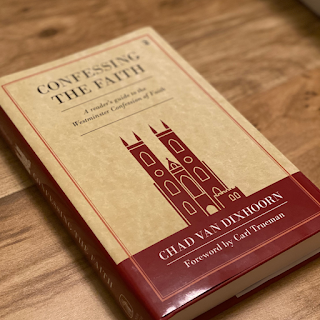
WCF Chapter One "Of Holy Scripture" Sunday School (Sept.-Oct. 2021)

Our text for Sunday School (also "The Confession of Faith and Catechisms") Biblical Theology Bites What is "Biblical Theology...