Showing posts with label Peter Kreeft. Show all posts

Sunday, June 8, 2014

Kreeft on the link between faith and humility


These two things naturally go together: belief in God and humility. These two things also naturally go together: skepticism about God and pride. For if there is no God, then man is the highest and wisest of all beings. But if there is a God or gods, then human wisdom, now judged by a higher standard, is relatively tiny. However proud and arrogant some religious believers may have been, humility is inherent in the very logic of religious belief. And however humble some unbelievers may have been, lack of humility is inherent in the very logic of unbelief.
No one saw this connection between humility (before truth) and belief (in God) more clearly than philosophy's most passionate atheist, Nietzsche. If there is no God, no eternal mind, he reasoned, then there is no eternal truth. Truth is only God without a face. Nietzsche dared to ask "the most dangerous question … why truth? Why not rather untruth?"
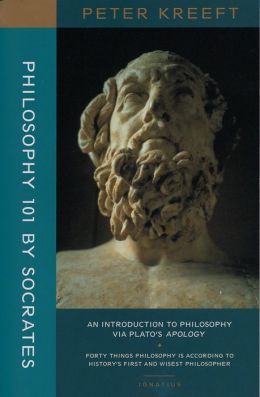
 ~Peter Kreeft, Philosophy 101 By Socrates: An Introduction to Philosophy Via Plato's Apology (Forty Things Philosophy is According to History's First and Wisest Philosopher)

Book Review Forthcoming. Check back here in a week or two for a link.

Tuesday, April 22, 2014

Catholic philosopher Peter Kreeft on Pilate, Jesus' Epistemology

THE FIRST GREAT PHILOSOPHICAL question is: What is? The second, which naturally follows, is: How do we know what is? The first question is about being, the second is about truth.
Truth is relative to being, for “truth” means“the truth about being.” “An orange is round” is true only because an orange is round.
Jesus’ answer to the first question, the question of being, was Himself. It was not to point but to be, to be “I AM.” So His answer to the second question, the question of truth, is also not to point to anything else as the truth but simply to be Himself the truth: “I AM the truth.” ( John 14:6)
Thus the supreme irony of Pilate cynically addressing the philosophers’ great question “What is truth?” to the eternal, perfect, absolute, divine, eternal truth Himself, made incarnate and concrete and personal and standing before him, condemned.
Pilate’s skepticism implicitly complains: “How am I supposed to know that great philosophical will-o-the-wisp, ‘truth’? Can I see it? Can I touch it?” And Jesus answers: “Yes. In fact, you can crucify it.”

Peter Kreeft, Philosophy of Jesus (pages 47-48)

WCF Chapter One "Of Holy Scripture" Sunday School (Sept.-Oct. 2021)

Our text for Sunday School (also "The Confession of Faith and Catechisms") Biblical Theology Bites What is "Biblical Theology...